 PRODUCT
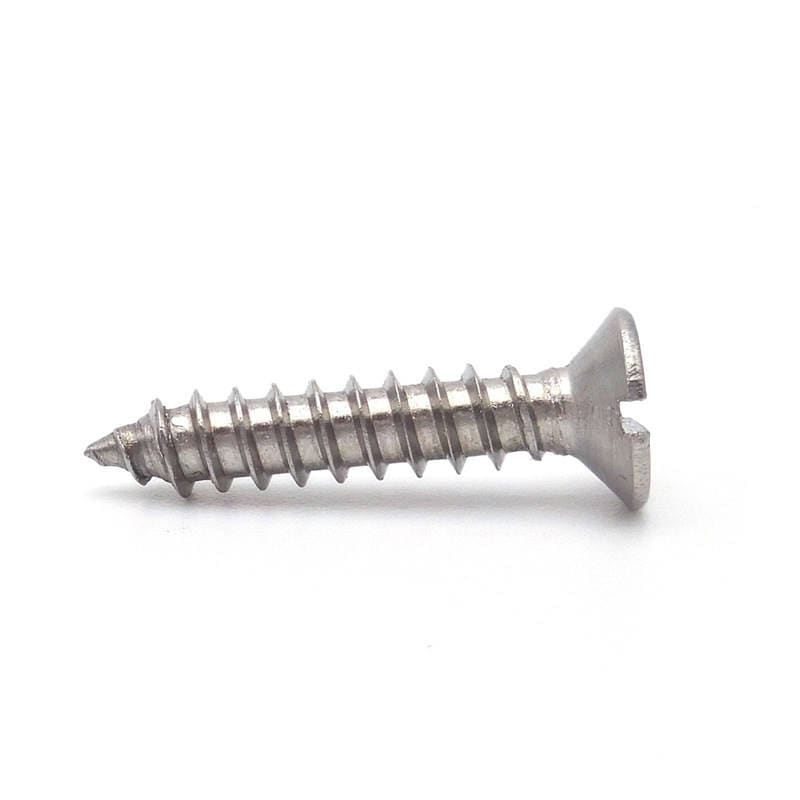
Slotted Countersunk Head Tapping Screw DIN 7972 / ISO 1482 Steel Fastener for Flush Mounting and General Assembly
DIN 7972 slotted countersunk head tapping screws in steel, ST2.2–ST6.3. View sizes, lengths and thread-end data. Send your size list for a quote.
- Standard
- DIN 7972:1990
- Material
- Steel
Product Details
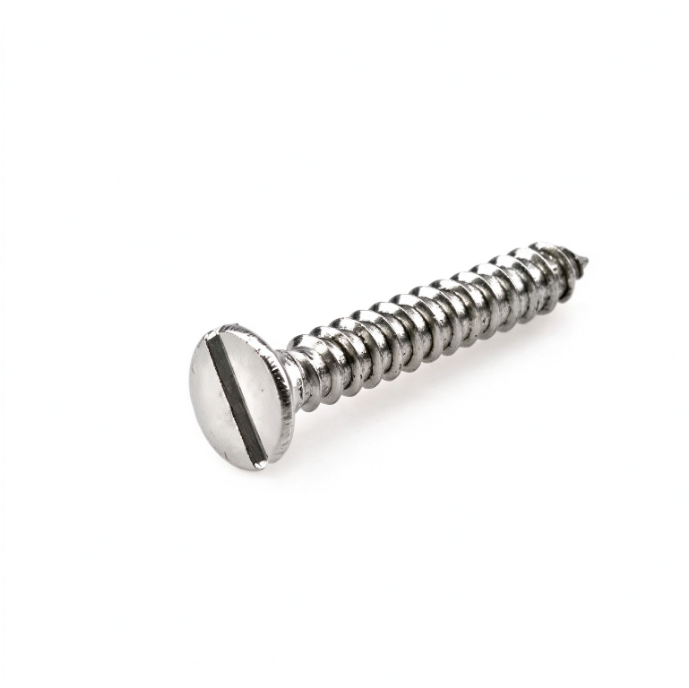
DIN 7972 slotted countersunk head tapping screws have a flat countersunk head and a single straight slot. The head is designed to seat into a matching countersink so that it can sit flush with the mating surface when the recess is correctly formed. The product uses a tapping screw thread and is identified by ST sizes rather than metric machine-thread M sizes.
The DIN 7972:1990 reference lists sizes from ST2.2 to ST6.3, with ST3.9 shown as a non-preferred size. The reference specifies steel, with mechanical properties and material grade according to DIN 267-12. Thread and thread-end requirements refer to DIN 7970, and the dimensional tolerance grade is A according to DIN ISO 4759 Part 1.
Product Specifications
| Item | Details |
|---|---|
| Product Name | Slotted Countersunk Head Tapping Screw |
| Standard Reference | DIN 7972:1990 |
| Head Type | Countersunk Head |
| Drive Type | Single Straight Slot |
| Thread Type | Tapping Screw Thread |
| Thread Size — Reference Range | ST2.2–ST6.3 |
| Listed Sizes | ST2.2, ST2.9, ST3.5, ST3.9, ST4.2, ST4.8, ST5.5, ST6.3 |
| Non-Preferred Size | ST3.9 |
| Material | Steel |
| Mechanical Properties and Material Grade | According to DIN 267-12 |
| Thread and Thread Ends | According to DIN 7970 |
| Dimensional Tolerance Grade | A, according to DIN ISO 4759 Part 1 |
| Surface Treatment | Untreated or electroplated according to DIN 267-9; other treatments by agreement |
The values above describe the DIN 7972:1990 reference. The required size, length, thread-end form, surface treatment and quantity are confirmed for the quoted item.
Head and Drive
The countersunk head has a flat top and a conical bearing surface. It is intended for a matching countersink in the mating component. When the recess matches the head geometry, the top of the screw can sit flush with the surrounding surface instead of projecting above it.
The single straight slot accepts a flat-blade screwdriver. The blade should fit the slot and remain aligned with the screw during installation and removal. The condition of the slot and the fit of the driver affect how the screw can be handled during assembly.
Head diameter, head height, slot width and slot depth are separate dimensions. A similar screw diameter does not establish that another head form will fit the same countersink or provide the same installed profile.
Thread Size and Nominal Length
DIN 7972 uses ST tapping screw sizes. The reference lists ST2.2, ST2.9, ST3.5, ST3.9, ST4.2, ST4.8, ST5.5 and ST6.3. ST3.9 is shown in parentheses as a non-preferred size.
The reference length selector lists nominal lengths of 6.5, 9.5, 13, 16, 19, 22, 25, 32 and 38 mm. The applicable length options depend on the selected ST size, so the size and nominal length should be stated together in the inquiry.
The reference includes separate values for Type C and Type F thread ends. The required thread-end form should be identified when it affects the assembly or when the screw is purchased as a replacement part.

Material and Surface Condition
The DIN 7972:1990 reference specifies steel. Mechanical properties and material grade are according to DIN 267-12.
The surface-treatment references are an untreated condition and electroplating according to DIN 267-9. Other surface treatments can be agreed between the buyer and supplier. General requirements are according to DIN 267 Part 1, surface roughness according to DIN 267-2, surface defects according to DIN 267-19, and acceptance and packaging according to DIN 267 Part 5.
The required surface condition should be stated with the inquiry. Where a drawing or project specification controls coating thickness, appearance or acceptance, that document should be identified separately.
Related Standards
DIN 7972:1990 is associated with GB/T 5283, ISO 1482 and DIN EN ISO 1482. Some related standards may be approximately equivalent; the original standard should govern in case of doubt.
For a replacement part or an existing assembly, state the controlling standard and edition on the drawing or purchase order. A related standard reference should not be treated as confirmation that every dimension or technical requirement is identical.
Information Needed for a Quotation
DIN 7972:1990 or the controlling drawing number and edition.
ST thread size and nominal length.
Type C or Type F thread-end requirement.
Required surface treatment.
Quantity for each size and length.
Inspection, marking and packaging requirements.
Delivery destination and any project-specific acceptance requirements.
FAQ
1. What is a DIN 7972 screw?
DIN 7972 is a slotted countersunk head tapping screw. It has a flat countersunk head, a single straight slot and a tapping screw thread.
2. What sizes are listed in the reference?
The reference lists ST2.2, ST2.9, ST3.5, ST3.9, ST4.2, ST4.8, ST5.5 and ST6.3. ST3.9 is a non-preferred size.
3. What material does the reference specify?
The DIN 7972:1990 reference specifies steel, with mechanical properties and material grade according to DIN 267-12.
4. What surface treatments are referenced?
The reference includes an untreated condition and electroplating according to DIN 267-9. Other surface treatments can be agreed.
5. What nominal lengths are shown?
The reference length selector lists 6.5, 9.5, 13, 16, 19, 22, 25, 32 and 38 mm. The applicable length depends on the selected ST size.
6. What is the difference between Type C and Type F?
The DIN 7972:1990 reference provides separate y max values for Type C and Type F thread ends. The required thread-end form should be specified in the inquiry.
7. Which standards are related to DIN 7972?
DIN 7972:1990 is associated with GB/T 5283, ISO 1482 and DIN EN ISO 1482.
---
Send the requiredST size, nominal length, Type C or Type F thread-end requirement, surface treatment and quantity toJJ Fastener Factory.Include the controlling standard or drawing so the quotation can follow the required specification.