From Inquiry to Mass Production: A Complete Process Management Guide for Fastener OEM Contract Manufacturing

Daniel
With experience in fastener manufacturing and export sales, we specialize in bolts, nuts, screws, self-drilling screws, fully threaded rods, and customized fastening solutions for construction, machinery, automotive, and industrial applications.
From Inquiry to Mass Production: A Methodology for Full-Process Management of Fastener OEM Contract Manufacturing
In manufacturing supply chains, fasteners are often regarded as "small parts," yet their impact on assembly efficiency, product reliability, and after-sales costs cannot be underestimated. Many procurement and engineering teams have encountered similar situations: samples appear to pass inspection, but when entering batch assembly, screws or nuts exhibit poor fit, loosening, thread stripping, or even rework; in marine, outdoor, or high-humidity environments, corrosion issues may also cause downtime and maintenance costs. The problem usually does not lie in a single part being "poor quality," but rather in the lack of alignment among requirement definition, drawing versions, material selection, heat treatment, surface treatment, and acceptance criteria.
This article is intended for buyers and fastener suppliers, outlining a closed-loop management method covering inquiry, sampling, validation, and batch delivery to help both parties reduce uncertainty in fastener OEM contract manufacturing projects. It should be noted that this article does not cite unverified industry statistics, but focuses on actionable management actions and inspection points.

Why Fastener OEM Projects Often Get "Stuck" Before Mass Production
Risks in fastener OEM projects often surface intensively before mass production. Common causes include: providing only a simple drawing or verbal description at the inquiry stage without specifying thread standard, tolerance grade, and surface treatment; using different material batches or different outsourced processes for samples and mass production; inconsistent acceptance criteria between the sample stage and the batch stage; and changes without written records, leading to confusion in drawing versions. For projects involving stainless steel fasteners, high-strength bolts, or hot-dip galvanized bolts, if material certificates, heat treatment records, and coating thickness requirements are not agreed upon in advance, disputes are highly likely to arise later.
Therefore, the management focus should not remain on "comparing unit prices" but should establish stage-gate control: each stage has clear inputs, outputs, responsible persons, and release conditions. The following is organized into six steps.
Step 1: Convert Inquiry Requirements into Manufacturable, Acceptable Specifications
The quality of the inquiry document directly determines subsequent communication costs. The buyer should first organize the part type, application, assembly location, load, vibration, temperature, humidity, and corrosive environment, and clarify whether the product is a bolt, stud, nut, screw, or other fastener. Then unify key specifications: dimensions, tolerances, thread standard and grade, material grade, mechanical properties, surface treatment, packaging, and marking requirements.
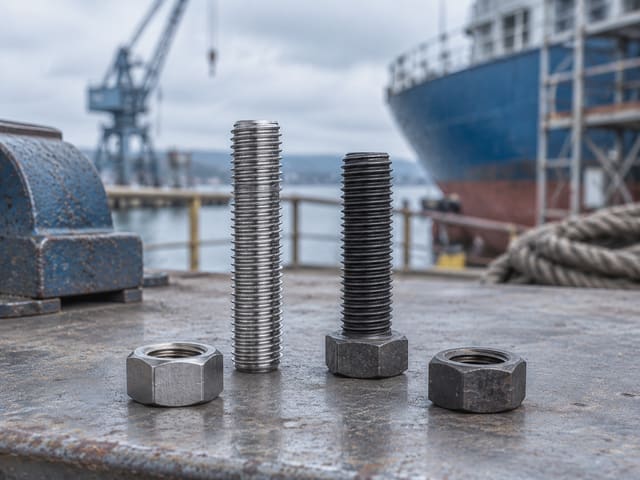
A complete documentation package typically includes 2D drawings, 3D models, technical specifications, annual demand, forecast cycles, target market, and applicable standards, and clearly specifies the drawing version and the person responsible for changes. For projects with special environmental requirements, such as high-pressure flange connections or corrosion-resistant piping, material certificates and performance testing requirements can be confirmed in advance. TakingFull Thread Stud Bolt ASTM A193 B8M Stainless Steel for High Pressure Flange and Corrosion Resistant Pipeline Connectionsas an example, this type of product uses ASTM A193 B8M Class 1 full-thread studs, with specifications covering 1/4–4 in, thread standards including UNC/UNF/8UN, and compliance with ASME B18.31.2 Table 1; the material is 316 stainless steel, suitable for high-pressure flange and corrosion-resistant pipeline connection scenarios. If these parameters can be specified at the inquiry stage, suppliers' quotations and process assessments will be more comparable.
It is recommended to use a structured inquiry checklist that lists product category, material, performance grade, surface treatment, inspection requirements, packaging method, and delivery location item by item, avoiding comparison solely by unit price while ignoring tooling, inspection, packaging, lead time, and logistics costs.
Step 2: Assess the Capabilities and Risks of Fastener OEM Contract Manufacturers
When selecting a fastener manufacturer, first look at process match: whether cold heading, turning, thread rolling, heat treatment, surface treatment, and secondary processing capabilities cover the project requirements. Next, verify the quality system, inspection equipment, process traceability, raw material management, change control, and nonconforming product handling mechanisms. Production capacity, equipment load, management of outsourced key processes, minimum order quantity, tooling ownership, and capacity expansion plans should also be included in the assessment.
Supply continuity and compliance capabilities are equally important, including raw material sources, export documents, packaging markings, and delivery coordination. Through on-site audits, sample reviews, and risk checklists, potential supply risks can be identified. When selecting a hex bolt manufacturer or other specialized suppliers, focus on verifying their actual processes and product experience rather than judging solely by product catalogs. For stainless steel fastener manufacturers, high-strength bolt manufacturers, or hot-dip galvanized bolt suppliers, it should also be confirmed whether their material sources and process records are traceable.
Step 3: Technical Review and Quotation—Align on Cost Boundaries First
The technical review should be conducted jointly by procurement, engineering, quality, and the supplier to identify items in dimensions, tolerances, materials, or process requirements that may affect cost and yield. Quotations should break down cost items such as raw materials, forming, machining, heat treatment, surface treatment, tooling, inspection, packaging, and transportation to facilitate comparison of different options.
When comparing options, evaluate total lifecycle cost rather than only comparing the per-piece price of screws or nuts. For projects such as non-standard fastener machining and custom special-shaped fasteners, development costs, tooling ownership, sample rounds, quotation validity period, and pricing rules for requirement changes must be clarified. Lead time, quality standards, volume-tiered pricing, payment terms, and claim mechanisms should also be included in formal quotation and contract review.
Step 4: Sample Development and Validation—Establish the Threshold for Mass Production
At the sample stage, the purpose should be clarified: engineering sample, process sample, approval sample, or trial production sample, with quantity, lead time, and acceptance responsible persons set for each stage. The validation plan should be developed based on risk, covering dimensions and threads, mechanical properties, material composition, surface treatment, salt spray or other environmental tests, and actual assembly performance. For bolt-and-nut fit, locking performance, and assembly tool compatibility, combined validation should be carried out, simulating vibration, load, or corrosive conditions where necessary.
Root cause analysis should be conducted for sample issues, and inspection reports, deviation approvals, and final sealed sample records should be retained. TakingCross Recessed Countersunk Head Wood Screw DIN 7997 Steel Stainless Steel and Brass Fastener for Furniture and Flush Wood Assemblyas an example, this type of DIN 7997 cross recessed countersunk head wood screw is available in steel, stainless steel, or brass, with specifications covering 2–8 mm; the countersunk head design is suitable for flush mounting in furniture and wood assembly. During sample validation, focus on head type and drive fit, countersink angle, thread forming, and applicable substrate to ensure batch products are consistent with the sealed sample.
Signing sample approval and freezing drawings and inspection standards should be a prerequisite for mass production release, avoiding the use of different versions for samples and batch products.
Step 5: Trial Production and Process Control—Verify Manufacturing Stability
The trial production plan should confirm batch size, equipment, process parameters, personnel, inspection frequency, and exception escalation paths. Establish batch traceability from raw materials to finished products, recording key processes, inspection results, equipment or tooling status, and rework situations. Verify key dimensions and performance through first article inspection and in-process patrol inspection; set clear control points for key or outsourced processes such as heat treatment and coating.
Translate key characteristics of products such as screws and nuts into a control plan, specifying sampling plans, gauges, acceptance rules, and record retention requirements. After trial production, hold a review to decide whether to proceed to mass production based on yield, closure of exceptions, delivery performance, and process capability.
Step 6: Mass Production Delivery and Continuous Improvement
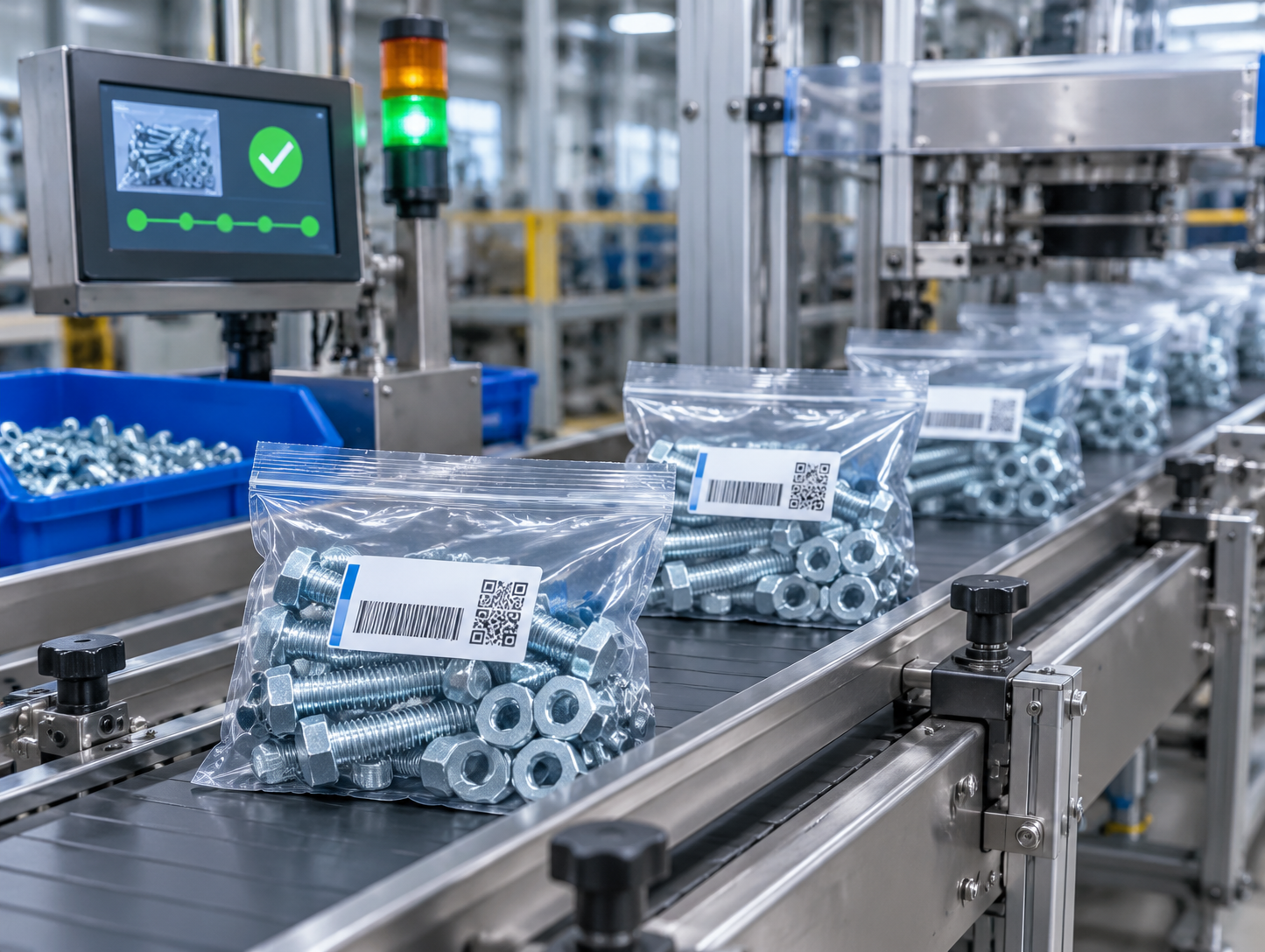
During mass production, coordinate capacity through rolling forecasts, order confirmations, and safety stock to reduce emergency rush orders and delivery fluctuations. Agree on outgoing inspection, batch labels, packaging protection, packing lists, and delivery documents to ensure products still meet usage requirements after transportation and storage. Establish a quality abnormality response mechanism, clarifying containment, root cause analysis, corrective and preventive actions, replenishment or rework time limits, and division of responsibilities.
Regularly review on-time delivery rate, incoming or outgoing nonconformities, complaint closure cycle, cost changes, and inventory status to drive continuous supplier improvement. For projects such as ASTM bolt exports, hot-dip galvanized bolt supply, or stainless steel fastener projects, documents, labels, packaging, and applicable standards should be confirmed in accordance with target market requirements. Fastener export suppliers also need to pay attention to the consistency between destination port customs clearance documents and packaging markings.
Fastener OEM Project Management Checklist
- Before inquiry: Are drawings and versions complete? Are the application environment, estimated usage, delivery location, and acceptance requirements clear?
- Before supplier selection: Have the supplier's process capability, production capacity, quality system, traceability capability, and outsourcing management been verified?
- Before mass production: Have samples been formally approved? Have materials, processes, inspection standards, and change rules been frozen?
- During delivery: Are order forecasting, batch traceability, shipping documents, abnormality response, and replenishment mechanisms clear?
- During review: Are quality, delivery, total cost, and collaboration efficiency evaluated together, rather than only looking at the purchase unit price?
Common Product Categories and Key Project Communication Points
The communication priorities differ significantly among different fastener categories. For hex bolts, flange bolts, and high-strength bolts, focus on grade, mechanical properties, heat treatment, and assembly requirements; for heavy hex nuts, lock nuts, and carbon steel nuts, confirm matching bolts, thread fit, locking function, and surface treatment. For socket head cap screws, self-tapping screws, self-drilling screws, and machine screws, specify head type, drive type, material, tip structure, and applicable substrate; for carriage bolts, expansion bolts, and studs, specify installation method, application substrate, load conditions, and service environment.
When involving custom bolt wholesale, machine screw wholesale, or expansion bolt wholesale, specifications, batch quality, and packaging requirements should still be written into the procurement documents, and product names should not replace technical standards. For segmented roles such as heavy hex nut manufacturers, lock nut suppliers, custom socket head cap screws, self-tapping screw manufacturers, self-drilling screw suppliers, carriage bolt factories, or flange bolt suppliers, it is recommended to require explanations of relevant product experience and inspection capabilities at the inquiry stage.
Summary: Use stage-gate control to turn inquiries into stable mass production
The core of fastener OEM manufacturing is not one-time procurement, but establishing a full-process closed loop of requirement clarification, supplier evaluation, technical review, sample approval, trial production release, and continuous improvement. For buyers, clear specifications and change management can reduce rework; for fastener suppliers, transparent forecasts and consistent acceptance standards help stabilize production scheduling.
Action recommendation: Starting from the next inquiry, use a unified requirements template, and set clear responsible persons and records for sample approval, mass production release, and abnormality closure. Whether for screw, nut, or stud projects, only by clearly writing the release conditions for each stage can fastener OEM manufacturing move from "getting stuck" to replicable stable delivery.