Fastener Procurement Review Standard Process: Seven Gates from Inquiry to Mass Production

Daniel
With experience in fastener manufacturing and export sales, we specialize in bolts, nuts, screws, self-drilling screws, fully threaded rods, and customized fastening solutions for construction, machinery, automotive, and industrial applications.
Why should fastener procurement review be made a standard process?
Many on-site problems do not start with large equipment, but with a seemingly simplescrewornut. Mismatched specifications cause assembly difficulties, improper surface treatment choices lead to corrosion in humid environments, and mismatched performance grades cause failure under high-load conditions—these problems range from rework at best to downtime, repairs, and safety risks at worst. Fasteners have a low unit price, but the cost of failure is often far higher than the procurement price difference.
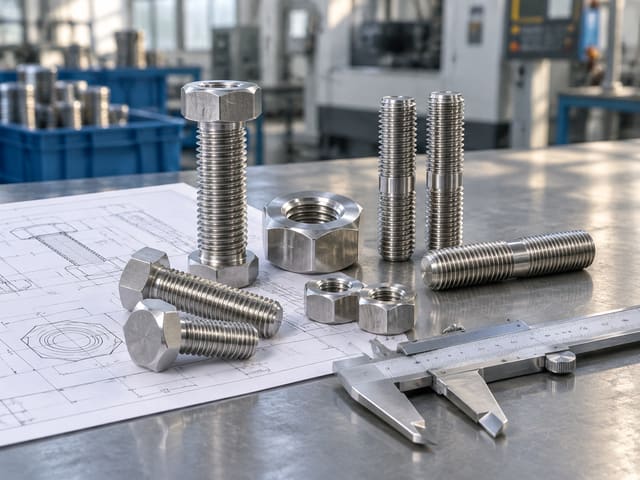
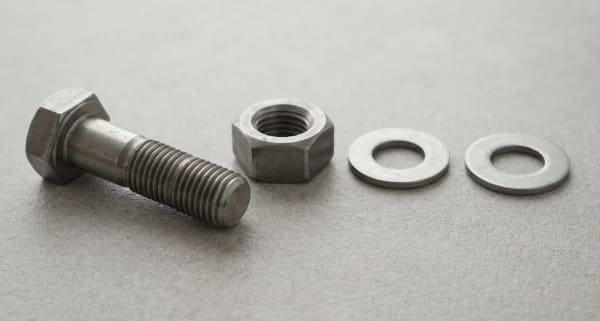
Procurement risk for fasteners is not just about unit price. For various products represented bybolts,studs,hex bolts,flange bolts, their material, dimensions and tolerances, performance grade, surface treatment, and application environment together determine final performance. Under the same specification name, products with different materials and processes may perform completely differently in actual working conditions.

The goal of this article is to establish a stage-gate process from inquiry, samples, and verification to mass production, so that procurement, engineering, quality, and suppliers use the same set of review criteria. It should be noted that existing industry materials include cases on distribution, maintenance, and corrosion protection, but do not provide fastener market statistics that can be directly cited; therefore, this article does not fabricate industry size or performance figures and only discusses processes and methods.
Step 1: Convert the inquiry into reviewable procurement requirements
Incomplete inquiry information is the source of all subsequent disputes. The first step is not to rush to quote, but to convert customer or internal requirements into a reviewable, traceable procurement requirements list.
- Product category: whether it is standardscrews,nuts,hex bolts, orcustom special-shaped fastenersornon-standard fastener machiningparts.
- Drawing or standard: standard number, version, thread specification, length, head type, and key dimensions.
- Material and performance grade: carbon steel, alloy steel, or stainless steel; strength grade or material grade.
- Surface treatment: zinc plating, hot-dip galvanizing, blackening, passivation, or other coating requirements.
- Quantity, delivery time, packaging method, and target market.
A product name alone is far from sufficient; operating condition information must also be provided: load characteristics, vibration conditions, operating temperature, humidity, salt spray or corrosive media, assembly tools, and maintenance cycle. For example, in high-pressure flange and corrosion-resistant pipeline connection scenarios, it is often necessary to specify the material grade, thread specification, and applicable standard. Such requirements are suitable for mapping to specific products, such as fully threadedstudsSupplied in accordance with ASTM A193 B8M Class 1, 1/4–4 in UNC/UNF/8UN, ASME B18.31.2 Table 1, made of 316 stainless steel, suitable for high-pressure flange and corrosion-resistant pipeline connections. Only when such information is written into the inquiry form can the review have a basis.
Clarification questions must be set for requirement gaps, and assumptions, responsible persons, and confirmation times must be recorded. Key specifications that have not been confirmed in writing by the customer must not enter quotation freeze.
Step 2: Technical review—confirm specifications, suitability, and risks
The core of the technical review is to check whether "what the drawing says" is consistent with "what the site requires."
- Check the drawings, standards, and versions, and confirm the inspection methods for threads, length, head type, grade, mating relationships, and key dimensions.
- Evaluate materials and surface treatment according to the application scenario.Stainless steel fastenersThey must be evaluated in combination with the corrosive environment and mating materials; applicability cannot be judged solely by the name "stainless steel"; different grades perform noticeably differently in chloride environments.
- For high-load or safety-related applications, evaluatebolts,studs,nutsthe matching relationships, assembly requirements, and verification plans of the components.
- Identify special category requirements, such asflange bolts,lock nuts,tapping screwsorself-drilling screws, and confirm their functional characteristics and corresponding test standards.
Furniture and woodworking assembly scenarios are another type of technical focus. For example, cross-slot countersunk wood screws are supplied according to DIN 7997, with materials available in steel, stainless steel, or brass (CuZn), and specifications covering 2–8 mm; the countersunk head design is suitable for flush assembly of furniture and wooden parts. The review focus for such products is the fit between head type, slot type, and thread with wood, rather than high-strength loads.
Technical reviews should output clear conclusions: quotable, additional information required, alternative solutions recommended, or temporarily not undertaking the project, along with an explanation of the risks and basis.
Step 3: Supplier Admission and Manufacturing Capability Assessment
Supplier reviews must not substitute keywords or promotional promises for capability verification. Forfastener manufacturersorfastener suppliersthe audit should cover the quality system, equipment and processes, inspection capabilities, traceability mechanisms, production capacity, and delivery records.
Actual manufacturing capability should also be verified based on product type. When procuringhex boltsit should be confirmed that thehex bolt manufacturerhas the corresponding forming, threading, and heat treatment capabilities; when procuringflange boltsit should be confirmed that theflange bolt suppliercan provide inspection evidence matching the specifications; whencarriage boltsare involved, thecarriage bolt factory's head forming and dimensional control capabilities should be verified. Similarly,heavy hex nut manufacturers,carbon steel nut factories,high-strength bolt manufacturers,hot-dip galvanized bolt suppliers,self-tapping screw manufacturersandSelf-drilling screw suppliers, should provide samples, process documents, and inspection reports for their product category.
- Evaluate raw material sources, heat treatment, surface treatment, and outsourcing management, and confirm that key processes are traceable and auditable.
- Forfastener OEM contract manufacturing,fastener export suppliersor cross-border projects, add reviews of intellectual property, export documents, packaging labels, destination compliance, and communication responsiveness.
- Request samples, process documents, inspection reports, and necessary on-site audit records to form a supplier file.
Step 4: Commercial review — compare total cost rather than just quotes
Differences between quotations often come from inconsistent bases. The first step in a commercial review is to standardize the quotation basis: specifications, quantity tiers, mold or tooling costs, packaging, transportation, payment terms, quotation validity, and lead time.
The second step is to evaluate total cost of ownership, including inspection, rework, inventory, transportation, line downtime, and failure risks. A low price does not equal low procurement cost; a cheapscrewwith large batch-to-batch variation may bring inspection and rework expenses several times the price difference.
- Forcustom bolt wholesale,custom socket head cap screw,expansion bolt wholesaleand other projects, calculate development costs, minimum order quantities, and subsequent replenishment conditions separately.
- Formachine screw wholesaleand other standard categories, focus on comparing batch consistency and lead time stability.
- Forexport of inch-series boltsand other cross-border needs, confirm the standard version, documents, labels, packing, and delivery responsibilities in advance to avoid documentation or customs clearance problems after shipment.
It is recommended to establish a commercial review form to record quotation differences, risk items, negotiation conclusions, and approvers, so that pricing decisions are documented and traceable.
Step 5: Samples and verification — move from document compliance to actual applicability
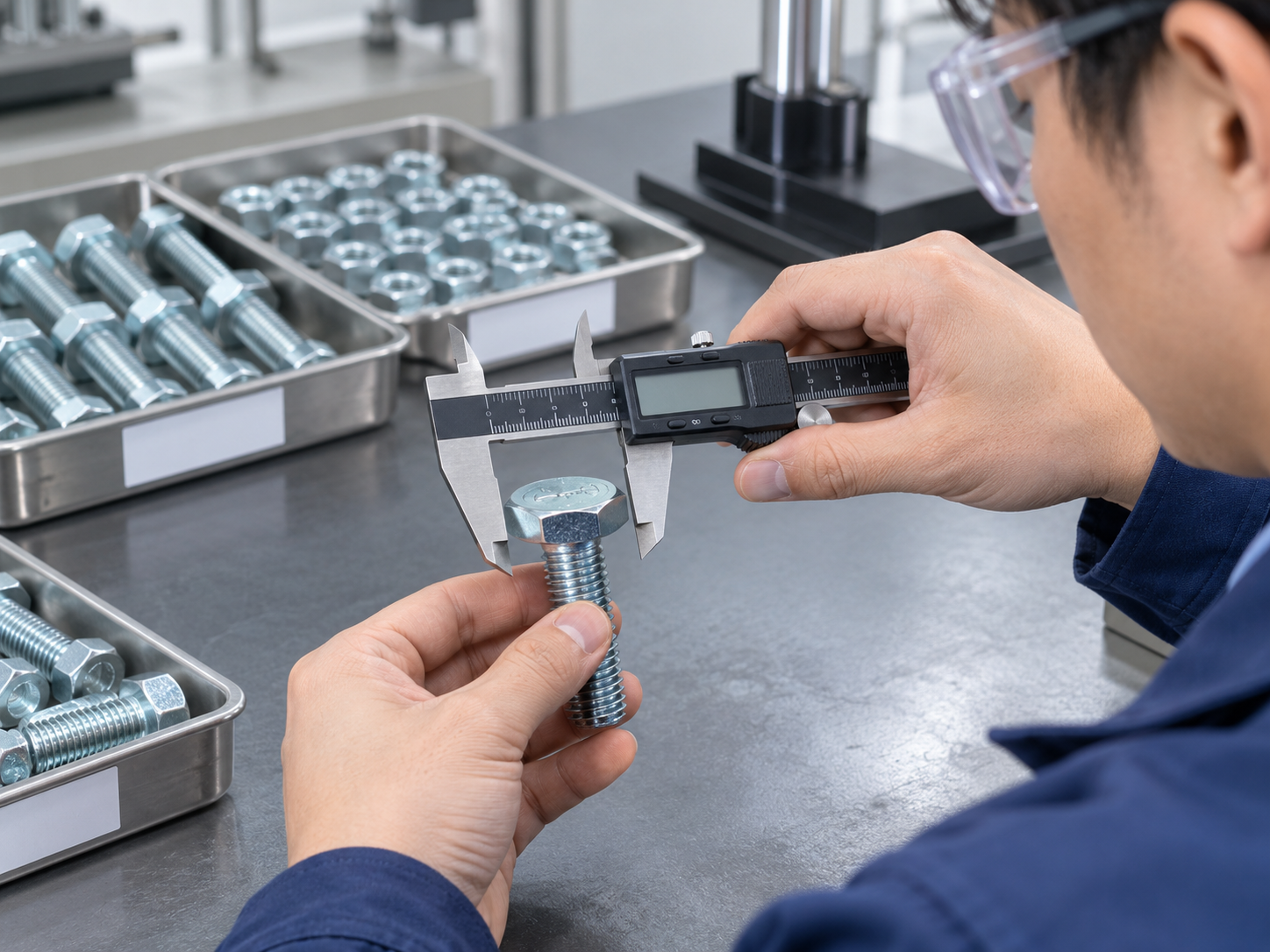
Samples are the first reconciliation between documents and the physical product. A sampling plan should be established, specifying sample quantity, version, test items, acceptance criteria, responsible testing party, and completion deadline.
- Check dimensions, appearance, material or performance certificates, surface treatment, and packaging markings to ensure the samples are consistent with the approved drawings and quoted specifications.
- Arrange assembly tests, load or performance tests, and corrosion-related verification according to application risks; all methods and acceptance criteria should be confirmed before testing.
- Incorporate sample test results and on-site feedback into the review.
Regarding corrosion protection, the industry practice concepts of "cleaning, inspection, and preventive maintenance" can be referenced, but maintenance measures cannot replace product qualification verification. When samples fail, execute issue closure: describe the deviation, analyze the cause, define corrective actions, resubmit samples, and retain version records.
Step 6: Small-batch trial production and mass-production approval
Before trial production, drawings, materials, processes, inspection plans, packaging, and change procedures should be frozen to avoid inconsistency between samples and mass-production conditions.
- Through first-article inspection and small-batch verification, confirm that equipment, process parameters, operator actions, and inspection methods are stable.
- For different product categories, set key characteristic control points according to risk:Carbon steel nut factoryFocus on threads and hardness,Heavy hex nut manufacturerFocus on load-bearing capacity,High-strength bolt manufacturerFocus on consistency of materials and heat treatment.
- Mass-production release must meet the agreed quality, delivery, documentation, and traceability requirements; unresolved major issues should block release.
After approval, establish a mass-production baseline and specify batch identification, inspection records, certificates of conformity, and retention sample requirements.
Step 7: Post-mass-production changes, anomalies, and continuous improvement
Mass production is not the end point. Changes in materials, processes, equipment, subcontractors, inspection methods, or place of origin should all be subject to prior approval, with an assessment of whether resubmission of samples or re-verification is required.
- Establish a feedback mechanism for incoming material anomalies and field failures, recording batch, problem symptoms, scope of impact, temporary measures, and root cause analysis.
- Conduct regular re-evaluations based on on-time delivery rate, batch pass rate, customer complaint closure cycle, and change compliance rate forfastener suppliers.
- For issues such as corrosion, loosening, and assembly difficulties, distinguish among product design, selection, manufacturing, storage and transportation, and installation and maintenance factors, and avoid attributing causes without verification.
- Update improvement results into drawings, inspection specifications, supplier files, and the next round of RFQ templates.
Standardized review gates and responsibilities that can be implemented directly
Condense the above seven steps into five gates, each with a clear lead party and decision output:
- Gate 1: Requirements completeness review.Led by sales or procurement, with engineering confirming specifications and operating conditions.
- Gate 2: Technical and supplier review.Engineering and quality jointly confirm product suitability, manufacturing capability, and risks.
- Gate 3: Quotation and sample approval.Confirmation is completed by procurement, engineering, quality, and the customer according to their authority levels.
- Gate 4: Trial production and mass production release.Quality confirms the verification results, procurement confirms the delivery conditions, and engineering approves the technical baseline.
- Gate 5: Mass production performance review.A cross-functional team updates the supplier rating based on quality, delivery, cost, and issue closure status.
Recommended supporting forms: inquiry requirements form, supplier evaluation form, sample verification form, first article inspection form, mass production release form, and change request form. The forms do not need to be complex, but the fields must be able to support the decisions.
Conclusion: Use an evidence chain to reduce procurement uncertainty
The core of a standardized process is not to add approvals, but to ensure that every stage has clear inputs, responsible persons, decision criteria, and traceable records. Whether procuring standardfasteners,stainless steel fasteners, orcustom fastener machiningparts, decisions should be based on application requirements, supply capability, sample verification, and mass production stability.
It is recommended to select one key category from existing procurement projects to pilot the above review process, and then continuously improve it based on exception data. The value of the process is ultimately reflected in every well-founded release and every traceable improvement.