Five-Step Fastener Procurement Management: From Inquiry to Delivery Review

Daniel
With experience in fastener manufacturing and export sales, we specialize in bolts, nuts, screws, self-drilling screws, fully threaded rods, and customized fastening solutions for construction, machinery, automotive, and industrial applications.
Introduction: One unsuitable screw can bring an entire assembly line to a halt
On the assembly floor, a screw with a dimensional deviation can force workers to repeatedly test-fit it; during equipment operation, a nut made of the wrong material can cause downtime due to corrosion or loosening. Fasteners are low in unit price, yet they sit at the critical position of connection and load-bearing. Small oversights in selection and procurement often translate into rework, line stoppages, maintenance, and even safety costs.
Therefore, fastener procurement management should not stop at comparing unit prices. Whether specifications match, whether materials meet standards, whether quality is stable, whether delivery times are reliable, and whether supply is continuous all need to be incorporated into the same management logic. This article follows five stages—inquiry, supplier evaluation, sample verification, mass-production control, and delivery review—to outline procurement management methods for products such as screws, nuts, bolts, and studs, helping companies turn one-off price comparisons into traceable process management.

Stage 1: Clarify requirements and standardize inquiry materials
The most common problem at the inquiry stage is inconsistent understanding of requirements between buyer and supplier. The first step to reducing deviations is to write the requirements clearly: product type, specifications and dimensions, thread type, strength grade, material, surface treatment, applicable standard, procurement quantity, and application environment should all be listed item by item.
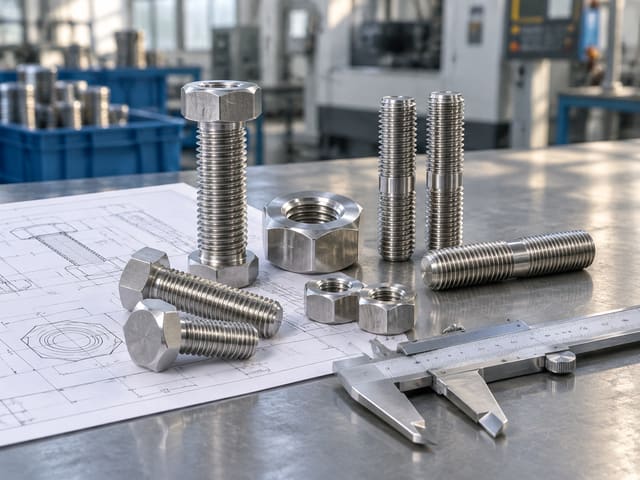
For bolts, nuts, studs, and mating parts, the assembly relationship must also be confirmed. For example, when hex bolts, flange bolts, or stainless steel fasteners are involved, key performance requirements such as corrosion resistance grade, torque conditions, or mating part material should be specified. For high-pressure flange or corrosive pipeline connection scenarios, products such as ASTM A193 B8M Class 1 fully threaded studs may be referenced: specifications cover 1/4–4 in UNC/UNF/8UN threads, manufactured to ASME B18.31.2 Table 1, made of 316 stainless steel, suitable for high-pressure flange and corrosion-resistant pipeline connections. Only when such technical requirements are written into the inquiry materials can suppliers provide comparable quotations.
Providing drawings, samples, or technical specifications, and marking tolerances, inspection requirements, packaging methods, and target delivery dates, can significantly reduce quotation misunderstandings. During inquiry, it is recommended to classify by standard parts, custom parts, or non-standard parts; for custom socket head cap screws, custom special-shaped fasteners, and non-standard fastener machining projects, process feasibility should be confirmed with suppliers as early as possible to avoid discovering after quotation that production is impossible.
In addition, the quotation basis must be unified: whether tax is included, who bears transportation costs, minimum order quantity, tooling costs, and quotation validity period should all be specified in the inquiry sheet. For countersunk wood screws commonly used in furniture or woodworking assembly, such as DIN 7997 cross-recessed countersunk head wood screws, with specifications covering 2–8 mm and optional steel, stainless steel, or brass materials, suitable for applications requiring flush countersunk installation, the material, specifications, and surface treatment requirements should likewise be noted during inquiry.
Stage 2: Evaluate fastener supplier capabilities and risks
When selecting a fastener manufacturer or fastener supplier, one should not look only at the quotation sheet. Production equipment, testing capabilities, quality systems, production capacity, and delivery records determine whether a supplier can consistently deliver products that meet requirements. During evaluation, suppliers should be asked to provide equipment lists, inspection items, system certificates, and past delivery cases.
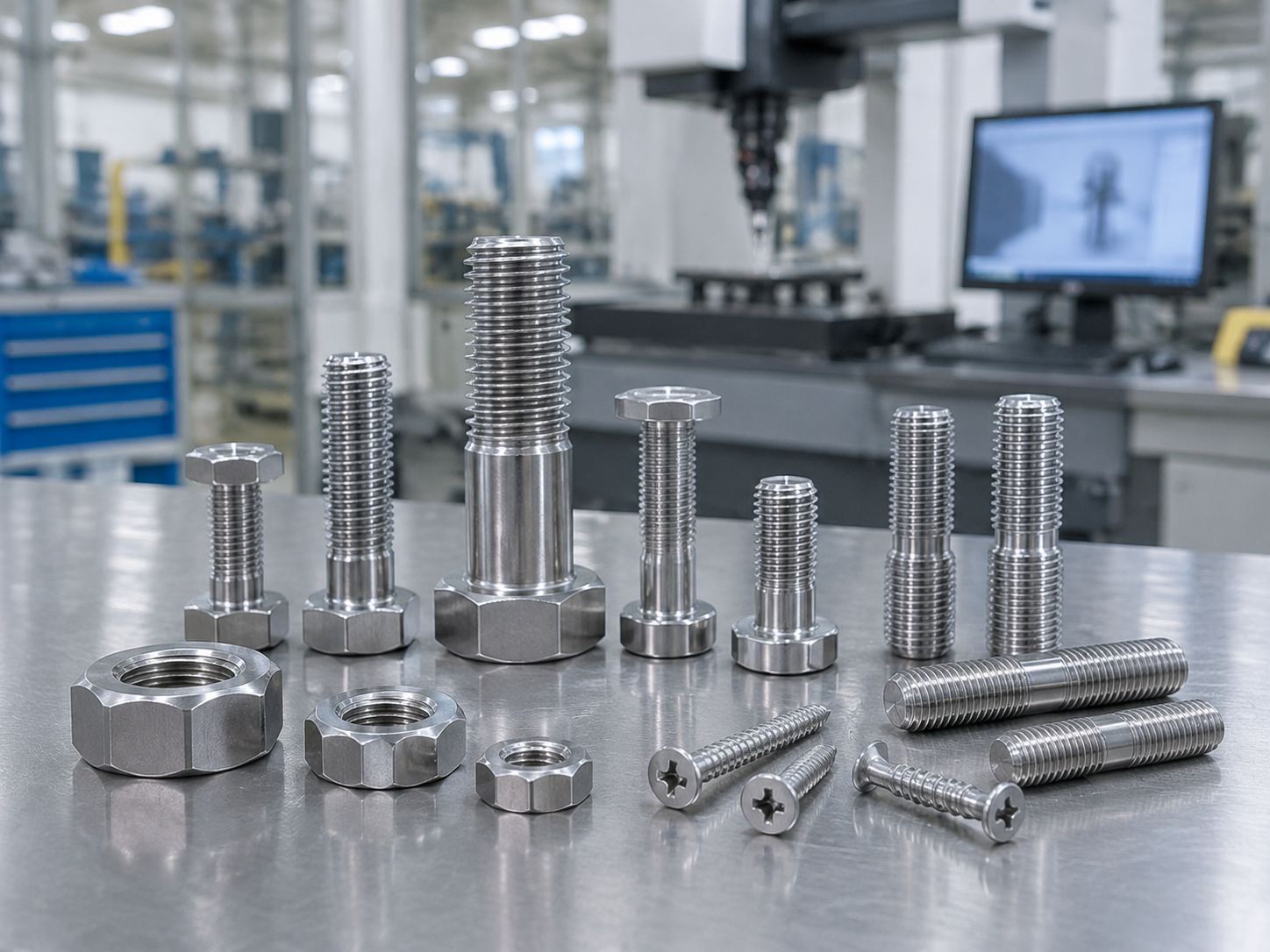
Different product categories require different supply capabilities. When evaluating hex bolt manufacturers, flange bolt suppliers, lock nut suppliers, or heavy hex nut manufacturers, their relevant process and inspection experience should be verified, such as thread machining precision, heat treatment control, and mechanical property testing capabilities. For specialized categories such as self-tapping screw manufacturers, self-drilling screw suppliers, and carriage bolt factories, it is necessary to confirm whether material selection, forming, heat treatment, and surface treatment capabilities cover the required specifications.
If carbon steel nut factories, hot-dip galvanized bolt suppliers, or stainless steel fastener manufacturers are involved, focus on verifying material certificates, coating requirements, and batch traceability capabilities. Export procurement also requires confirming packaging, labeling, documentation, and destination requirements; for US-standard bolt export and fastener export supplier projects, applicable standards and documentation responsibilities should be agreed in advance to avoid additional costs at the port of arrival due to non-compliant documents.
For risk control, supplier audits, sample records, quality agreements, and backup supply plans can reduce the risks of supply interruption and batch quality issues. For critical connecting parts, it is recommended to retain at least one qualified backup source to prevent capacity fluctuations at a single supplier from affecting the entire assembly line.
Stage 3: Sample confirmation and technical verification
Sample confirmation is the last technical checkpoint before mass production. First, confirm that the sample is consistent with the drawings, quoted specifications, and applicable standards, then carry out inspections for dimensions, threads, appearance, hardness, mechanical properties, or coatings. Inspection results should be documented rather than released based on visual inspection alone.
Where conditions permit, assembly fit, fastening effectiveness, and corrosion resistance should be verified under actual operating conditions. For critical connecting parts, installation tools, torque requirements, and whether mating nuts match should also be evaluated. For products provided by high-strength bolt manufacturers, strength grade, heat treatment process, and inspection documents should be confirmed; for expansion bolt wholesale projects, attention should be paid to whether the base material type and installation conditions match, to avoid selection that does not fit the actual wall or substrate.
Sample management is equally important: sample numbers, inspection results, deviation handling, and approval status should all be kept on file, and materials or processes must not be changed arbitrarily without written approval. For custom bolt wholesale and fastener OEM projects, mold ownership, drawing versions, sample acceptance standards, and subsequent change procedures should also be confirmed to prevent the situation during mass production where "samples pass but batches deviate."
Stage 4: Lock down quality, cost, and delivery conditions before mass production
After samples pass, preparations for mass production begin. At this point, a procurement or quality agreement should be signed, specifying product specifications, acceptance standards, batch sampling methods, abnormal response times, returns and exchanges, and division of responsibilities. The more specific the agreement, the fewer disputes there will be later.
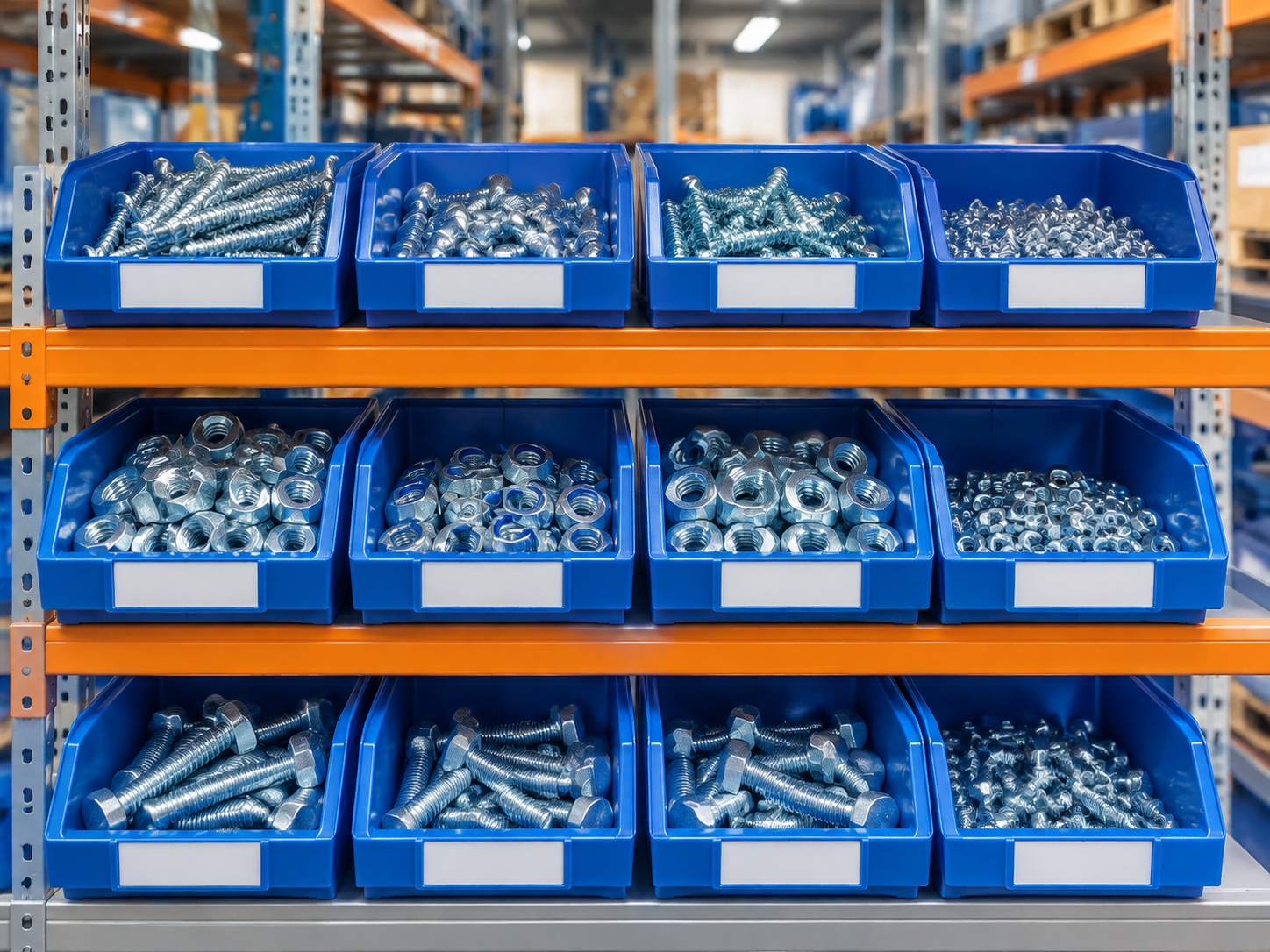
Delivery management needs to be translated into scheduling: confirm mass production schedules, raw material preparation, production cycles, safety stock, and phased delivery plans to avoid order commitments being disconnected from actual capacity. For products such as screws, nuts, and bolts, packaging, labeling, and batch traceability requirements should also be standardized to ensure identification and traceability in warehousing, assembly, and after-sales processes.
Cost management should look at total procurement cost, not just unit price. For bulk purchases such as machine screw wholesale and expansion bolt wholesale, transportation, inspection, inventory, and defective product handling costs should all be included in the comparison. At the mass production launch stage, it is recommended to set up first-article confirmation and key process inspections; any change in materials, equipment, processes, or outsourcing should first be assessed for impact and approved before implementation.
Stage 5: Batch acceptance, delivery review, and continuous improvement
Incoming goods acceptance is the closing step of the procurement process. Quantities, packaging, labels, material certificates, and inspection reports should be checked, and dimensions, appearance, and performance sampled and inspected according to agreed standards. If thread nonconformance, rust, abnormal coatings, or mixed materials are found, the batch should be isolated promptly, the problem recorded, and supplier corrective actions initiated to prevent problematic products from entering the assembly line.
Delivery reviews should produce quantifiable tracking indicators: on-time delivery rate, incoming material qualification rate, abnormal response time, and rework losses, with supplier performance evaluated regularly. At the same time, combined with on-site installation and usage feedback, selection, surface treatment, storage, and maintenance requirements should be reviewed to reduce corrosion, loosening, and assembly difficulties. For consistently well-performing suppliers, annual improvement plans can be established; for critical products, qualified backup sources should be retained to enhance supply chain resilience.
Conclusion: Turn procurement from a one-time price comparison into traceable process management
The five stages connect requirements, supplier selection, verification, mass production, and review, helping companies manage quality, cost, delivery, and supply risks simultaneously. From ordinary screws and nuts to non-standard fastener machining, unified technical documentation and acceptance standards are the foundation for stable batch supply.
When selecting suppliers, decisions should be based on verifiable capabilities and sustained performance, not on whether a single quotation is high or low. It should be noted that the available materials do not provide verifiable industry statistics, so this article does not cite market size or procurement benefit figures; companies should establish a fastener procurement management process suited to their own order structure and quality requirements.