Stainless Steel or Carbon Steel? A Guide to Corrosion-Resistant Fastener Selection and Procurement

Daniel
With experience in fastener manufacturing and export sales, we specialize in bolts, nuts, screws, self-drilling screws, fully threaded rods, and customized fastening solutions for construction, machinery, automotive, and industrial applications.
Introduction: It looks like just replacing a screw, so why does it end up as downtime maintenance?
On dock trestles, in outdoor distribution boxes, or in damp workshops, what is most easily overlooked is often not large equipment, but individualscrewsandnuts. During maintenance, threads are found rusted solid and nuts are stuck and cannot be turned, so disassembly is forced to stop and the schedule drags on and on; after barely removing them, rust must still be cleaned, holes repaired, and even surrounding parts damaged as a knock-on effect must be replaced. Maintenance that originally took a few minutes ultimately turns into downtime maintenance.
Many procurement staff have an intuitive judgment when selecting models:stainless steel is definitely more corrosion-resistant than carbon steel, so they place orders directly based on the material name. But this judgment ignores a series of factors such as medium composition, structural design, surface treatment, and assembly conditions. For the same "stainless steel," different grades may perform vastly differently in chlorine-containing environments; for the same carbon steel, a suitable plating or coating solution can also serve stably for many years under certain operating conditions.
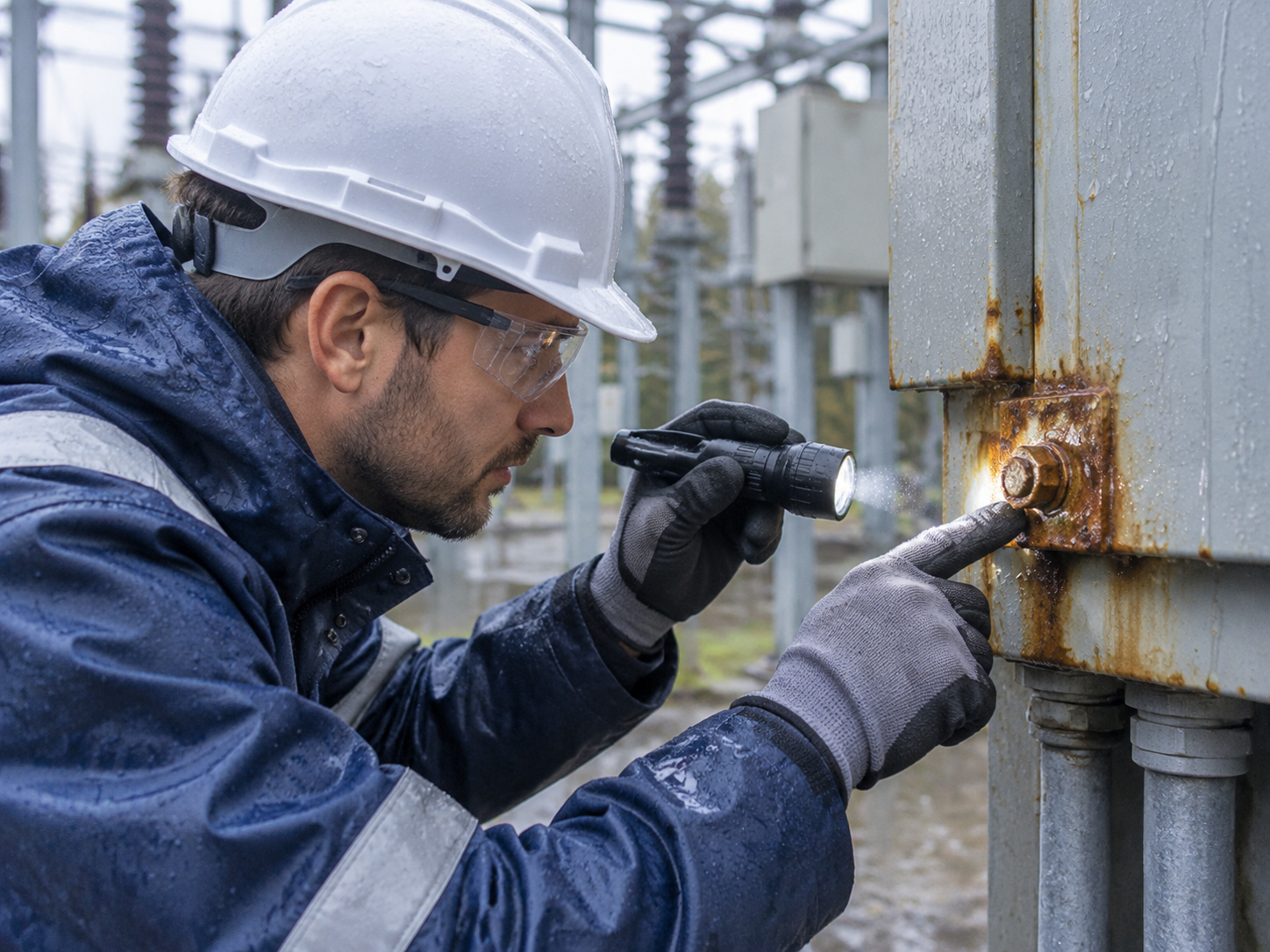
The goal of this article is not to rank materials, but to break down the material selection logic according to actual operating conditions, helping procurement and engineering personnel write requirements clearly and think through risks in advance, thereby reducing selection mismatches, delivery delays, and later maintenance costs.
First clarify the concept: corrosion resistance of stainless steel does not mean it never rusts
Stainless steel is "stainless" because a dense passive film can form on the surface, isolating the substrate from the corrosive medium. But this film is not indestructible: chloride ions (such as salt spray, seawater, and certain cleaning agents), acidic and alkaline environments, relatively high temperatures, surface scratches, and oil contamination all weaken the stability of the passive film. Once the local passive film is destroyed and cannot self-repair, pitting corrosion, crevice corrosion, rust spots, and even stress corrosion cracking under the combined action of tensile stress and specific media may occur.
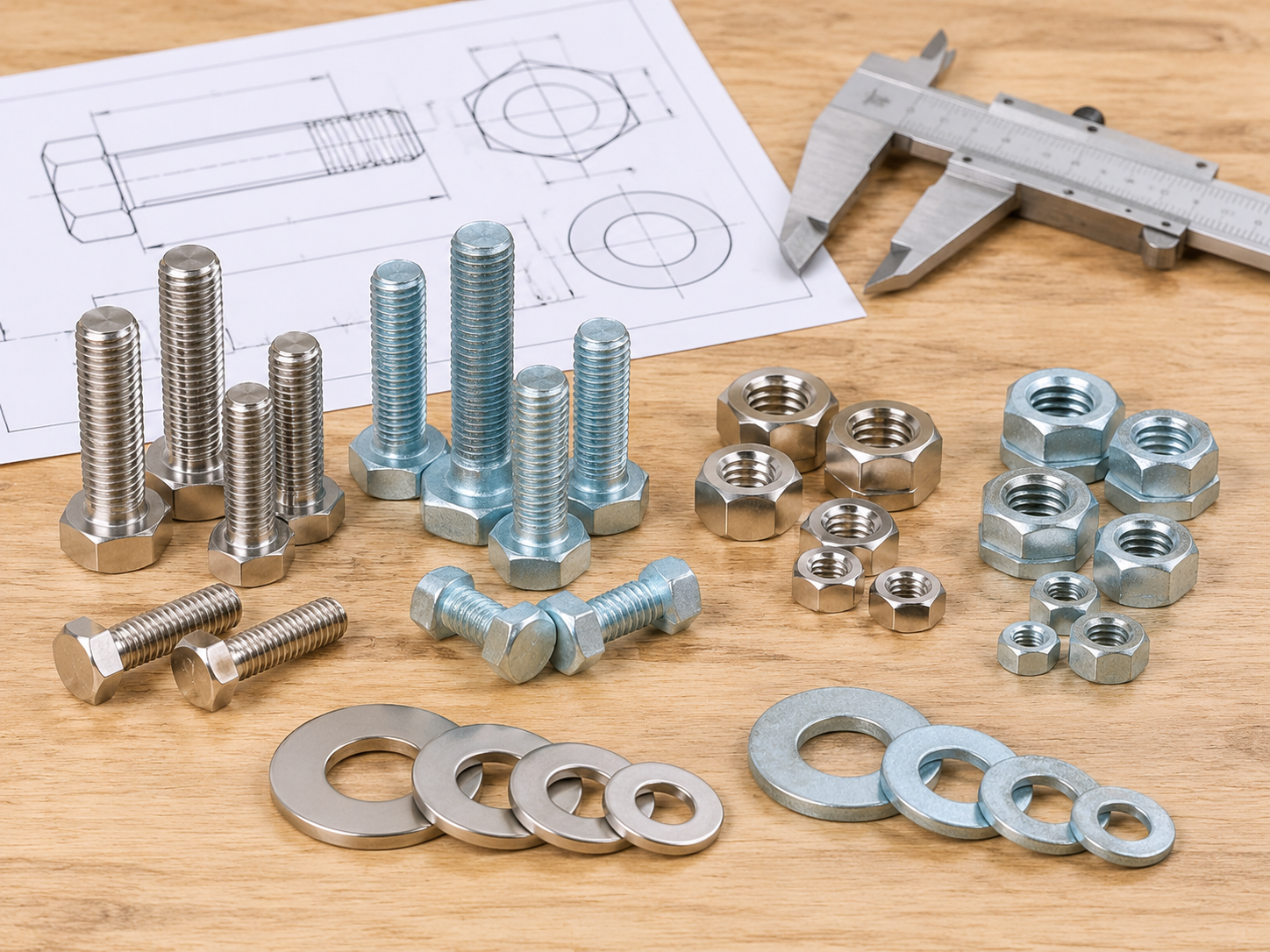
Therefore, when discussing corrosion resistance, specific grades must be distinguished. Common stainless steels include different series such as austenitic, martensitic, and ferritic, with different corrosion resistance, strength, and workability; carbon steel usually obtains protection through electrogalvanizing, hot-dip galvanizing, Dacromet, or coatings. Drawing conclusions based only on the two names "stainless steel" or "carbon steel" makes it easy to fall into pitfalls in procurement.
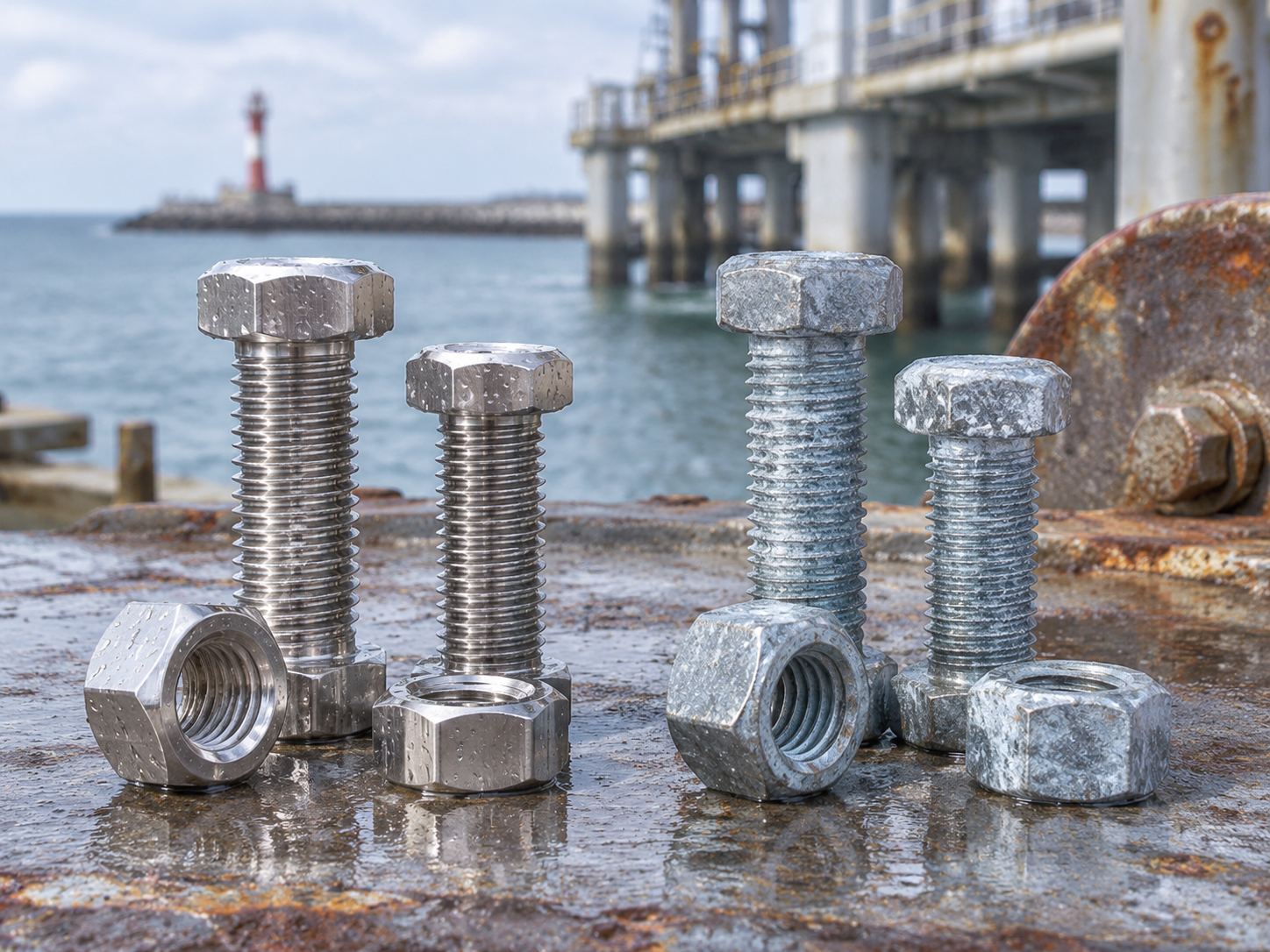
Conversely, carbon steel is not at a disadvantage in all scenarios. If coating thickness, adhesion, and process quality meet standards, combined with reasonable drainage and ventilation design, galvanized carbon steelfastenerscan also meet usage requirements in general outdoor or industrial environments, and at a more advantageous cost. The key is not whether the material is "high" or "low," but whether the solution matches the operating conditions.
Material selection cannot rely only on material grade: six types of operating condition information must be clarified first
Before asking afastener manufacturerfor a quote, it is recommended to first sort out the following six types of information clearly, as this information directly determines the choice of material and protection solution.
- Service environment: Indoor, outdoor, coastal, marine, chemical, or food processing environments have very different corrosion pressures and need to be evaluated separately.
- Corrosive media: Confirm whether salt spray, chloride ions, cleaning agents, acid/alkali liquids, or industrial pollutants are present; this is the core basis for judging whether a stainless steel grade is suitable.
- Temperature and humidity: Consider temperature changes, long-term dampness, condensation, and the frequency of alternating wet and dry conditions; these factors accelerate the corrosion process.
- Structure and drainage: Pay attention to crevices, liquid accumulation locations, contact between dissimilar metals, and hard-to-clean dead corners; these locations are often the starting points of corrosion.
- Load and reliability: Check strength grade, preload, vibration, fatigue requirements, and consequences of failure; corrosion resistance cannot replace strength verification.
- Maintenance and life cycle: Compare procurement cost, inspection intervals, disassembly and assembly difficulty, and replacement cost, rather than looking only at unit price.
How to choose between stainless steel and carbon steel: compare by application scenario, not by simple ranking
Once the operating condition information is organized, you can compare scenario by scenario instead of vaguely asking "which one is more corrosion-resistant."
Mild indoor environment
In dry indoor scenarios with no corrosive media, both carbon steel with electroplated protection and stainless steel solutions can be considered. At this point, cost, strength requirements, and maintenance frequency should be compared comprehensively. For thin-sheet connections such as enclosures and panels,self-tapping screw manufacturersthe self-tapping products they offer are often more efficient, for example DIN 7972 slotted countersunk head self-tapping screws (steel, ST2.2–ST6.3, covering multiple specifications and lengths); the countersunk structure enables flush mounting and is suitable for general assembly. DIN 7973 slotted raised countersunk head self-tapping screws, on the other hand, have a raised head on top of the countersunk base, combining countersunk assembly with certain decorative and positioning needs, and are suitable for applications requiring a raised countersunk fit.
Outdoor or humid environments
For outdoor exposure, long-term humidity, or alternating wet and dry locations, a comprehensive assessment is needed that considers the degree of exposure, surface treatment quality, and drainage design. For coated carbon steel, focus on coating thickness and adhesion; for stainless steel, select the correct grade and avoid structures where liquid can accumulate.
Coastal and salt-containing environments
Coastal and salt-containing environments are the "high-pressure zone" of material selection. Here, the term "stainless steel" cannot be used generically; instead, verify whether the specific grade is suitable for chloride environments, while also paying attention to additional risks from crevices, sediment accumulation, and contact between dissimilar metals. When necessary, considerhot-dip galvanized bolt suppliersthe heavy-duty anti-corrosion solutions they provide for some structural parts, or choose stainless steel grades with better resistance to chloride attack.
High-load connections
For connections bearing larger loads, first meet the design-required strength grade, connection form, and preload requirements, then screen the available corrosion resistance and protection methods among materials that meet the strength requirements. For high-strength connections, contacthigh-strength bolt manufacturers, clarify the performance grade and acceptance standards, and then discuss surface treatment.
Reminder: Specific corrosion resistance depends on grade, manufacturing and surface condition, installation, and maintenance. When necessary, confirm through standards, testing, or engineering evaluation; do not substitute a single promotional claim for verification.
Easily overlooked failure risks: beyond corrosion, there are galling and galvanic corrosion
Many buyers focus entirely on "whether it rusts" while overlooking other failure modes in the assembly process.
- Galling and cold welding: During assembly of stainless steel screws and nuts, the thread contact surfaces are prone to galling or even cold welding, causing tightening difficulties and thread damage during disassembly. The assembly process, tightening speed, and lubrication scheme should match the design requirements.
- Galvanic corrosion: When stainless steel contacts different metals such as carbon steel or aluminum and is in a conductive humid environment, the more active metal will corrode faster. The risk of galvanic corrosion needs to be assessed, and measures such as insulating washers and isolation coatings should be taken.
- Improper assembly and cleaning: Over-tightening, mismatched tools, surface contamination (such as attached iron filings), and improper cleaning can all affect connection reliability or induce localized corrosion.
In daily maintenance, it is recommended to clean regularly and check for signs of rust and tightening status. When abnormalities are found, first assess the cause—whether it is a media issue, structural liquid accumulation, or an assembly process issue—rather than simply "switching to another material" to resolve it.
Procurement selection checklist: write requirements into inquiries and acceptance requirements
The material selection logic must ultimately be reflected in the inquiry sheet and acceptance standards; otherwise, even the best judgment cannot be executed. It is recommended to specify the following in the procurement documents:
- Specifybolts,nuts,studsand screws' specifications, threads, dimensions, tolerances, material grades, and property classes.
- State the surface treatment method, applicable environment, technical standards, batch traceability requirements, and necessary inspection or certification documents.
- Forhex bolts,flange boltsand similar products, verify the head type, flange structure, matching nuts, and actual assembly space.
- Confirm with the application requirements whether corrosion resistance, strength, hardness, salt spray, or other verification is needed; do not equate a single test result with an actual service-life guarantee.
- Provide complete operating conditions and drawings to thefastener supplierto reduce mismatches caused by purchasing based only on keywords or low price.
For non-standard or special structural requirements, drawing review is especially critical. Whencustom socket head cap screws,custom special-shaped fastenersornon-standard fastener machiningare involved, confirm the material, tolerances, surface treatment, and acceptance method in advance, and place mass orders only after sample verification.
Supplier evaluation: shifting from price comparison to traceable delivery capability
Once the material plan is determined, supplier capability becomes the key factor determining delivery quality. During evaluation, it is recommended to focus on material sources, grade identification, production and inspection processes, quality records, and batch traceability capability, and to confirm whether the supplier can provide recommendations based on operating conditions for carbon steel protection, stainless steel material selection, and dissimilar metal connections, while clearly defining the applicable boundaries of those recommendations.
According to actual needs, you can contacthex bolt manufacturers,flange bolt suppliersorStainless steel fastener manufacturer; for non-standard requirements, focus on confirming the drawing review, sample verification, and change management processes. The procurement scope can also naturally extend depending on the degree of project involvement, for examplecarriage bolt factory,ASTM standard bolt exports,expansion bolt wholesale,heavy hex nut manufacturerandlock nut supplierand other subcategories.
If you needself-tapping screw manufacturer,self-drilling screw supplier,machine screw wholesaleand other conventional categories, you should likewise prioritize providing drawings, materials, and acceptance requirements. When involvingfastener OEM contract manufacturing,fastener export supplier,hot-dip galvanized bolt supplier,carbon steel nut factoryorcustom bolt wholesale, clearly specify the applicable standards, target market requirements, and delivery documents to avoid discovering non-compliance only after arrival.
Conclusion: There is no absolutely more corrosion-resistant material—only solutions better suited to the operating conditions.
Returning to the question at the outset: stainless steel is not superior to carbon steel in every environment. The material grade, surface protection, structural design, assembly process, and maintenance approach jointly determine actual performance. Using "stainless steel is always more corrosion-resistant" as the basis for selection can instead easily plant hidden risks in chlorine-containing environments, crevice structures, or high-load connections.
The recommended procurement decision sequence is: first define the operating environment and the consequences of failure, then verify strength and connection requirements, and finally compare materials, protection solutions, life-cycle costs, and supply capability. For high-risk or complex environments, engineering evaluation, sample verification, or small-batch trials should be conducted, and the verification conclusions should be incorporated into the procurement specifications. In this way,screwsandnutswill not become the starting point of the next downtime repair.