Stainless Steel or Carbon Steel? Fastener Selection Depends on Environment, Material, and Operating Conditions

Daniel
With experience in fastener manufacturing and export sales, we specialize in bolts, nuts, screws, self-drilling screws, fully threaded rods, and customized fastening solutions for construction, machinery, automotive, and industrial applications.
Introduction: Choosing the wrong material often starts with a single screw
On equipment maintenance sites, ship decks, or outdoor steel structure projects, what is most easily overlooked is often not the main equipment, but a tinyscrew. When anuthas rusted solid, abolthas seized and jammed, forcing cutting or drilling during disassembly, and even delaying the maintenance window and affecting equipment operation, the root cause of such problems is often already planted at the selection stage.
Procurement and engineering personnel often face a dilemma: worried that carbon steel is not corrosion-resistant, they switch to stainless steel; only to find that stainless steelfastenersalso suffer pitting corrosion and crevice corrosion in certain environments, and thread seizing or even fracture failure can occur. Costs go up, but the problem is not truly solved.
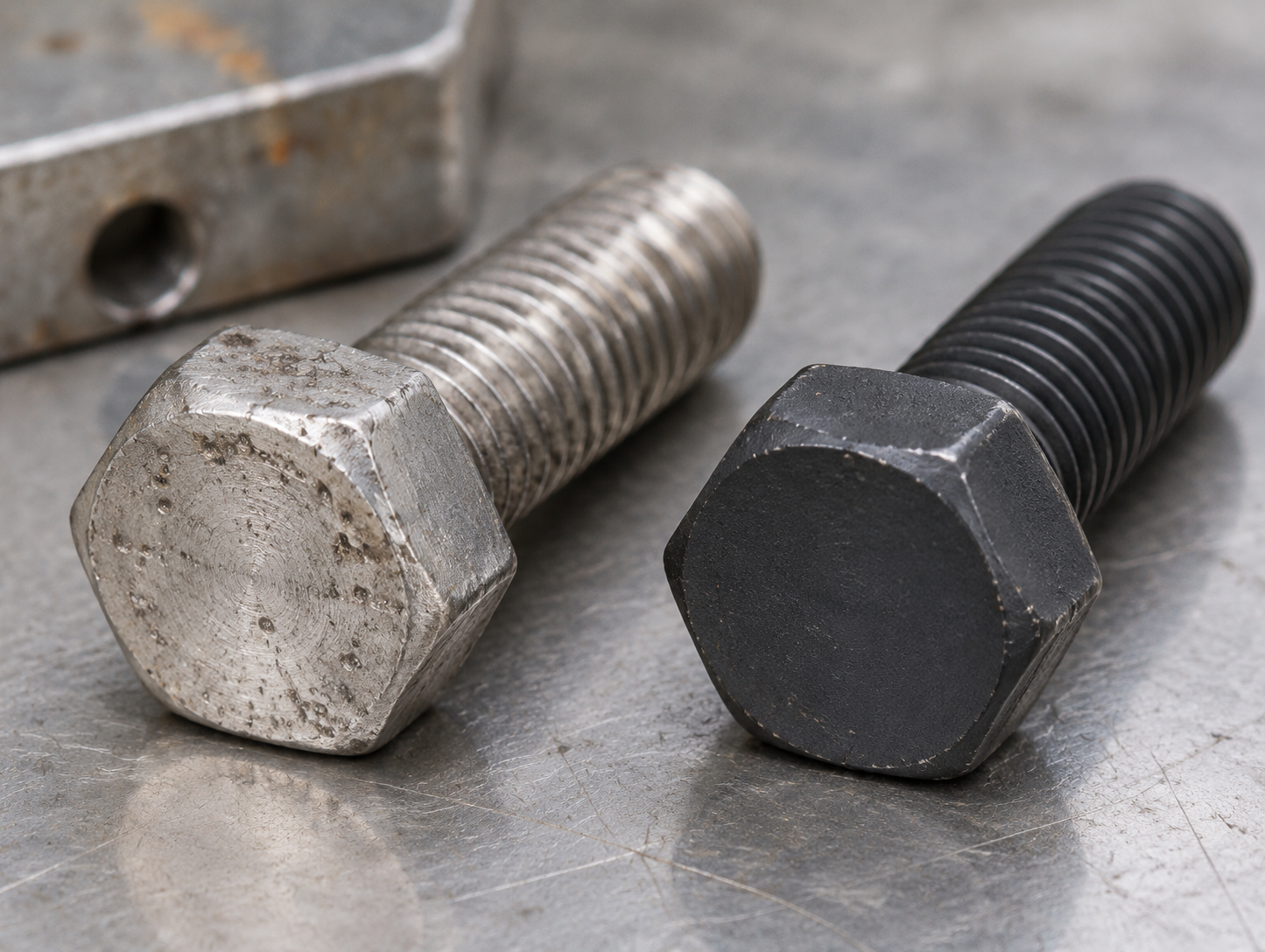
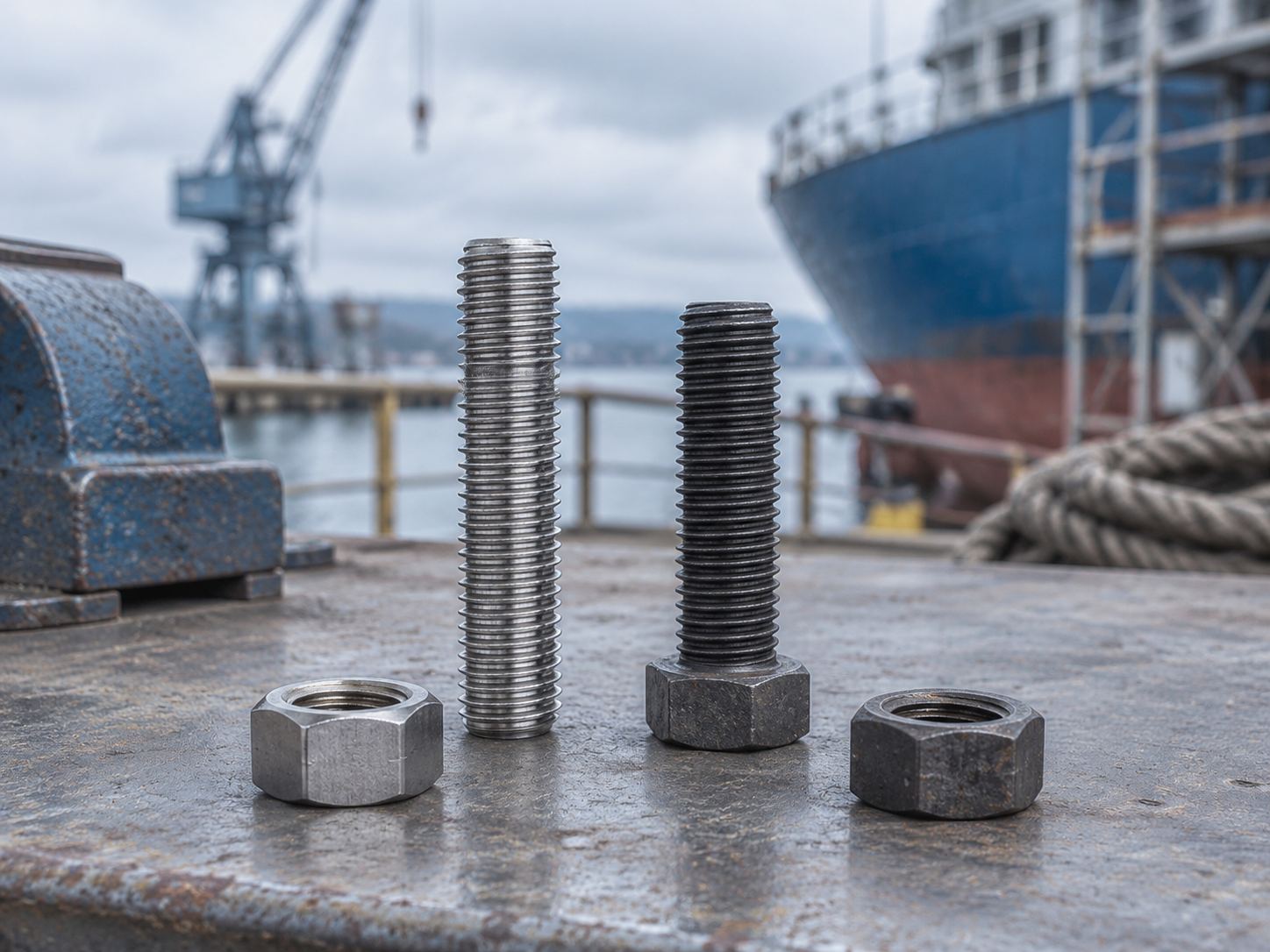
The core point is clear:stainless steel does not mean more corrosion-resistant in every environment. Fastener selection must consider three prerequisites at the same time: the service environment, the material condition, and the connection working conditions, rather than simply concluding that "stainless steel is better than carbon steel."
Prerequisite 1: Identify the corrosive environment first, rather than just looking at "indoor or outdoor"
Many selection discussions stop at the rough judgment of "carbon steel indoors, stainless steel outdoors," but the actual corrosion risk is far more complex than this division. Atmospheric environments, damp standing water, marine salt spray, chlorine-containing media, acid and alkali chemicals, and high-temperature conditions all have completely different corrosion mechanisms on materials. Salt deposition, humidity cycling, industrial pollutants, and liquid-trapping dead corners on structural components all significantly raise the corrosion risk.
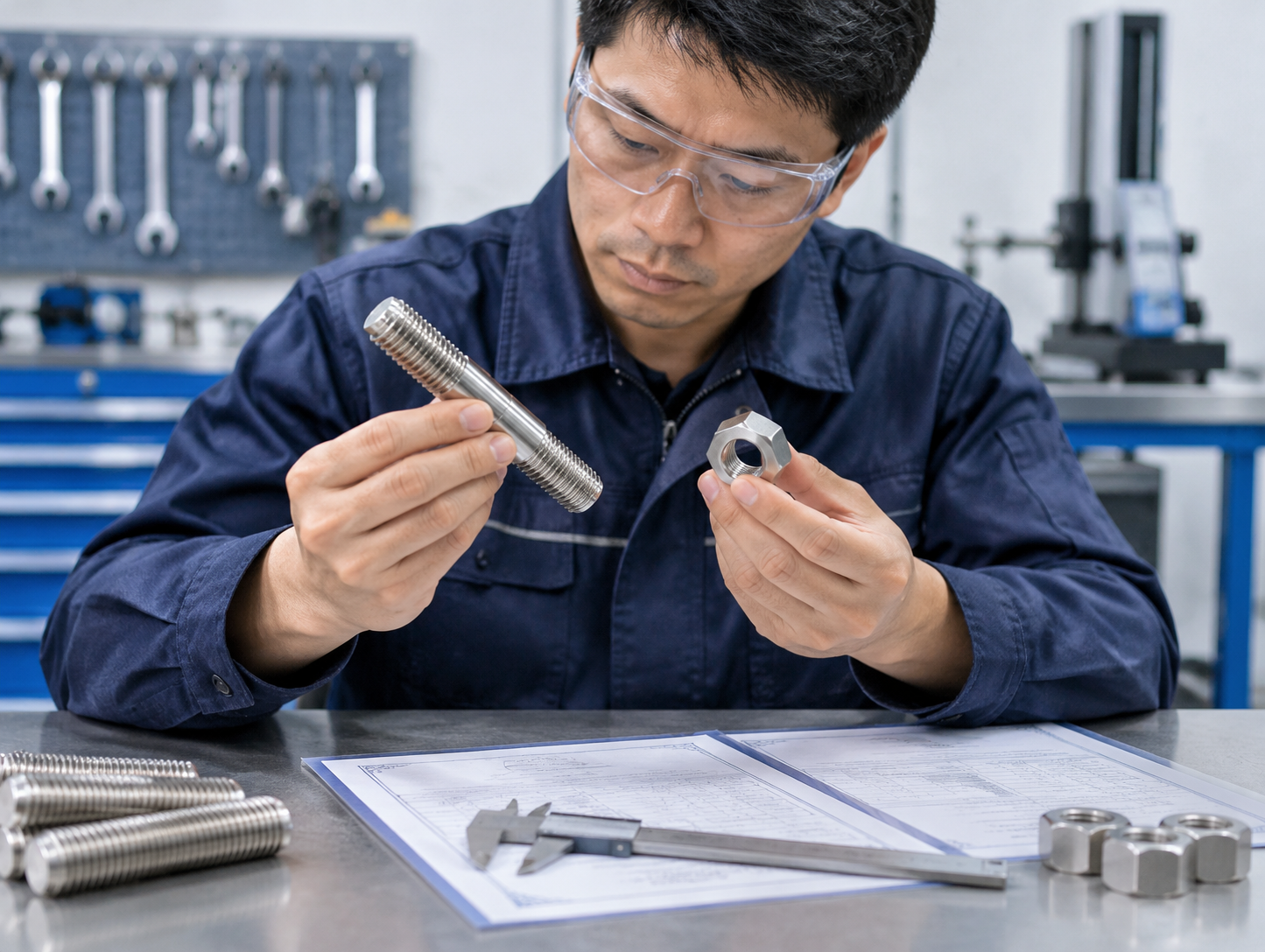
The corrosion resistance of stainless steel depends on how well the specific grade matches the environment. In chlorine-containing environments, ordinary austenitic stainless steel may suffer pitting or crevice corrosion, so it cannot be broadly assumed that "stainless steel is suitable." For example, in coastal or high-salt-spray applications, grades with higher alloy content are often required, or structural design should be used to avoid salt and liquid accumulation.
Conversely, carbon steel is not necessarily unusable in corrosive environments. Appropriate electroplating, hot-dip galvanizing, or coating systems, combined with regular maintenance, can meet the needs of quite a few specific applications. The key is whether the protective system matches the corrosion intensity of the environment.
Before selection, the following information should be confirmed as far as possible: medium composition and concentration, temperature and humidity range, degree of salt spray exposure, cleaning method and frequency, whether the installation location is prone to water accumulation, and expected service life. This information determines the material direction far better than "indoor or outdoor."
Prerequisite 2: Clarify the material grade, surface treatment, and manufacturing quality
When comparing stainless steel grades, do not just look at labels such as "304" or "stainless steel." Material certificates, chemical composition, and applicable standards should be verified, and evaluation should be based on actual corrosion conditions. Even among austenitic stainless steels, different grades perform noticeably differently in chlorine-containing environments; and for products of unknown origin with substandard composition, performance is hard to guarantee even if a grade is marked.
For carbon steel fasteners, the protective system is the core. The choice of electroplating, hot-dip galvanizing, or other coatings needs to be judged comprehensively based on coating thickness, coverage integrity, and the service environment. Coatings that are too thin or insufficiently covered at the thread are often the starting point of early corrosion.
Manufacturing and handling processes also affect corrosion performance. Residual iron chips from machining, surface scratches, improper heat treatment, or contamination during storage and transport can all trigger pitting corrosion in stainless steel. Therefore, procurement should requirefastener manufacturersorfastener suppliersto provide traceable information on material, dimensions, tolerances, and surface treatment, and avoid judging quality by appearance alone.
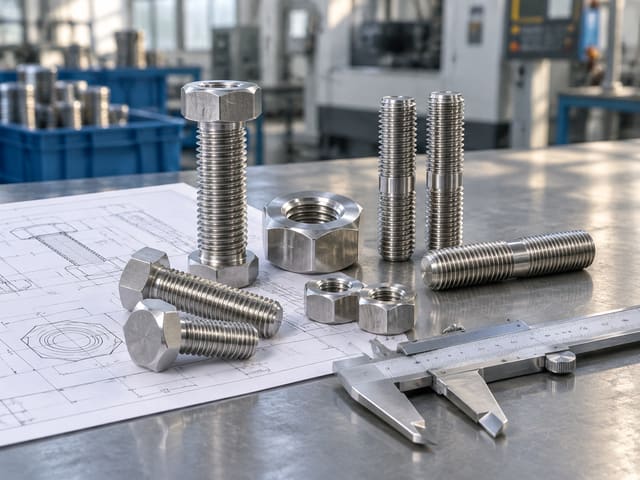
Taking pipeline and high-pressure flange connections as an example,Full Thread Stud Bolt ASTM A193 B8M Stainless Steel for High Pressure Flange and Corrosion Resistant Pipeline Connectionsuses ASTM A193 B8M Class 1 full-thread studs, with specifications covering 1/4–4 in UNC/UNF/8UN threads, conforming to ASME B18.31.2 Table 1, and made of 316 stainless steel. This type ofStudSuitable for high-pressure flange and corrosion-resistant pipeline connection scenarios, but its applicability should still be evaluated in combination with the specific medium and chloride ion content, rather than assuming it is universally suitable just because it is "316".
Similar logic also applies in furniture and timber structure assembly.Cross Recessed Countersunk Head Wood Screw DIN 7997 Steel Stainless Steel and Brass Fastener for Furniture and Flush Wood AssemblyAvailable in steel, stainless steel, or brass (CuZn), with specifications of 2–8 mm; the cross recessed countersunk head design is suitable for furniture and flush wood assembly. Material selection likewise depends on the humidity and contact medium of the service environment, rather than simply pursuing stainless steel.
Premise 3: Incorporate connection conditions and failure modes into selection
Corrosion resistance is only one selection dimension. Load magnitude, strength grade, vibration conditions, operating temperature, preload requirements, and fatigue life all need to be calculated together. In some high-strength connections, the strength and cost advantages of carbon steel high-strength bolts are more obvious; while the choice of strength grades for stainless steel is relatively limited and needs to be verified according to standards.
Different material pairings may cause galvanic corrosion. When stainless steelboltsare in contact with carbon steel parts, or dissimilar metals are exposed to humid environments for a long time, the potential difference will accelerate the corrosion of the more active metal. Connections with crevices where water accumulates or that are exposed to moisture for long periods also need to be avoided or protected against in the design.
Stainless steel threaded connections also carry the risk of galling and seizing. During installation, attention should be paid to thread fit accuracy, surface condition, lubrication method, and tightening method to avoid thread seizure caused by high-speed tightening or surface damage.
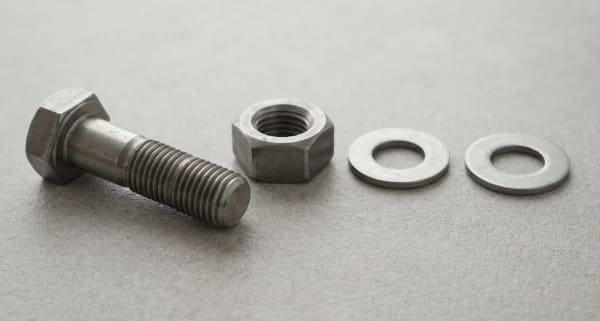
bolts,studs,nutsand washers should be matched as a complete connection system. Upgrading only a single part while ignoring overall performance often fails to achieve the expected effect. For example, if a corrosion-resistant stud is replaced but ordinary carbon steelnutsare still used, the corrosion risk still exists.
Stainless Steel and Carbon Steel Fasteners: Compare by Service Conditions, Not Simple Rankings
The following table summarizes the differences between the two types of materials in common dimensions. Note that actual performance is affected by grade, surface treatment, and environment, and cannot be used as absolute conclusions.
- Corrosion resistance: Stainless steel performs better in most atmospheric and oxidizing environments, but may suffer pitting in chloride-containing environments; carbon steel relies on plating or coating protection, and when the protection is intact it can meet various service conditions.
- Strength selection: Carbon steel can obtain a wider range of high-strength grades through heat treatment; the choice of strength grades for stainless steel is relatively limited and needs to be verified according to standards.
- Cost: Stainless steel material and processing costs are usually higher; carbon steel with a protection system has a greater cost advantage in some projects.
- Maintenance: Carbon steel requires attention to coating integrity and regular maintenance; stainless steel has lower maintenance requirements, but is not maintenance-free.
- Installation notesStainless steel must be protected against thread galling and galvanic corrosion; carbon steel must avoid coating damage and requires attention to dissimilar metal contact.
Stainless steel fasteners are suitable for verified corrosive environment requirements, but not all stainless steel grades are suitable for seaside or chlorine-containing environments. Carbon steel fasteners with appropriate surface protection and controllable maintenance may better meet strength, cost, and supply requirements in some projects.
At the specific product level,hex bolts,flange bolts,nutsand other categories should be selected based on application specifications and working condition verification, not substituting product names for material judgment. When it comes tohex bolt manufacturers,flange bolt suppliersselection, their material certification and testing capabilities should likewise be examined, rather than looking only at price quotes.
Procurement selection checklist: confirm these five items before ordering
- Confirm the usage environment: medium composition, salinity, humidity, temperature, cleaning and maintenance conditions, and whether there are liquid accumulation dead corners.
- Confirm connection requirements: load, strength grade, dimensions, thread specifications, preload, and anti-loosening requirements.
- Confirm material and protection: specific grade, surface treatment method, material certification, and relevant execution standards.
- Confirm matching relationships:boltsorstudswithnuts, and washers material matching, and assess galvanic corrosion risk.
- Confirm supply capability: batch traceability, inspection documents, delivery time, and customization requirements; conduct sample or environmental verification first if necessary.
For projects with special requirements, such ascustom special-shaped fasteners,non-standard fastener machiningorfastener OEM contract manufacturing, material and protection requirements should be clarified even more clearly during the prototyping stage to avoid rework after mass delivery.
Conclusion: Make decisions based on evidence and operating conditions
To reiterate: stainless steel is not inherently suitable for all corrosive environments, and carbon steel should not be directly ruled out when a protection assessment is lacking. The essence of selection is aligning the environment, material, and connection conditions, rather than simply ranking material names.
It is recommended that engineering, quality, and procurement jointly confirm the operating environment, material grades, connection design, and maintenance strategy to reduce the risk of corrosion, seizing, and unplanned downtime from the source.
If non-standard dimensions, dissimilar material pairing, or complex corrosive environments are involved, you can request technical documentation and conduct a selection assessment from afastener supplierwith testing and traceability capabilities, so that everyscrewis backed by evidence.