 PRODUCT
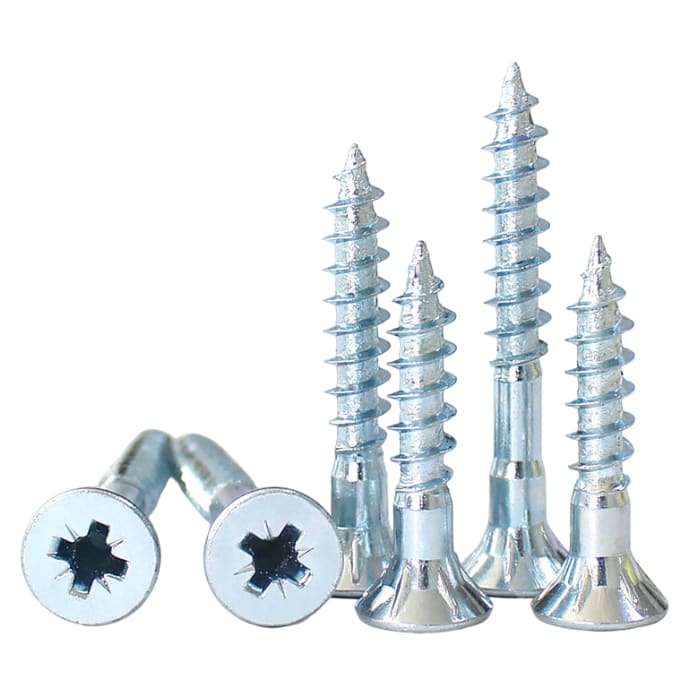
Cross Recessed Countersunk Head Wood Screw DIN 7997 Steel Stainless Steel and Brass Fastener for Furniture and Flush Wood Assembly
DIN 7997 cross recessed countersunk wood screws in steel, stainless or CuZn, sizes 2–8 mm. Flush wood and furniture assembly; request a quotation.
Product Details
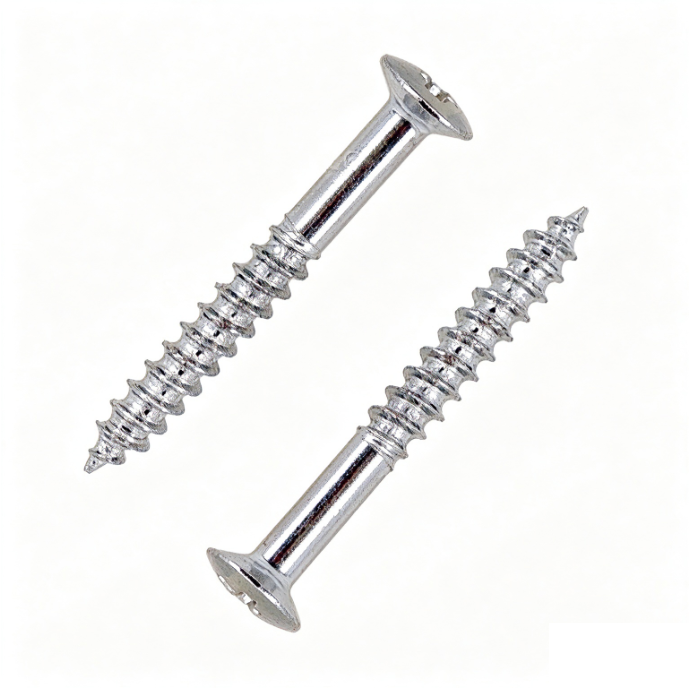
DIN 7997:2016 cross recessed countersunk head wood screws have a flat countersunk head, a cross recess drive and a wood screw thread with a point according to DIN 7998. The head is intended to seat in a matching countersink so that the fastening point can finish flush with the wood surface. The thread forms its own path in wood and is not a metric machine thread.
Typical use includes furniture, joinery, cabinetry, timber components and general wood-to-wood assembly. The screw can be supplied in steel, A2–A5 stainless steel or CuZn copper-zinc alloy, subject to the selected size and order requirements.
Product Specifications
| Item | Details |
|---|---|
| Product Name | Cross Recessed Countersunk Head Wood Screw |
| Standard Reference | DIN 7997:2016 |
| Head Type | Countersunk head with flat top |
| Drive Type | Cross recess |
| Recess Type | H or Z, to be specified |
| Thread Type | Wood screw thread |
| Thread and Point | According to DIN 7998 |
| Cross Recess Standard | DIN EN ISO 4757 |
| Size Range | 2–8 mm |
| Pitch Range | 0.9–3.6 mm |
| Dimensional Tolerance | Product grade C, according to DIN EN ISO 4759-1 |
| Materials | Steel St; stainless steel A2–A5; CuZn copper-zinc alloy |
| Surface Treatment | According to material group; see the table below |
| Surface Defects | Steel screws according to DIN EN 26157-1 |
| Acceptance and Packaging | According to DIN EN ISO 3269 |
| Nominal Length | Specified with the order |
| Packaging | Confirmed with the order requirements |
The values above describe the DIN 7997 product form. The selected material, recess type, size, length, finish and acceptance requirements are confirmed for the quoted item.
Head Geometry and Flush Fit
The countersunk head has a flat top and a conical bearing surface. It is intended for a matching countersink in the wood or in a mating component. When the recess and driving depth suit the material, the top of the head can finish close to the surrounding surface instead of standing above it.
The nominal head diameter ranges from 3.8 mm to 14.5 mm across the listed sizes. Maximum head diameter ranges from 4.18 mm to 15.05 mm, while minimum head diameter ranges from 3.42 mm to 13.95 mm. Head height ranges from 1.2 mm to 4.0 mm.
Head diameter, head height and shank diameter are separate dimensions. A countersink prepared for one screw size should not be assumed to fit another size simply because both screws have a similar thread size.
The cross recess accepts a matching driver bit. DIN 7997 includes H-type and Z-type cross recess data, so the required recess type should be identified when the driver or bit is also being specified. The bit should engage the full recess and remain aligned with the screw during driving.
Wood Screw Thread and Installation
DIN 7997 screws use a wood screw thread and point according to DIN 7998. The thread is intended to form its own path in wood and does not require a matching nut. It should not be treated as a metric machine screw or as a metal self-drilling screw.
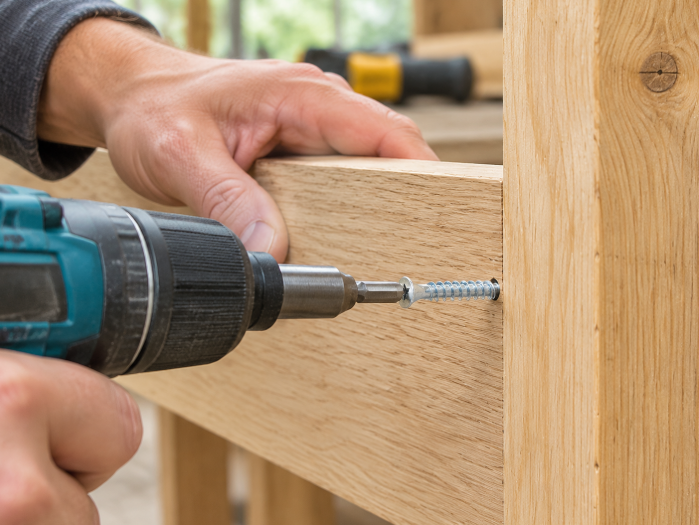
Whether a pilot hole is required depends on the wood species, density, moisture content, screw diameter and distance from the edge. Dense hardwood, thin components and fastening close to an edge may require a pilot hole or a different installation method to reduce the risk of splitting. Test the selected screw and driving method on a representative sample before production assembly.
Use a driver bit that fits the recess and avoid excessive driving torque after the head seats. Over-driving can crush the wood under the head, damage the recess or prevent the intended flush fit.
For structural or load-bearing timber connections, follow the project's engineering specification. A general-purpose wood screw designation should not be used by itself as structural approval.
Size, Pitch and Head Dimensions
| Size (mm) | Pitch P (mm) | Shank Diameter ds Max / Min (mm) | Head Diameter dk Max / Min (mm) | Head Height k Max (mm) | Cross Recess No. |
|---|---|---|---|---|---|
| 2 | 0.9 | 2.00 / 1.60 | 4.18 / 3.42 | 1.20 | 0 |
| 2.5 | 1.1 | 2.50 / 2.10 | 5.08 / 4.32 | 1.50 | 1 |
| 3 | 1.35 | 3.00 / 2.60 | 5.98 / 5.22 | 1.65 | 1 |
| 3.5 | 1.6 | 3.50 / 3.02 | 6.95 / 6.05 | 1.93 | 2 |
| 4 | 1.8 | 4.00 / 3.52 | 7.95 / 7.05 | 2.20 | 2 |
| 4.5 | 2.0 | 4.50 / 4.02 | 8.75 / 7.85 | 2.35 | 2 |
| 5 | 2.2 | 5.00 / 4.52 | 9.65 / 8.75 | 2.50 | 2 |
| 5.5 | 2.4 | 5.50 / 5.02 | 10.75 / 9.65 | 2.75 | 3 |
| 6 | 2.6 | 6.00 / 5.52 | 11.55 / 10.45 | 3.00 | 3 |
| 7 | 3.2 | 7.00 / 6.42 | 13.05 / 11.95 | 3.50 | 3 |
| 8 | 3.6 | 8.00 / 7.42 | 15.05 / 13.95 | 4.00 | 4 |
The table lists the diameter data for the DIN 7997 range. Nominal length is selected separately for the required material thickness and grip. Because the available length options depend on the screw size, state the size and nominal length together in the inquiry.
Materials and Surface Treatment
| Material Group | Grade or Reference | Surface Condition |
|---|---|---|
| Steel | St, steel grade selected by the manufacturer | Untreated, or electroplated according to DIN EN ISO 4042 |
| Stainless Steel | A2–A5, according to DIN EN ISO 3506-4 | Passivated according to DIN EN ISO 16048 |
| Copper-Zinc Alloy | CuZn, according to DIN EN 12166 | Untreated, or electroplated according to DIN EN ISO 4042 |
State the material group and finish with the order. Stainless steel passivation is a surface condition rather than an applied coating, while electroplating adds a separate metallic layer. The two should not be specified interchangeably.
For exterior, damp, coastal or chemically treated wood applications, describe the service environment and the required material and finish. The appropriate combination depends on the exposure conditions as well as the screw size and installation detail.
Edition and Replacement Parts
DIN 7997:2016 is the controlling edition for this product. Earlier editions from 1984, 2008 and 2010 are listed as prior versions. For a replacement part or an existing assembly, state the controlling edition, drawing number and any project-specific requirement rather than relying on the product name alone.
FAQ
1.What is the difference between DIN 7997 and DIN 571?
DIN 7997 has a cross recessed countersunk head for a flush finish. DIN 571 has a hex head. The head form and driving method are different, so the two should not be substituted without checking the assembly.
2. Is DIN 7997 a self-tapping screw?
It is a wood screw with a thread and point according to DIN 7998. It forms a path in wood, but it is not a metal self-drilling screw and should not be selected for drilling through steel or aluminum.
3. What are H-type and Z-type cross recesses?
DIN 7997 includes H-type and Z-type cross recess data. The required type should match the driver bit and the assembly specification. Confirm the recess type when the screw is intended to replace an existing part.
4. Which materials are available?
The standard covers steel St, stainless steel A2–A5 and CuZn copper-zinc alloy. The selected material and surface condition are confirmed for the quoted size and order.
5. How should the length be specified?
Provide the screw size, nominal length, material, recess type and surface finish together. The required length depends on the thickness of the components, the required engagement and the intended installed position.
---
Send the requiredDIN 7997size, nominal length, material, recess type and surface finish, together with the application, wood type and quantity.Drawings, samples or existing part references can be reviewed against the quoted configuration.