Expansion Anchor Procurement Checklist

Daniel
With experience in fastener manufacturing and export sales, we specialize in bolts, nuts, screws, self-drilling screws, fully threaded rods, and customized fastening solutions for construction, machinery, automotive, and industrial applications.
Buying an expansion anchor requires more than just choosing the diameter and length. Before requesting a quotation, the buyer should confirm the anchor type, substrate, fixture details, installation conditions, and necessary documents for acceptance. These details help importers, distributors, and project buyers compare suitable products and identify missing information before placing an order. They also help distinguish between content that suppliers can confirm and content that requires project engineers to make decisions. Prepare the expansion anchor RFQ using the following checklist. The final selection should follow the project design and the current technical information of the selected product.
1. Identify the Anchor Type Before Comparing Sizes
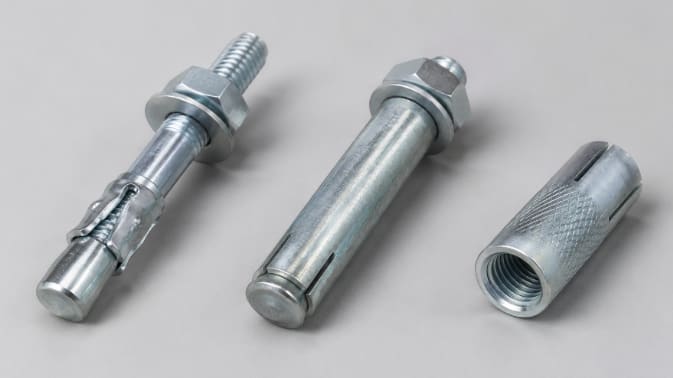
Wedge anchors, sleeve anchors and drop-in anchors use different fixing arrangements. Two products with the same thread size may require different holes, setting methods and installation tools.
| Anchor type | General fixing arrangement | What buyers should confirm |
|---|---|---|
| Wedge anchor | Tightening expands a clip or wedge against the drilled hole. Commonly used in concrete where the specific product is assessed for that condition. | Concrete condition, fixture thickness, embedment, edge and spacing limits, and installation requirements. |
| Sleeve anchor | A sleeve around the anchor body expands against the hole. Suitable base materials vary by product. | Whether the exact concrete or masonry type is covered, together with hole dimensions, fixture thickness and finish. |
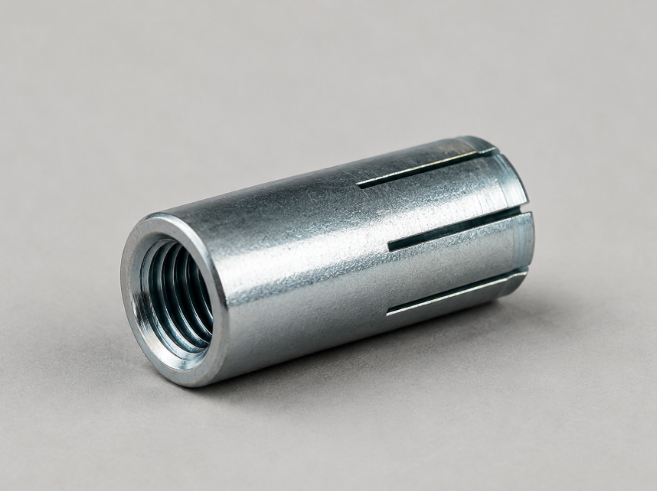
| Drop-in anchor | A setting tool expands an internally threaded socket. A separate bolt or threaded rod screws into it. | Internal thread, setting tool, bolt engagement, base material and product-specific installation instructions. |
With a drop-in anchor, the attached bolt may be removed while the anchor remains in the base material. This differs from removing the complete anchor.
JJ Fastener Factory’swedge anchor,sleeve anchoranddrop-in anchorpages provide starting points for identifying the product family. Confirm the exact size, material, finish and available documents for the proposed order.
2. Describe the Actual Base Material
“Concrete” or “brick” is not a complete base-material specification. Product suitability depends on the condition at the fixing location and the scope of the available technical data.
| Information to confirm | Why it matters |
|---|---|
| Concrete, solid masonry, hollow block or another substrate | An anchor suitable for one material is not automatically suitable for another. |
| Cracked or uncracked concrete | Product assessments may cover only a defined concrete condition. |
| Strength, deterioration and previous repairs | Existing material may differ from the assumptions used in published data. |
| Base thickness, fixing location and reinforcement | These can restrict drilling positions and the available fixing geometry. |
| Moisture, chemicals, temperature and outdoor exposure | These affect material and coating selection and may affect installation. |
For existing structures, provide drawings, measurement information, or previous fixed records (if any). Photos can help explain the location, but cannot determine the strength of the material or the suitability of the anchor. If the substrate is unknown, please mark it as' to be confirmed '. Before making a choice, the responsible engineer should determine whether investigation or testing is necessary. Don't assume that "stainless steel" is suitable for every corrosive environment. Explain the actual exposure situation and request confirmation based on the selected materials and product information.
3. Explain the Fixture and Installation Conditions
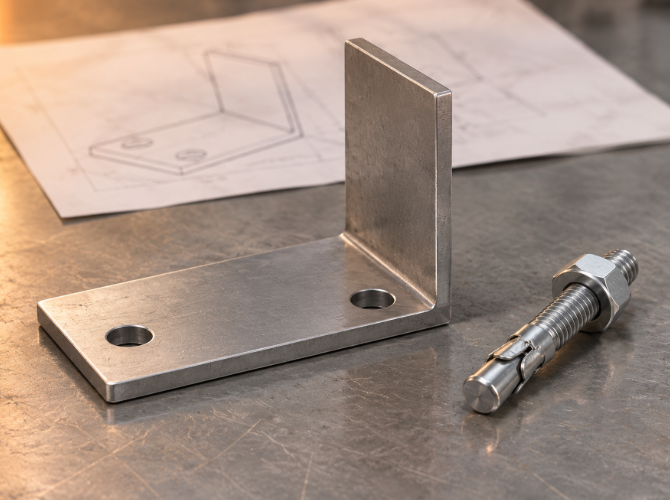
Suppliers need to understand the complete connection, including the content of the connection and how the installation personnel can access it. Provide fixture material and thickness, clearance hole or groove size, required thread protrusion, and any gasket, cement slurry, or support clearance. A simple sectional view usually conveys these details more clearly than a separate dimensional description. Also need to confirm:
Load and load direction in project design.
Required fixed positions, margins, spacing, and embeddings.
Drilling channels, high-altitude operations, and installation restrictions.
Available settings tools and any specified installation methods.
Vibration, earthquake, fire or other special requirements.
The project load and fixed geometric shape should be derived from the design. The drilling size, cleaning, setting, and tightening requirements should come from the instructions of the selected product and be checked for compatibility with the design. Avoid transferring installation values from another anchor solely based on diameter matching. Similarly, descriptions such as' heavy 'cannot determine whether they are applicable to cracked concrete, seismic action, or fire exposure.
4. Request Documents That Match the Proposed Product
Agree on the document list before comparing prices. Ask each supplier to identify what is available for the exact product being quoted.
| Document | What buyers should check |
|---|---|
| Product datasheet and drawing | Product identity, dimensions, thread, material, coating and identification markings where applicable. |
| Installation instructions | Drilling, cleaning, setting method, tools and tightening requirements. |
| Material and coating records | Specified grade or coating and the relevant batch or inspection reference. |
| Assessment or test reports | Products and sizes covered, intended use, test method, date and limitations. |
| Traceability and packaging information | How delivered goods can be linked to the order and supporting records. |
The scope of the report should be reviewed, not just the title. Check if it is related to the quoted model, size, material, and basic conditions. Reports with different configurations will not automatically determine the performance of the proposed product.
What an ETA Shows
A European Technical Assessment, or ETA, documents assessed product performance for an intended use. EOTA explains that it identifies the manufacturer, product, intended uses and assessment information.
Therefore, a statement of "ETA approval" alone is not enough. View the document and its limitations. Product evaluation and product acceptance for specific projects are separate.
When Site Testing May Be Relevant
Site testing may investigate uncertain base material or verify installation quality. These are different purposes and require an appropriate procedure.
The Fastener + Fixing article on on-site testing distinguishes allowable load testing from proof testing. The responsible engineer should define whether testing is needed, who should perform it and how results will be accepted.
Neither an ETA nor a site-test result should be treated as blanket approval for every application.
5. Compare Quotations on the Same Basis
Before comparing unit prices, check whether suppliers have quoted the same product and document requirements.
A useful comparison should cover:
Anchor type, dimensions, thread and included components.
Material grade and coating specification.
Intended base material and stated limitations.
Installation instructions and required tools.
Assessments, reports and traceability offered.
Quantity, packaging, destination and delivery assumptions.
Require suppliers to clearly identify alternatives and exclusions. If alternative solutions are proposed, please compare their product information and installation requirements before accepting them. For project orders, resolve technical differences with the responsible engineer before placing the order. It is difficult to evaluate lower prices when quoting products that cover different conditions or provide different documents
6. Prepare a Complete Expansion Anchor RFQ
The following checklist can be copied into an inquiry. Mark unavailable information as “to be confirmed” rather than filling gaps with assumptions.
| RFQ item | Information to provide |
|---|---|
| Application | What is being fixed, where it is located and the project requirements. |
| Anchor and base | Proposed anchor type, base material, strength and condition where known. |
| Fixture and design | Fixture thickness, holes, loads and fixing geometry. |
| Installation and environment | Access, tools, exposure and special requirements. |
| Documents | Required drawings, instructions, assessments, test reports and batch records. |
| Order details | Quantity by size and material, packaging, destination and required delivery date. |
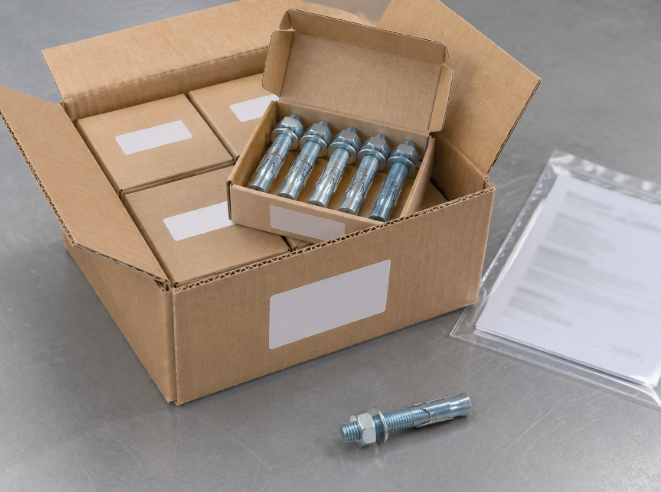
Before accepting delivery, check that the product identity, dimensions, material, coating and batch references agree with the approved order and documents. For broader inspection guidance, see ourFastener Procurement and Acceptance Guide.
Preparing an expansion anchor inquiry?Send yourapplication sketch and RFQ details toJJ Fastener Factory. Ask for confirmation of the available product scope and documents, and resolve open technical points with the responsible engineer before ordering.
This article is a procurement checklist. It does not provide design loads or installation values. Final selection, installation and acceptance must follow approved project documents and the manufacturer’s current instructions.