Stainless Steel or Carbon Steel? Common Misconceptions and Procurement Points for Choosing Screw and Nut Materials

Daniel
With experience in fastener manufacturing and export sales, we specialize in bolts, nuts, screws, self-drilling screws, fully threaded rods, and customized fastening solutions for construction, machinery, automotive, and industrial applications.
Introduction: Choosing the wrong material for screws and nuts often does not cause problems immediately
Many devices run well right after installation, with no abnormalities at the fastening points, but after a period of use, problems begin to appear: corrosion on screw surfaces, nuts seizing onto bolts and becoming difficult to remove, and even loosening at connection points. Such situations are not uncommon in outdoor equipment, humid workshops, coastal projects, or chemical environments.
When these problems occur, two judgments are often heard on site: one is that "carbon steel is not durable," and the other is that "switching to stainless steel will definitely be better." But the actual situation is often not that simple. The final performance of fasteners is determined not only by material category but also by factors such as surface treatment, structural design, installation method, contact medium, temperature, and maintenance cycle.
Therefore, when purchasing screws, nuts, and various fasteners, the question that truly needs to be answered is not "which material is more expensive" or "which name sounds more premium," but rather:Under the current working conditions, which combination of material, grade, and surface treatment is more suitable?
Misconception 1: Stainless steel fasteners are always more corrosion-resistant than carbon steel
The name "stainless steel" easily creates a misunderstanding that as long as stainless steel fasteners are selected, they will not rust. In reality, the corrosion resistance of stainless steel depends on the specific grade, contact medium, temperature, oxygen supply conditions, and surface condition. Being "stainless" does not mean it will not corrode in all environments.
Under conditions of chloride-containing environments, coastal salt spray, crevice liquid accumulation, or coverage by deposits, stainless steel fasteners may suffer pitting corrosion, crevice corrosion, and even stress corrosion cracking under specific combinations of stress and medium. In other words, if the environment is misjudged, stainless steel screws can also fail, and some failure modes are more concealed than ordinary carbon steel corrosion.
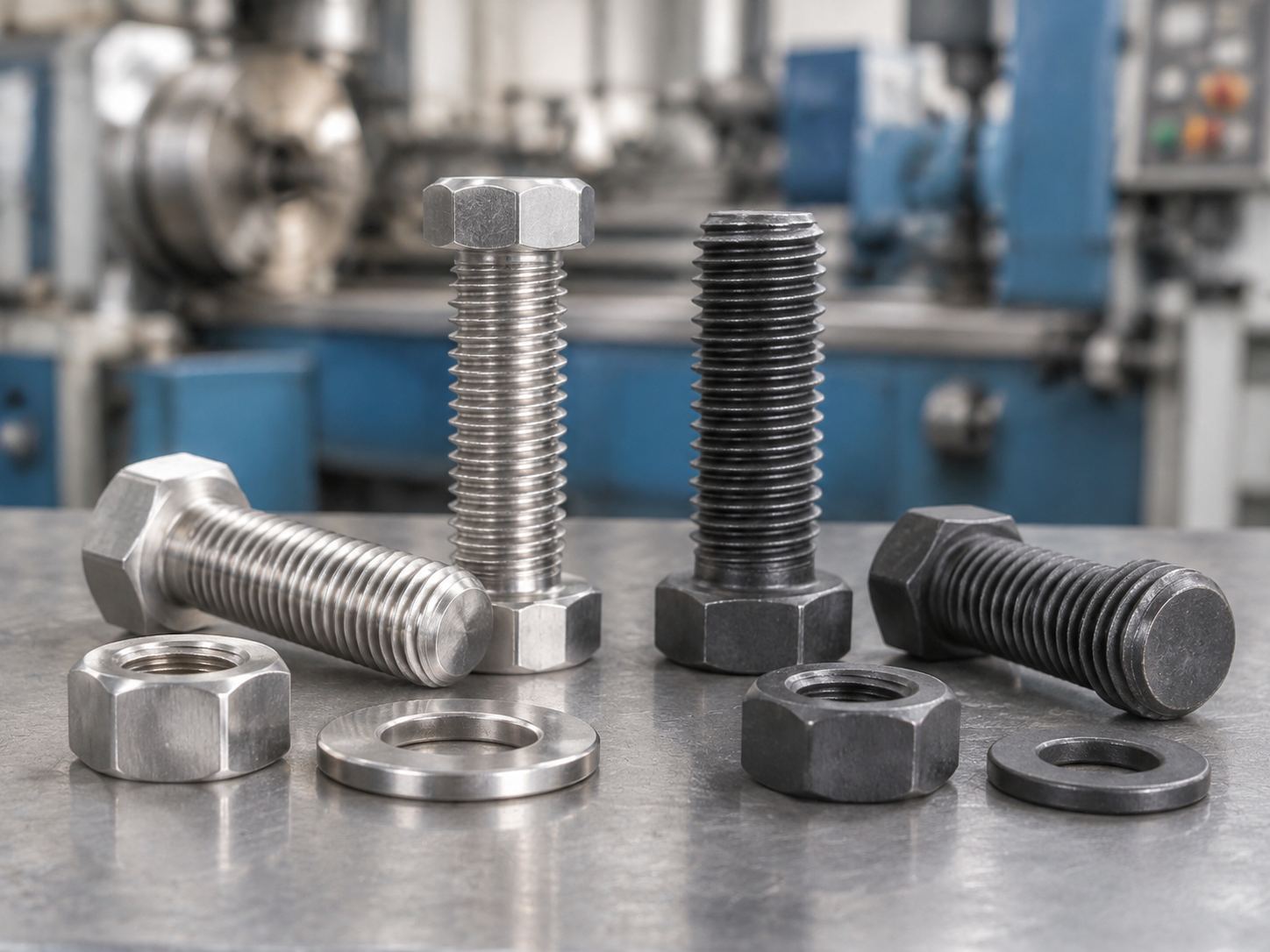
Conversely, carbon steel is not necessarily non-durable. In indoor dry environments or general equipment connections, carbon steel screws, nuts, and bolts with reasonable surface treatment can often meet service life requirements while offering cost and supply advantages. For example, hot-dip galvanized bolts and blackened or galvanized carbon steel nuts can form effective protective systems in controlled environments.
A more reasonable approach to comparison is: for indoor dry occasions with stable maintenance conditions, carbon steel plus surface treatment solutions can be evaluated; for humid, chemical medium, frequently cleaned, or coastal exposure occasions, stainless steel grades should be evaluated based on medium composition, concentration, temperature, and exposure time. Conclusions cannot be drawn solely from grade names such as "304" or "316"; product standards, applicable environments, and actual verification requirements also need to be checked.
For assembly scenarios requiring frequent disassembly or higher appearance requirements, some self-tapping fasteners also involve choices regarding surface condition and assembly method. For example, DIN 7973 slotted raised countersunk head self-tapping screws use a single straight slot and raised countersunk head structure, suitable for thin plates or general connection points requiring raised countersunk assembly; DIN 7972 / ISO 1482 slotted countersunk head self-tapping screws are suitable for countersunk installation and general assembly. The material, surface treatment, and size range of such products need to be checked against specific working conditions and cannot be judged solely by the "carbon steel" or "stainless steel" label.
Misconception 2: Stainless steel strength is always sufficient, and carbon steel is only cheaper
Another common misconception is equating material category directly with strength grade. In fact, the load-bearing capacity of fasteners depends not only on the material but also on design load, thread specifications, heat treatment condition, manufacturing standards, and connection structure. Carbon steel bolts can cover different products from ordinary strength to high-strength grades, and stainless steel fasteners also have different grades and conditions. It cannot simply be said that "stainless steel is always stronger" or that "carbon steel is only cheaper."
The strength characteristics of some stainless steel fasteners differ from those of high-strength carbon steel bolts. In some high-load or safety-critical connections, direct replacement without calculating loads and connection requirements may bring risks. In particular, bolts, studs, and nuts should be evaluated as a matched connection assembly to avoid problems of mismatched strength, hardness, or thread fit.
During procurement, strength grades, dimensional tolerances, and load requirements in drawings and standards should be checked. For high-risk connections, calculations or verification should be performed by engineering personnel. For products such as hex bolts, flange bolts, high-strength bolts, and heavy hex nuts, grade and performance requirements differ significantly under different standards, and selection should be based on technical documents rather than material names alone.
In general assembly, the strength of self-tapping screws and machine screws is also closely related to applicable plate thickness, thread form, and pilot hole size. When purchasing, specifying product type, size, material or grade, applicable standard, surface treatment, and inspection requirements is more meaningful than simply comparing "stainless steel" or "carbon steel."
Misconception 3: As long as the material is chosen correctly, corrosion and failure risks are solved
Material selection is only part of fastener corrosion protection. Actual corrosion risk is also affected by dissimilar metal contact, water-retaining structures, coating damage, surface contamination, and installation method. Even if corrosion-resistant materials are selected, problems may still occur if the structural design is unreasonable or installation is not standardized.
Galvanic corrosion is one of the common factors. When different metals come into contact in a conductive medium, corrosion risk may concentrate on one of the materials. For example, an improper combination of fastener and connected-part materials may accelerate corrosion of the more active metal. Therefore, during procurement, the material combination of screws, nuts, bolts, and connected parts should be checked, and insulating washers or isolation measures should be used when necessary.
Crevice corrosion and liquid accumulation also deserve attention. Localized corrosive environments may form under gaskets, at lap joints, in blind holes, and at locations where drainage is difficult. Even stainless steel fasteners may corrode under conditions of long-term liquid accumulation in crevices and insufficient oxygen supply. Structural design should avoid water accumulation and hard-to-clean dead corners as much as possible.
Installation and maintenance factors should not be ignored either. Contamination of fastening tools, over-tightening, insufficient lubrication, or combinations of different materials can all cause thread galling, seizing, or difficulty in disassembly. For locations requiring frequent maintenance, product forms such as lock nuts and flange bolts can be evaluated, with control combined with lubrication and installation torque requirements.
The truth about corrosive environments: select materials by working conditions, not by "higher cost"
The core of fastener material selection is matching the material to the working conditions. The following typical scenarios can serve as references for procurement evaluation.
- Dry indoors, general equipment connections:The service life, cost, and maintenance requirements of carbon steel surface treatment and stainless steel solutions can be compared. For indoor enclosures, general brackets, or low-humidity environments, carbon steel screws with appropriate coatings can often meet requirements.
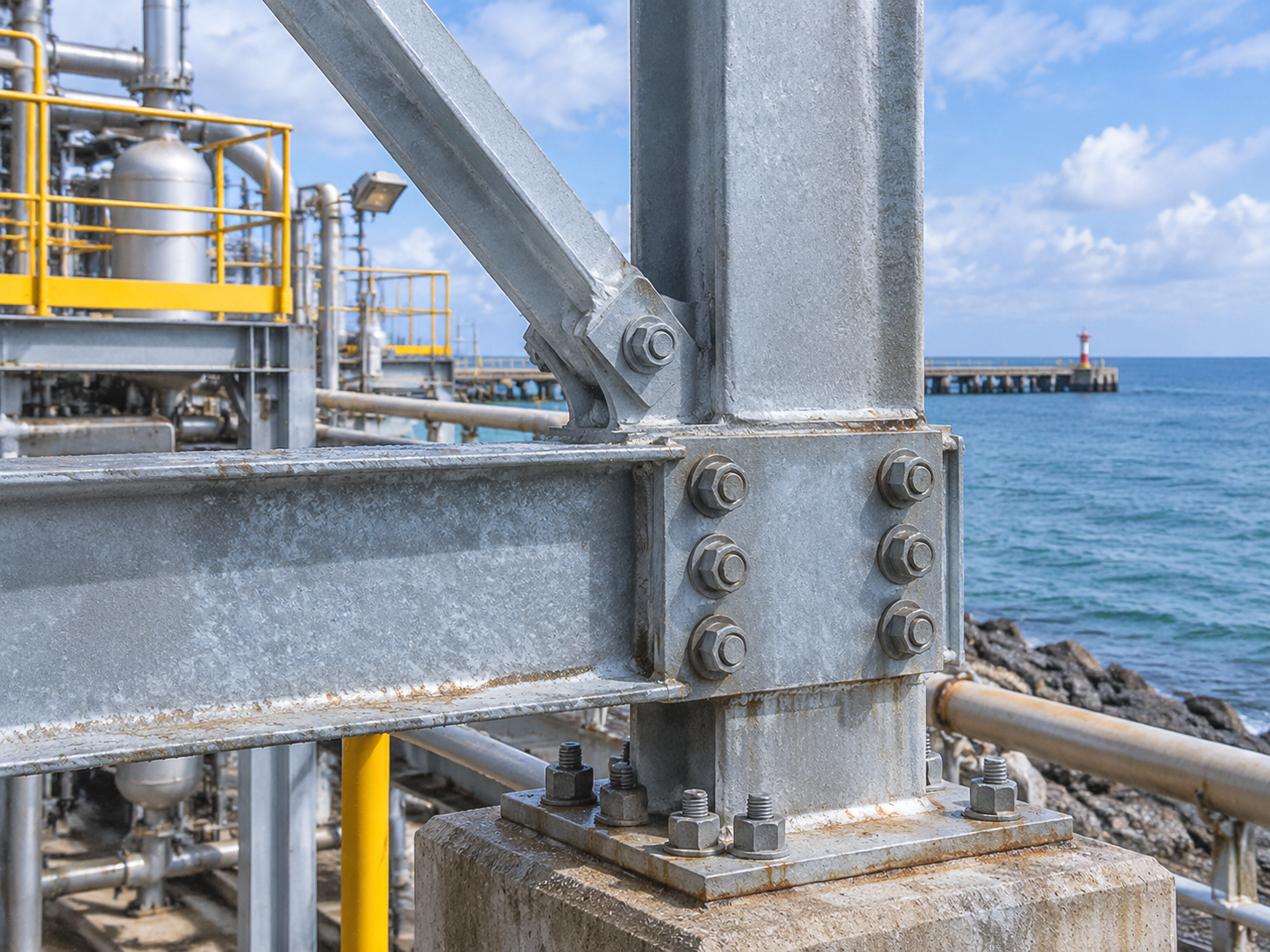
- Outdoor humid or coastal environments:Materials and protective solutions should be evaluated in light of salt content, water accumulation, exposure time, and maintenance cycle. Coastal projects cannot be judged solely by the "stainless steel" label; attention should be paid to grade, surface condition, and crevice design.
- Chemical, cleaning, or high-temperature environments:First confirm the medium composition, concentration, temperature, and contact time, then confirm material suitability with technical personnel or suppliers. Such working conditions place higher requirements on the technical documentation of stainless steel fastener manufacturers and suppliers.
- High-load or safety-critical connections:First satisfy the standards, strength grades, and verification requirements, then comprehensively evaluate corrosion resistance needs. For products such as high-strength bolts and heavy hex nuts, performance documents and inspection records should be checked.
The procurement team can establish a checklist that itemizes the environmental medium, design load, connection materials, dimensional standards, surface treatment, service life, maintenance conditions, and acceptance documents. This can reduce deviations caused by inquiring and quoting based solely on material names when communicating with fastener manufacturers or fastener suppliers.
Procurement implementation: shift from the price of a single screw to full life cycle cost
The unit price of fasteners is low, which easily leads procurement to focus only on the price of a single screw. However, the actual cost also includes installation convenience, expected replacement frequency, downtime risk, and maintenance cost. A solution that is cheap but frequently rusts, seizes, or requires line stoppage for replacement may have a higher full life cycle cost.
Procurement specifications should be as clear as possible: product type (such as hex bolts, flange bolts, lock nuts, carriage bolts, or self-tapping screws), dimensions, material or grade, applicable standards, surface treatment, and inspection requirements. For non-standard or special assembly needs, communicate in advance with the factory regarding custom special-shaped fasteners, non-standard fastener processing, or fastener OEM requirements.
Require fastener suppliers to provide material certificates, performance documents, and necessary inspection records corresponding to the order. For special operating conditions, confirm applicability first, then arrange bulk procurement. Trial assembly or small-batch verification can be used to check assembly fit, corrosion performance, and disassembly conditions, but cannot replace necessary engineering calculations and standard inspections.
In supply chain selection, match the corresponding manufacturer according to the product category. For example, hex bolt manufacturers, flange bolt suppliers, high-strength bolt manufacturers, hot-dip galvanized bolt suppliers, carbon steel nut factories, lock nut suppliers, self-tapping screw manufacturers, self-drilling screw suppliers, machine screw wholesale, expansion bolt wholesale, heavy hex nut manufacturers, custom socket head cap screws, carriage bolt factories, U.S. standard bolt exports, fastener export suppliers, etc. Suppliers with different positioning have different emphases in standard coverage, surface treatment, and export documents. During procurement, suppliers should be asked to clarify the standards they can implement and their inspection capabilities, rather than only comparing quotations.
Conclusion: The key to choosing the right fasteners is matching the material to the operating conditions
Stainless steel is not superior to carbon steel in all scenarios. Corrosion resistance, strength, structure, and maintenance conditions must be evaluated together. The selection of screws, nuts, bolts, and studs should start from the actual medium, load, connection structure, and expected life, and then determine the material, grade, and surface treatment solution.
The recommended action is: first organize the environmental medium, load, drawing standards, and service life requirements, then confirm the selection with fastener manufacturers or fastener suppliers. For humid, coastal, chemical, or high-load conditions, suppliers should be required to provide applicability statements and necessary verification documents. For requirements involving screws, nuts, bolts, studs, and non-standard fasteners, providing specific operating conditions and specification information helps obtain more suitable material selection recommendations and product solutions.