How to Compare Fastener Procurement Rationally: Don't Just Look at Unit Price, Calculate Total Cost

Daniel
With experience in fastener manufacturing and export sales, we specialize in bolts, nuts, screws, self-drilling screws, fully threaded rods, and customized fastening solutions for construction, machinery, automotive, and industrial applications.
Introduction: A low price does not mean a low procurement cost
When equipment makes abnormal noises, fasteners seize up, or pins stick, on the surface it is just a matter of replacing a singlescrewornut, but behind it there may be downtime, rework, and maintenance costs. Many procurement staff have had similar experiences: to save a few cents on the unit price, they end up spending several extra hours on the assembly line, or even have an entire batch of products reworked because a single bolt failed. This hidden cost is often dozens or even hundreds of times higher than the price difference in procurement.
Therefore, procurement cannot compare unit prices alone. What really needs to be evaluated is product quality, service life, delivery stability, and total cost of ownership. A bolt with a slightly higher unit price but stable performance may save a great deal in maintenance costs over its entire service life; whereas a low-priced screw with unstable batches may force the quality inspection department to repeatedly sample and test, and cause the production line to stop frequently.
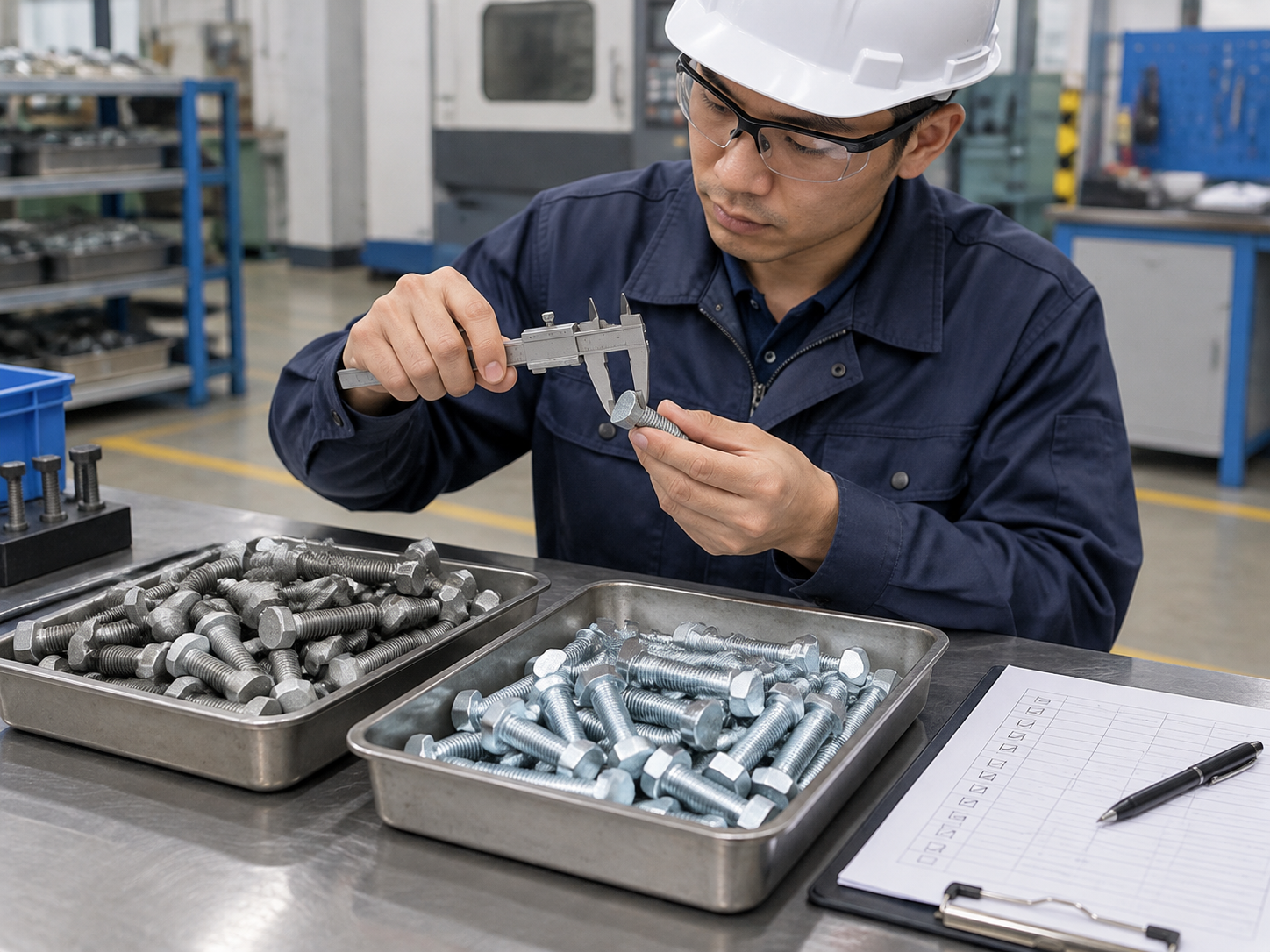
So, are cheap fasteners necessarily unreliable? And are high-priced products necessarily more worth buying? The answer is not absolute. This article attempts to break down several of the most common pricing misconceptions in fastener procurement, to help procurement staff establish a more rational price-comparison logic.
Misconception 1: For screws and nuts of the same specification, the lower the price, the better the deal
The same marked dimensions and grades do not necessarily mean that the material, machining precision, heat treatment, and inspection standards are completely identical. Take common self-tapping screws as an example: for the same ST4.2×16 specification, different manufacturers may have significant differences in steel selection, thread-forming processes, and surface treatment. Unstable thread fit, dimensional tolerances, or surface treatment may cause assembly difficulties, loosening, corrosion, or premature failure.

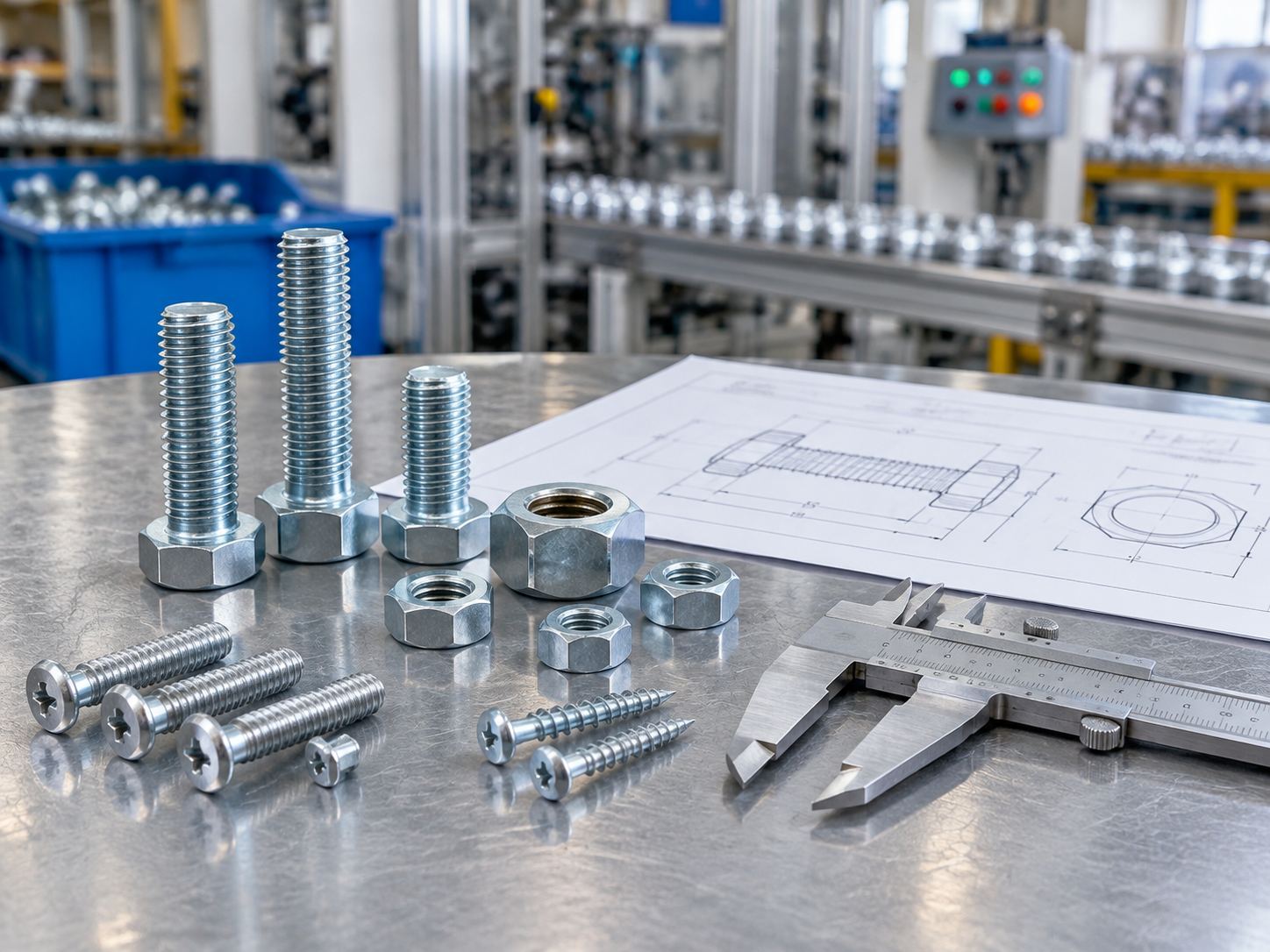
Take DIN 7972 slotted countersunk head self-tapping screws as an example. This type of product adopts a countersunk head design, suitable for occasions requiring flush mounting, and the steel material combined with standard threads is widely used in general assembly scenarios. If procurement only compares unit prices while ignoring the consistency of thread precision and head dimensions, problems such as bit slippage and the countersunk head not sitting flush may occur during assembly, which instead increases rework time. Similarly, DIN 7973 slotted raised countersunk head self-tapping screws have a raised countersunk structure and are suitable for occasions requiring raised countersunk assembly; the geometric shape of the head and the precision of the slot directly affect assembly efficiency. Such products may seem ordinary, but batch-to-batch stability is what procurement should really focus on.
When comparing quotations, procurement should check the drawings, standards, property classes, materials, surface treatment, and inspection requirements, rather than only looking at the unit price. It is recommended to clearly specify the applicable standards (such as DIN, ISO, GB), property classes, and acceptance conditions in the request for quotation, so that different suppliers quote under the same criteria and the quotes are comparable.
Misconception 2: A high price means good quality
A high price may come from brand premium, channel markups, special certifications, or small-batch costs, and should not be directly equated with higher actual value in use. Some imported-brand screws cost several times as much as similar domestic products, but in ordinary assembly scenarios, the actual service lives of the two may not differ significantly.
Judgments should be made based on working conditions: load, vibration, temperature and humidity, corrosive environment, and installation space determine the required fastener performance. For example, in humid or corrosive environments,stainless steel fastenershave obvious corrosion resistance advantages; while in heavy-load structures, the property class of high-strength bolts is the key indicator. For ordinary uses, there is no need to over-specify; using stainless steel bolts to fix an indoor decorative piece may not be a wise choice; for critical connections, verification and quality requirements must not be ignored just to drive down the price.
The rational approach is: first clarify the working condition requirements, then match products with the corresponding property classes, and finally compare prices among suppliers that meet the requirements. This avoids the two extremes of "buying excess performance at a high price" or "buying insufficient performance at a low price."
Misconception 3: Ignoring failure risk and calculating only the procurement unit price
The failure of a low-priced bolt may bring downtime, disassembly and reassembly, re-inspection, scrapping, and even safety risks, with subsequent losses far higher than the price difference. On an automated production line, a broken bolt may cause the entire line to stop for several hours; on outdoor equipment, a loose nut may cause a safety accident. These losses are far from being offset by a price difference of a few cents per piece.
When evaluating life-cycle costs, procurement, transportation, inventory, installation, replacement, quality inspection, and downtime costs should all be taken into account. For locations with high-frequency vibration, heavy loads, or difficult maintenance, priority should be given to reliability and traceability. For example, using lock nuts in vibrating environments, although the unit price is higher than ordinary nuts, can effectively prevent loosening and reduce maintenance frequency. Choosing afastener manufacturerwith a quality traceability system enables quick identification of the batch when problems occur, reducing troubleshooting costs.
In other words, the procurement price is only the tip of the iceberg; the failure risks and maintenance costs beneath the surface are what really determine the total cost.
Misconception 4: Directly comparing prices of products with different materials, processes, and surface treatments
Carbon steel and stainless steel fasteners, as well as bolts of different strength grades, are suitable for different environments and have different performance, and cannot be compared horizontally by specification alone. For hex bolts of the same specification, the load-bearing capacities of grade 8.8 and grade 10.9 differ significantly, so the prices naturally differ; the corrosion resistance of zinc-plated carbon steel and stainless steel products is worlds apart.
Treatments such as plating, hot-dip galvanizing, and passivation affect corrosion resistance and may also affect dimensions and assembly fit. Hot-dip galvanized bolts have a thicker zinc layer and perform excellently in outdoor and highly corrosive environments, but the zinc layer thickness may affect thread fit, requiring suppliers to control the process well. Before procurement, clarify the material certificate, property class, surface treatment requirements, and applicable standards to avoid "looking the same but actually being different."
It is recommended to require suppliers to provide material reports and surface treatment descriptions when comparing prices, and to request samples for salt spray testing or assembly verification when necessary. Only when the technical conditions are aligned does price comparison become meaningful.
Misconception 5: Focusing only on product quotations without evaluating supply capability
The delivery lead time, batch stability, quality traceability, and after-sales response of fastener manufacturers and fastener suppliers also affect procurement costs. A supplier with the lowest quote but unstable delivery times may cause the production line to run out of materials and stop; a supplier with fluctuating batch quality may keep the quality inspection department exhausted.
When requesting quotes, confirm sample verification, batch inspection, packaging identification, delivery commitments, and exception handling mechanisms. For commonly used parts such as studs, hex bolts, and flange bolts, evaluate stable supply and reasonable stocking plans to reduce material shortage and rush order costs. For customized needs, such as special-shaped fastener customization or non-standard fastener processing, it is even more important to confirm the supplier's drawing review capability and sampling cycle in advance.
Supply capability also includes flexible response capability. When order volumes suddenly increase or specifications are temporarily adjusted, whether the supplier can quickly cooperate is often more important than the difference in unit price.
How to establish a more rational fastener price comparison process
Step 1: Unify drawings, standards, materials, grades, surface treatment, quantity, and acceptance conditions. This is the basis for price comparison; if conditions are not unified, prices are not comparable.
Step 2: Require suppliers to provide quotation details, quality documents, samples, or inspection information to ensure consistent quotation standards. For key parts, third-party inspection reports may be required.
Step 3: Carry out assembly tests, torque verification, or necessary on-site trials for key applications. No matter how impressive the paper specifications are, they must still be verified through actual assembly.
Step 4: Compare total cost by comprehensively considering unit price, pass rate, delivery time, after-sales service, and failure risk, and conduct regular reviews. It is recommended to establish supplier performance files and record the incoming material pass rate and delivery achievement status of each batch.
This process may seem cumbersome, but once it is solidified, it can significantly reduce the arbitrariness of procurement decisions and also provide a basis for subsequent supplier management.
Selection and supplier evaluation for different procurement needs
Standard screws, nuts, and bolts: focus on comparing standard compliance, batch consistency, and delivery time. The technical threshold for such products is not high, but the usage volume is large, and batch stability directly affects production line efficiency.
Stainless steel fasteners, hot-dip galvanized bolts, or high-strength bolts: focus on verifying materials, performance, and applicable working conditions. Stainless steel fastener manufacturers should be able to provide material certificates, hot-dip galvanized bolt suppliers should specify zinc coating thickness standards, and high-strength bolt manufacturers should provide performance grade inspection reports.
Special-shaped fastener customization, non-standard fastener processing, or fastener OEM contract manufacturing: confirm drawing review, sampling, inspection standards, and mold costs in advance. Such needs place higher demands on suppliers' engineering capabilities, and it is recommended to prioritize fastener suppliers with customization experience.
Screen hex bolt manufacturers, flange bolt suppliers, lock nut suppliers, etc. according to specific needs, and avoid making decisions based only on keywords or the lowest quotation. For export business, such as American standard bolt exports, it is also necessary to confirm whether the supplier is familiar with relevant standards and packaging requirements; for construction needs, expansion bolt wholesale should focus on product certification and batch consistency; for heavy equipment, the material control capability of heavy hex nut manufacturers is particularly critical. In addition, for subdivided categories such as socket head cap screw customization, self-tapping screw manufacturers, self-drilling screw suppliers, machine screw wholesale, carriage bolt factories, carbon steel nut factories, and custom bolt wholesale, matching supply channels should also be selected according to specific working conditions and procurement volume.
Conclusion: The goal of procurement is not to buy the cheapest, but to buy what is suitable
"Cheap goods are not good" is not absolute; the real question is whether a low price is based on clear specifications, qualified quality, and reliable supply. A reasonably priced screw, as long as its specifications are clear, quality is verifiable, and supply is stable, can fully meet usage requirements; while an expensive bolt, if over-specified or supplied unstably, may also cause waste.
Only by incorporating consistent specifications, verifiable quality, predictable delivery, and full life cycle cost into decision-making can rework, downtime, and hidden expenses be reduced. The value of procurement lies not in pushing the unit price to the lowest, but in obtaining a stable usage experience at a reasonable cost.
Action suggestion: The next time you request quotes, first unify technical and acceptance conditions, then compare prices, and conduct risk classification for key fasteners. For high-risk locations, it is better to spend a little more time on verification; for ordinary uses, there is no need to excessively pursue high-priced brands. Rational price comparison starts with clear requirements.