How to Choose Fastener Procurement Channels: Manufacturers, Traders, and B2B Platforms Compared

Daniel
With experience in fastener manufacturing and export sales, we specialize in bolts, nuts, screws, self-drilling screws, fully threaded rods, and customized fastening solutions for construction, machinery, automotive, and industrial applications.
When purchasing fasteners, why choosing the wrong channel affects delivery and quality
Many procurement staff have encountered similar situations: the drawing specifies an M8×30 hex bolt, but upon arrival the thread precision is insufficient and the strength grade does not match; for the same batch of screws, the previous batch assembled smoothly, but this batch seizes or strips; or the surface treatment is inadequate, and the product begins to rust after a few weeks in the warehouse. Even more common is the delivery issue—the production line is waiting to assemble, but the supplier keeps delaying, ultimately causing the entire production line to halt for lack of materials.
The root of these problems often lies not in the individual product itself, but inthe choice of procurement channel. Fasteners appear to be standard parts, but what is actually being procured is far more than a single screw or nut; it also includes: specification confirmation and selection support, clarity on materials and surface treatment, provision of quality traceability documents, assurance of inventory and delivery times, and after-sales response capability when anomalies occur. If the wrong channel is chosen, any of these links can go wrong.
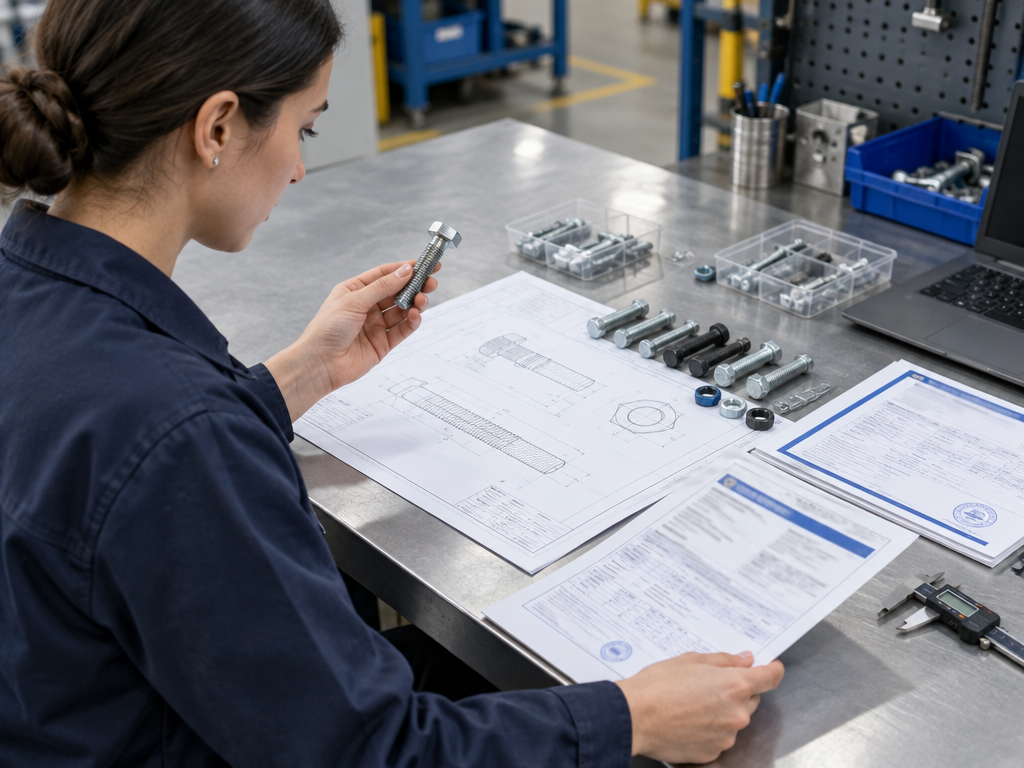
This article uses three mainstream procurement models—factory direct sales, trader procurement, and B2B platform procurement—as a framework to explain what kinds of procurement tasks each is suited for, and compares them across dimensions such as price, minimum order quantity, selection support, delivery assurance, and risk control, to help procurement staff make judgments based on actual needs.
Core differences among the three procurement models
Before going into details, here is an overall positioning of the three models:
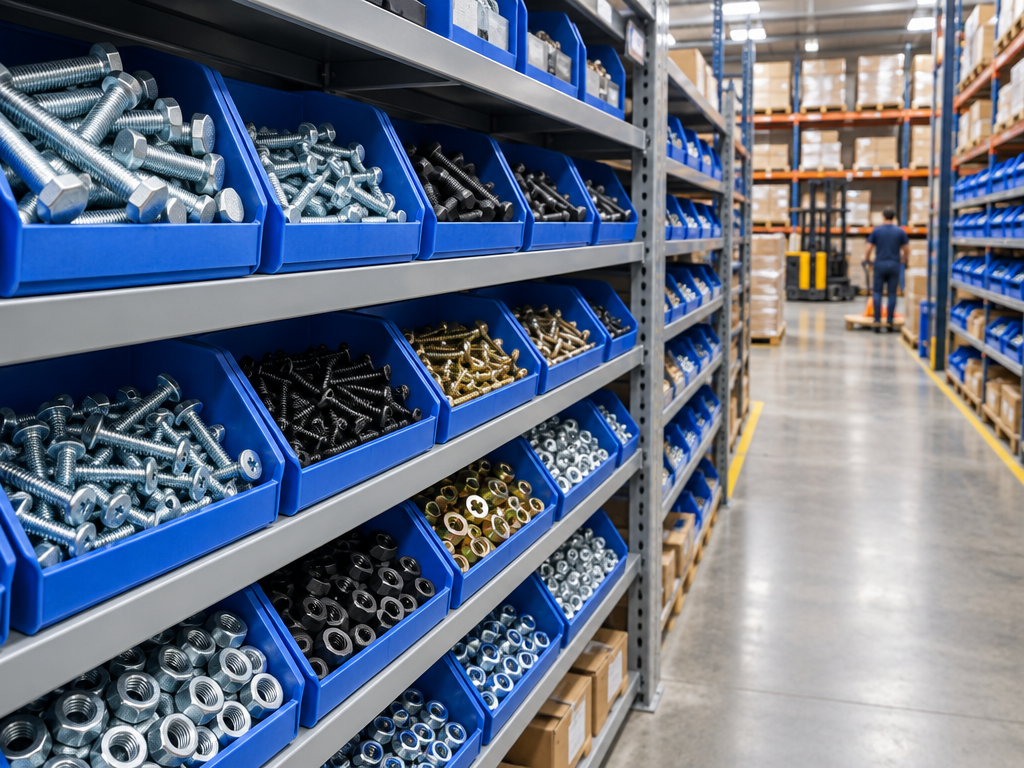
- Factory direct sales:Direct contact with the manufacturer, suitable for orders with stable demand, larger volumes, or customization needs. Pricing and production communication are more direct, eliminating intermediate links, but the buyer is usually required to have clear technical requirements and be able to specify specifications, materials, standards, and acceptance conditions clearly.
- Trader procurement:Fastener suppliers integrate multiple brands, specifications, and inventory resources, suitable for scenarios with multiple categories, small batches, or urgent replenishment. Service is flexible and response is fast, but it is necessary to verify the source of goods, the composition of markups, and quality traceability capability.
- B2B platform procurement:Convenient for searching, price comparison, screening, and contacting multiple merchants at the same time, suitable for initial sourcing and standard-part inquiries. However, the information displayed on the platform does not equal actual production capacity or quality assurance; after online communication, offline verification is still required.
The three models are not substitutes for one another, but apply to different stages and different tasks in the procurement process. Understanding this is the prerequisite for making a reasonable choice.
Factory direct sales: suitable for stable batches and customization needs
The greatest value of placing orders directly with a fastener manufacturer lies inreducing intermediate links. The buyer can communicate directly with the production side about production scheduling, material certificates, inspection requirements, and packaging methods, and when technical problems arise, can more quickly find the person who can make decisions. For categories with large repeat purchase volumes such as hex bolts and flange bolts, factory direct sales have obvious advantages in cost and production coordination.
When the demand involvescustom socket head cap screws, custom special-shaped fasteners, or non-standard fastener machining, factory direct sales is almost mandatory. Such orders require mold opening, adjustment of process parameters, and sample confirmation, and intermediaries can hardly replace direct communication with the production side. Likewise, projects involvingfastener OEM contract manufacturingalso require direct contact with factories that have the corresponding equipment and quality systems.
The limitations of factory direct sales also need to be faced squarely. Some fastener manufacturers set minimum order thresholds, or have minimum batch requirements for molds and production scheduling; small-batch orders of standard products may not get price advantages; and sampling and verification cycles also need to be included in the procurement plan in advance, and cannot be required at the pace of stock items.
When evaluating manufacturers, it is recommended to focus on verifying the following points: whether equipment and processes match the product (for example, cold heading, hot forging, heat treatment, and surface treatment capabilities), whether material and strength grade certificates can be provided, how dimensional tolerances and thread precision are controlled, whether surface treatment methods and salt spray requirements are clear, whether inspection items cover key performance, and whether the batch traceability method is practicable.
In actual sourcing, if the task is to findhex bolt manufacturers, high-strength bolt manufacturers, stainless steel fastener manufacturers, or to assess whether a certain factory hasfastener OEM contract manufacturingcapabilities, priority should be given to examining its actual production and quality control level, rather than only looking at the quotation sheet. For projects requiringcustom bolt wholesale, you should also confirm the factory's consistency control capability between small-batch trial production and mass delivery.
Trading company procurement: suitable for multiple categories, small batches, and rapid replenishment
The core value of a trading company isintegration and stocking. A fastener supplier with inventory capability can usually offer multiple categories at the same time, such as screws, nuts, bolts, and studs, so buyers do not need to deal with multiple factories separately, and management costs are significantly reduced. For urgent orders, small-batch orders, or temporary replenishment, the response speed of a stocking trading company is often better than factory production scheduling.
This type of channel also has points to watch. Prices may include channel service costs, so simply comparing unit prices is not necessarily fair; the consistency of products from different batches or different sources needs to be verified through material certificates, sample confirmation, and incoming inspection. Therefore, when choosing a trading company, you should not only look at the quotation, but should ask about product sources, inventory status, delivery commitments, material certificates and inspection reports, as well as the handling process for nonconforming products.
In actual procurement, for needs such asexpansion bolt wholesale, machine screw wholesalethat involve multiple specifications and multiple batches, or when looking forflange bolt suppliers, lock nut suppliers, hot-dip galvanized bolt suppliers, you can focus on comparing the other party's stocking depth and response capability. For specific categories such asheavy hex nut manufacturers, if your own usage is not enough to deal directly with a factory, purchasing through a trading company with a stable supply source is also a practical choice, but you should require it to clarify the production source and retain traceability documents.
B2B platform procurement: suitable for rapid sourcing and multi-party price comparison
The advantage of B2B platforms lies ininformation aggregation. Procurement personnel can search for fastener suppliers in different regions and of different types within a relatively short time, obtain product information, initiate inquiries, and receive preliminary quotations, which is particularly suitable for new supplier development and market price benchmarking.
However, the limitations of platform procurement are also obvious: product page information may be incomplete, and listed prices, inventory, and delivery times all need to be confirmed one by one; platform certification marks or store operating years cannot replace actual factory audits and product verification. What you see online is display information; what is verified offline is real capability.
To improve inquiry efficiency, it is recommended to provide drawings or complete specifications in the inquiry, clearly stating material, strength grade, surface treatment, quantity, packaging method, delivery location, and acceptance standards. The more complete the information, the more comparable the quotations from different parties will be, and the less room there will be for later disputes.
The verification steps are recommended to proceed in order: check the business license against actual production information, request samples or arrange a small trial order, and confirm the contracting entity, division of quality responsibilities, delivery commitments, and after-sales terms. For suppliers first contacted through a platform, cooperating in small batches first and then gradually increasing volume is an effective way to control risk.
Choosing channels by procurement scenario: a decision-making framework
Putting the three models into specific scenarios makes the selection logic clearer:
- Standard parts, stable demand, relatively large volume:prioritize evaluating direct factory sales, while retaining one trading company as an alternative supply channel to avoid single-source risk.
- Multiple specifications, small batches, tight delivery times:prioritize finding trading companies with strong inventory capability, and if necessary expand the price comparison scope through B2B platforms to shorten sourcing time.
- Non-standard parts, custom parts, or special materials:Prioritize working with manufacturers that have the corresponding process and inspection capabilities, and complete sample confirmation before placing a formal order. This is especially critical whencustom irregular fasteners or non-standard fastener machiningis involved.
- Orders for export or with clear standard-system requirements:Verify drawings, standard versions, material documents, packaging methods, and export experience. Whenexporting inch-standard boltsor selectingfastener export suppliers, the applicable standards and acceptance requirements should be clearly specified, and confirm whether the supplier has the corresponding testing and documentation support capabilities.
- Procurement of special categories:For example,carriage bolt factories, heavy hex nut manufacturers, carbon steel nut factories, self-tapping screw manufacturers, self-drilling screw suppliers, should be screened based on product process and quality control capabilities, rather than making decisions solely on keyword matching or the lowest quote.
Taking specific products as an example, when purchasing self-tapping screws for sheet metal panels and general assembly, you can consider slotted pan head self-tapping screws conforming to the DIN 7971 standard, with reference specifications covering ST2.2–ST6.3. When purchasing, the length, thread type, material, and surface treatment must be specified; such products are suitable for direct inquiries toself-tapping screw manufacturerswith cold heading and heat treatment capabilities. For slotted cheese head machine screws used in equipment panels and general assembly, such as products conforming to the DIN 84 standard, with reference thread specifications covering M1–M10 and materials available in steel, stainless steel, and brass, the material, thread precision, and head slot type must be specified when purchasing. Such needs can be replenished throughmachine screw wholesalechannels, or you can directly contactstainless steel fastener manufacturersto confirm material certificates.
Establish a supplier evaluation checklist to reduce procurement risks
Regardless of which channel is chosen, the final step must be a systematic evaluation of suppliers. The following checklist can serve as a routine framework for procurement verification:
- Technical matching:Verify specifications, materials, mechanical properties, thread precision, surface treatment, and applicable standards to avoid assembly problems caused by substituting similar models. Especially for bolts and studs, strength grades and thread precision directly affect connection reliability.
- Quality verification:Request samples, material certificates, and inspection records; set up first-article approval, incoming inspection, and batch sampling according to risk levels. For stainless steel fasteners, attention should also be paid to the actual performance of material grades and rust resistance.
- Delivery assurance:Confirm actual inventory, production cycle, minimum order quantity, packaging methods, and delay handling mechanisms. Factory production scheduling and trader inventory are two different delivery logics, and commitments should be treated differently.
- Commercial terms and traceability:Clearly define the quotation validity period, payment terms, return and exchange rules, batch identification, and the time limit for handling quality objections. Batch traceability is particularly critical when batch quality issues arise.
- Total cost assessment:Include unit price, transportation, inspection, inventory holding, communication costs, and line-down risk in the comparison. The channel with the lowest unit price is not necessarily the channel with the lowest total cost.
Conclusion: Let the procurement task determine the channel, rather than comparing only unit prices
The three channels each have their applicable boundaries:Factory direct salesare more suitable for stable volume and customization needs,Tradersare more suitable for multi-category combinations and rapid replenishment,B2B platformsare more suitable for expanding suppliers and preliminary price comparison. Setting them against one another is meaningless; the key is to match procurement tasks with channel characteristics.
For fasteners used in critical connection points or special operating conditions, priority should be given to confirming technical suitability, quality certification, and traceability before comparing prices. The unit price difference of a single screw is often far smaller than the cost of an assembly line stoppage or batch rework.
A more prudent approach is to establish a combined channel: useprimary suppliersto ensure stable supply of core categories, usesupplementary tradersto meet multi-specification and urgent order needs, and useplatform sourcingto continuously develop alternative suppliers. This controls costs while retaining delivery flexibility and supply security.