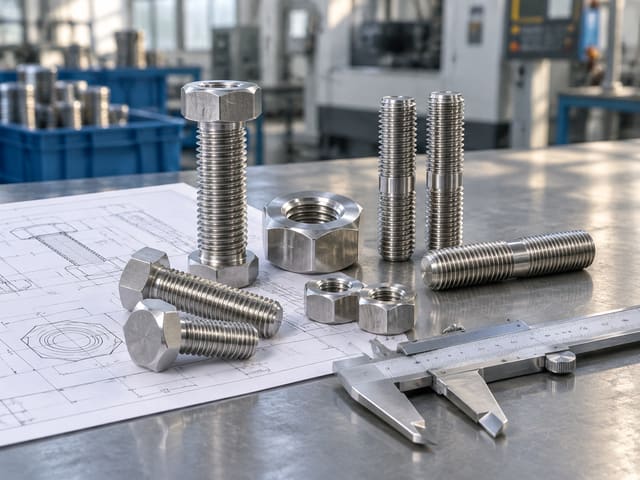
Hot-Dip Galvanized Bolts or Stainless Steel Fasteners? A Procurement Selection Guide

Daniel
With experience in fastener manufacturing and export sales, we specialize in bolts, nuts, screws, self-drilling screws, fully threaded rods, and customized fastening solutions for construction, machinery, automotive, and industrial applications.
Introduction: When fasteners are chosen incorrectly, problems often only surface at shutdown or rework
Many procurement staff have had similar experiences: on outdoor equipment,screwsandnutsdevelop rust in less than a year, and during maintenance the threads seize and are difficult to remove; or connections that were originally properly fastened suddenly loosen under vibration and humid conditions, causing shutdown or even rework. The problem often does not lie in the installation stage; hidden risks were already planted at the material selection stage.
When choosing between hot-dip galvanized bolts and stainless steel fasteners, you cannot look only at unit price. The corrosive environment, the materials being connected, the load type, installation conditions, and maintenance cycle all affectbolts' long-term performance. If a fastener that costs a few cents less leads to one unplanned shutdown, its total lifecycle cost may be several times higher.
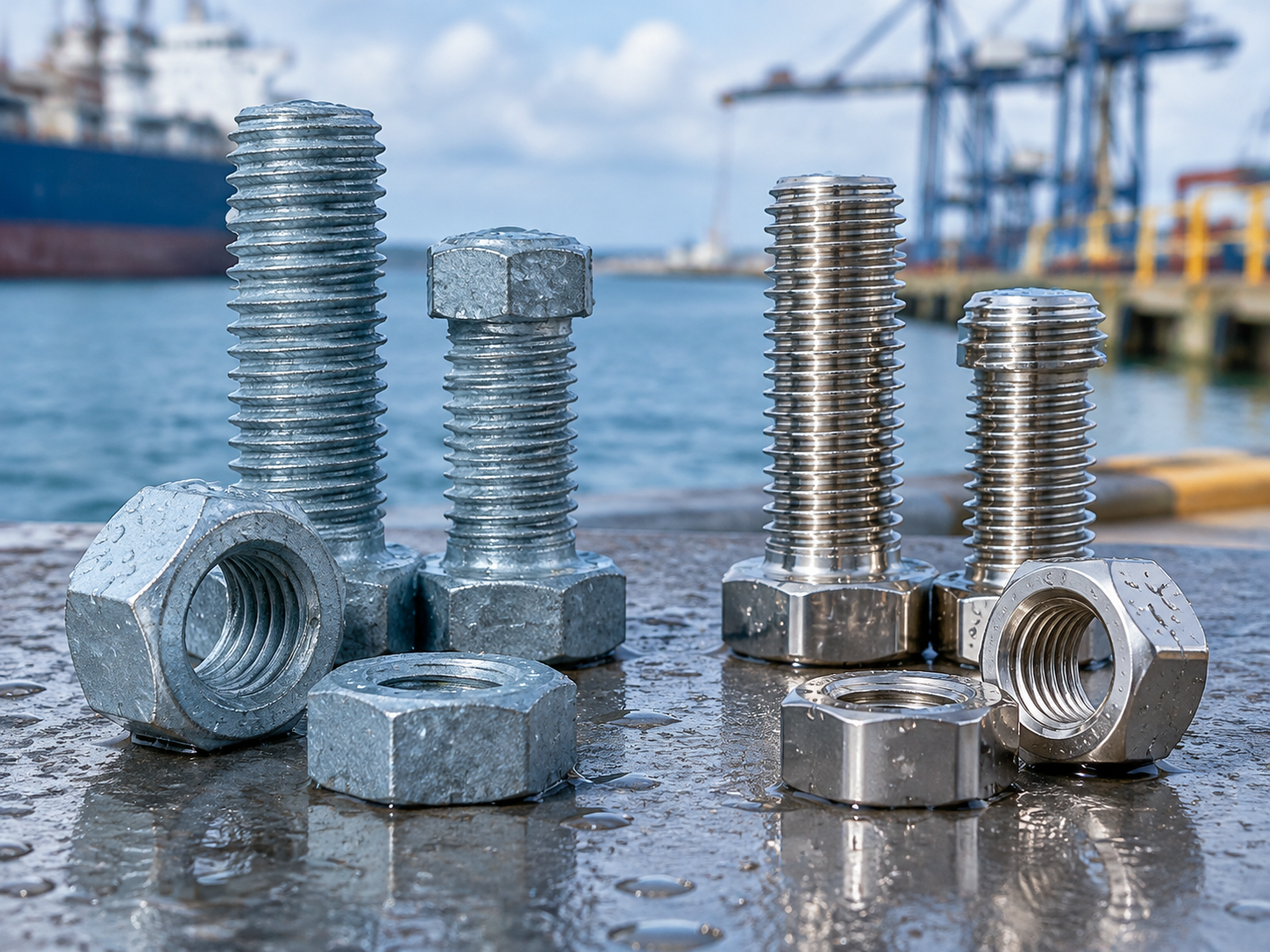
The goal of this article is clear: compare the applicable conditions of hot-dip galvanized bolts and stainless steel fasteners, sort out the judgment logic under different corrosive environments, and provide selection steps and a supplier confirmation checklist that are easy for procurement to implement.
First clarify the two product types: anti-corrosion methods and material characteristics
Hot-dip galvanized bolts: rely on the coating for barrier and sacrificial protection
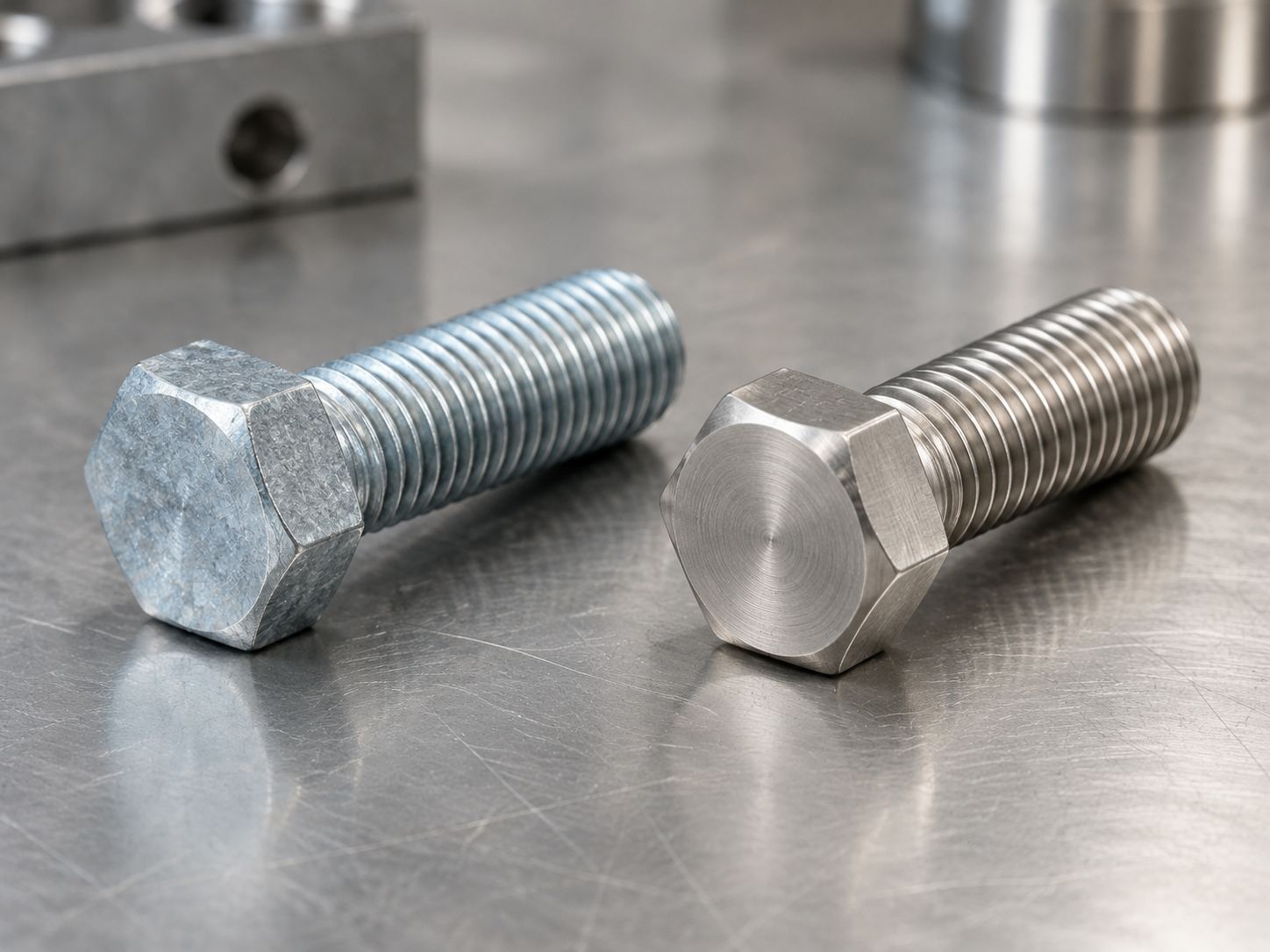
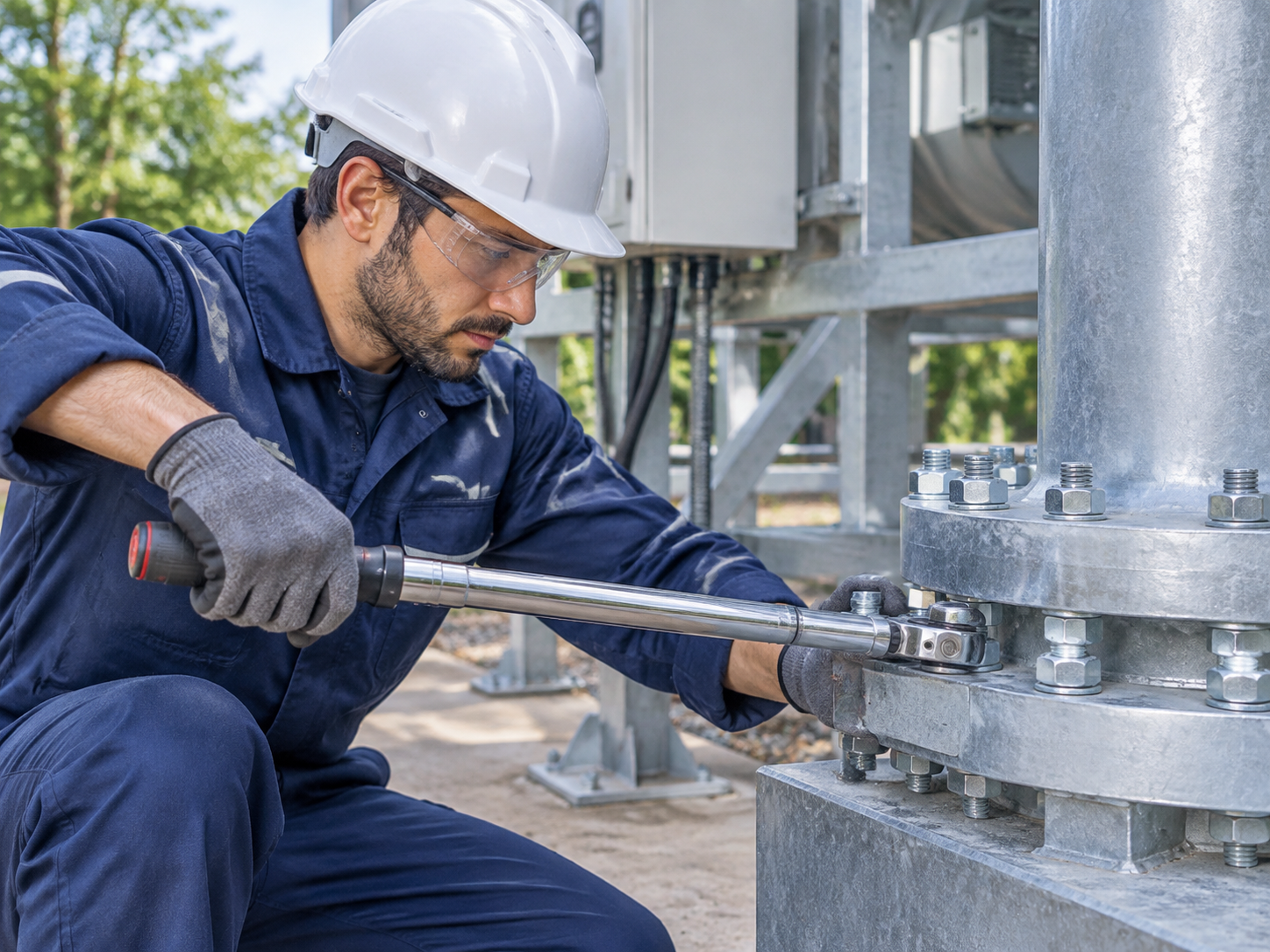
Hot-dip galvanized bolts usually use carbon steel as the base material and form a zinc layer on the surface through hot-dip galvanizing. The zinc layer acts as a physical barrier to isolate corrosive media, and when the coating is damaged, it protects the substrate through sacrificial anode action. Actual performance depends on coating thickness, uniformity, adhesion, and thread fit precision—excessive coating thickness may affect thread engagement, while uneven coating tends to cause localized early rust. During procurement, the coating standard, thread treatment method, and inspection records should be checked.
Stainless steel fasteners: rely on the material's own corrosion resistance
Stainless steel fastenersdo not rely on an applied coating but on the material's own passive film to resist corrosion. However, different grades perform very differently in chlorides, acid-base media, and temperature conditions: austenitic stainless steel performs well in general atmospheric and fresh water environments, while in high-chloride environments, attention must be paid to pitting corrosion and crevice corrosion risks. Treating "stainless steel" as a uniform performance grade is a common mistake in selection.
Procurement reminder: the name does not equal the grade
Whichever type is chosen, you cannot look only at the words "galvanized" or "stainless steel." The applicable standard, material grade, strength grade, thread specification, and surface condition need to be checked. For projects with special requirements,fastener manufacturersshould also be required to provide material certificates and performance inspection documents as the basis for acceptance.
Judging by corrosive environment: which scenarios are more suitable for which choice
Indoor dry or general atmospheric environment
In indoor dry scenarios without corrosive media, hot-dip galvanized carbon steel bolts usually have advantages in cost and strength, and the appropriate strength grade can be selected according to load requirements. If the project has higher requirements for appearance, cleanliness, or maintenance-free service life, a stainless steel solution may also be selected. At this point, the focus of comparison is whether the strength is sufficient and the service life adequate, rather than simply assuming one material is "better."
Outdoor rain exposure, humid, or industrial atmospheric environment
For connection points exposed outdoors, frequently rained on, or located in industrial atmospheres, a comprehensive assessment should be made based on expected service life, coating specifications, and maintenance conditions. Hot-dip galvanized bolts can handle most general outdoor environments, but coating grade requirements must be clearly specified; stainless steel is suitable for locations that are inconvenient to maintain and where later upkeep is to be reduced. It is not advisable to determine the material directly based only on the words "outdoor use."
Coastal, salt spray, de-icing salt, or chlorine-containing environments
This is the scenario where selection most easily goes wrong. High salt spray and chloride environments place higher demands on stainless steel's resistance to pitting and crevice corrosion, so grades need to be carefully evaluated, and attention should be paid to whether there are water-retaining crevices in the structure. Hot-dip galvanized solutions also require confirmation of whether the environmental corrosion level matches the coating design, and if necessary, higher coating requirements or composite anti-corrosion measures should be adopted. For coastal projects, sample exposure verification before bulk procurement is recommended.
Chemical, cleaning, or high-temperature environments
For connection points exposed to chemical media, cleaning agents, or high-temperature working conditions, judgment cannot be based on experience alone.fastener suppliersProvide material recommendations based on medium composition, concentration, temperature, and contact time, and confirm through engineering verification when necessary. In such scenarios, the more specific the medium information, the more reliable the solution provided by the supplier.
Buried or long-term water accumulation locations
For fasteners in buried locations and areas of long-term water accumulation, in addition to the material itself, attention should also be paid to the risk of coating damage, crevice water retention, galvanic corrosion caused by contact with dissimilar metals, and whether later maintenance access is available. For locations that are difficult to replace, priority should be given to higher corrosion protection grades or more maintainable structural designs, rather than merely comparing material names.
Procurement comparison: cost, strength, installation, and full life cycle
Procurement cost should be viewed over the full life cycle
When comparing initial quotations, surface treatment costs, spare parts inventory, installation labor hours, maintenance frequency, and replacement costs should all be included. Hot-dip galvanized bolts usually have a lower unit price, but may increase maintenance in highly corrosive environments; stainless steel has a higher initial cost, but may be more cost-effective in locations where maintenance is difficult. Full life cycle comparison is the reasonable basis for procurement decisions.
Strength and dimensions must be confirmed together
Before selection, the load type, thread specification, length, and strength grade must be clarified. After hot-dip galvanizing, thread fit must comply with the relevant standards to avoid difficulty in threading due to coating thickness. For load-bearing or critical connection points, confirm the performance grade and inspection method withhigh-strength bolt manufacturers, and ordinary grades must not be substituted.
Installation and disassembly: watch for galling risk
Stainless steel screws and nuts may gall under certain conditions, especially in high-speed assembly or high-torque applications. The risk can be reduced through appropriate lubrication, controlled installation speed, and torque management. For equipment that requires frequent disassembly and assembly, this point should be clearly communicated with the supplier at the procurement stage.
Matching compatibility cannot be ignored
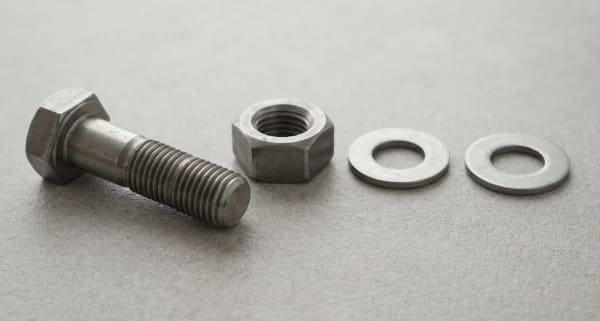
Bolts, nuts, and washers should be of matching material and grade. Mixed use may cause strength mismatch or accelerated corrosion. When purchasingnuts, confirm withcarbon steel nut factoriesorlock nut supplierswhether the thread system and surface treatment are consistent with the bolts, to avoid hidden risks caused by replacing only a single component.
Galvanic corrosion from contact with dissimilar metals
When fasteners come into contact with dissimilar metals such as aluminum or carbon steel, the risk of galvanic corrosion should be assessed, and insulating gaskets or other isolation measures should be considered. This issue should be raised at the drawing review stage, rather than remedied only after problems occur on site.
Selection reminders for different fastener types
Hex bolts, flange bolts, and studs
Specifications and surface treatment should be determined according to the connection structure, load distribution, installation space, and disassembly requirements.Hex boltshave strong versatility and are suitable for most structural connections;flange boltshave an integrated flange that improves pressure surface distribution and reduces the use of washers;studsIt is often used in situations where one end is fixed and the other end is tightened with a nut. When purchasing, you can separately contacthex bolt manufacturersandflange bolt suppliersto confirm product standards and matching scope.
Nuts and lock nuts
Confirm the thread system, strength grade, and matching coating or material. For locations with anti-loosening requirements, a locking structure can be selected, and you can contactheavy hex nut manufacturersto confirm load-bearing capacity. Mismatched mating parts often cause problems more easily than the bolts themselves.
Screws for equipment maintenance
Maintenance scenarios are often accompanied by vibration, frequent start-stop cycles, moisture, and narrow installation spaces. In such cases, anti-loosening measures and maintainability should be considered in advance. For fastening small sheet metal, cover plates, or decorative parts,self-tapping screwsare a common choice. For example, DIN 7972 slotted countersunk head self-tapping screws use a countersunk design and are suitable for assemblies that need to be flush with the surface, with specifications covering ST2.2–ST6.3, making it easy to select according to plate thickness and hole diameter; DIN 7973 slotted raised countersunk head self-tapping screws have a raised countersunk head and are suitable for assemblies that need to protrude slightly while balancing appearance and installation positioning. When purchasing such standard parts, you can contactself-tapping screw manufacturersto confirm material, surface treatment, and thread specifications; for applications requiring self-drilling capability, you should communicate withself-drilling screw suppliersabout substrate thickness and drilling conditions.
Non-standard structures and customization needs
When non-standard structures are involved, drawings, operating environment, performance requirements, and inspection standards should be provided so that fastener manufacturers can evaluatecustom special-shaped fastenersornon-standard fastener machiningfeasibility. For stable batch demand for standard parts, you may also considerfastener OEM contract manufacturingto lock in quality and delivery time.
Procurement selection checklist: key questions to confirm with suppliers
- Operating environment:Whether it is exposed to seawater, salt spray, chemical media, cleaning agents, or high temperatures; whether it is outdoors long-term, in standing water, or buried. The more specific the environment description, the more accurate the material selection recommendation.
- Product requirements:Standard number, material grade, strength grade, thread specifications, dimensional tolerances, and surface treatment requirements should be written item by item into the inquiry document.
- Quality documents:Require material certificates, dimensional and mechanical property inspection records, and applicable coating inspection information.
- Matching and traceability:Confirm the matching sets of bolts, nuts, and washers, batch traceability, packaging methods, and replenishment capability.
- Supply capability:Evaluatefastener suppliersfor their quality control system, delivery stability, export experience, and responsiveness to customization, rather than only comparing the numbers on quotations.
How to screen suppliers and customization services
Confirm withhot-dip galvanized bolt suppliersthe coating standard, thread treatment method, inspection process, and applicable environment description, and request coating inspection records. Confirm withstainless steel fastener manufacturersthe material grade certificates, batch consistency, and material selection recommendations for the actual medium.
If purchasing hex bolts, flange bolts, heavy hex nuts, or lock nuts, confirm the product standards, matching scope, and inventory capability. For export or customization needs, verify the technical documents and delivery requirements required forASTM standard bolt exports,fastener OEM contract manufacturing, andfastener export suppliers, including packaging markings, inspection reports, and logistics arrangements.
For needs such ascustom socket head cap screws, self-tapping screws,expansion bolt wholesale, orcustom bolt wholesale, provide the application conditions and acceptance standards. Inquiries using only keywords can easily lead to unclear specifications and repeated samples, which instead lengthens the procurement cycle. When building anchoring is involved, you can also consult professional manufacturers such ascarriage bolt factoriesfor matching solutions; for general mechanical assemblyMachine screw wholesale, the head type and drive type should be specified.
Common misconception: avoid treating the material name as the selection conclusion
Misconception 1: Stainless steel will definitely not rust
Actual corrosion resistance depends on the grade, medium, surface condition, and usage. In chloride-containing environments, even austenitic stainless steel may develop pitting or rust spots. Selection should be based on specific operating conditions.
Misconception 2: Hot-dip galvanized bolts are suitable for all outdoor environments
They can handle general outdoor environments, but high-salt, high-humidity, or special chemical media may require more specific anti-corrosion designs, including higher coating requirements or composite protection solutions.
Misconception 3: Focusing only on bolts without checking nuts and washers
Mismatched mating parts increase installation difficulty, corrosion risk, and maintenance costs. Confirming the complete set is the simplest way to avoid on-site problems.
Misconception 4: Purchasing based only on initial price
Only by including downtime losses, disassembly labor, rework costs, and replacement costs in the comparison can the true cost be seen clearly. For locations that are difficult to maintain, the initial price is often not the decisive factor.
Conclusion: Make decisions based on operating conditions, standards, and full lifecycle cost
In general environments, hot-dip galvanized carbon steel and stainless steel options can be compared on the premise of meeting strength and service life requirements; in highly corrosive environments, the medium composition and applicable material grade should first be clarified, and then the surface treatment or grade should be determined. The material name is only the starting point; the description of operating conditions is the core input for selection.
The recommended procurement process is: describe the operating conditions—determine standards and performance requirements—confirm bolt and nut compatibility—verify quality documents—evaluate full lifecycle cost. Maintaining communication with fastener manufacturers that have inspection and customization capabilities, and when necessary conducting sample verification or on-site trials before finalizing a bulk procurement plan, is often more effective at reducing long-term risk than one-time price cutting.