From Inquiry to Mass Production: A Complete Methodology for B2B Fastener Procurement

Daniel
With experience in fastener manufacturing and export sales, we specialize in bolts, nuts, screws, self-drilling screws, fully threaded rods, and customized fastening solutions for construction, machinery, automotive, and industrial applications.
From Inquiry to Mass Production: A Complete B2B Fastener Procurement Process Methodology (with Hex Bolt/Flange Bolt Acceptance Checkpoint Table)
1. Why Can't You Just Compare Unit Prices When Procuring Fasteners?
In B2B procurement scenarios, fasteners are often one of the least conspicuous yet most problem-prone categories of materials. A singlescrewworking loose, a singlenutseizing, a batch ofboltsrusting, or discovering during assembly that dimensions do not match—at best this causes production line downtime and rework, and at worst it causes delays in delivering an entire batch of equipment and customer complaints. Many procurement professionals have had similar experiences: the supplier with the lowest unit price on the quotation ultimately brings the highest total cost.
The real goal of fastener procurement is not to find the product with the lowest unit price, but to match product specifications, batch quality, delivery time, and traceability requirements to the specific use scenario. The same M8hex bolt, when used on an indoor equipment enclosure versus on outdoor steel structures, has completely different requirements for material, surface treatment, and property class; likewise,stainless steel fasteners, whether used in food equipment or in marine environments, also have clearly different acceptance standards.
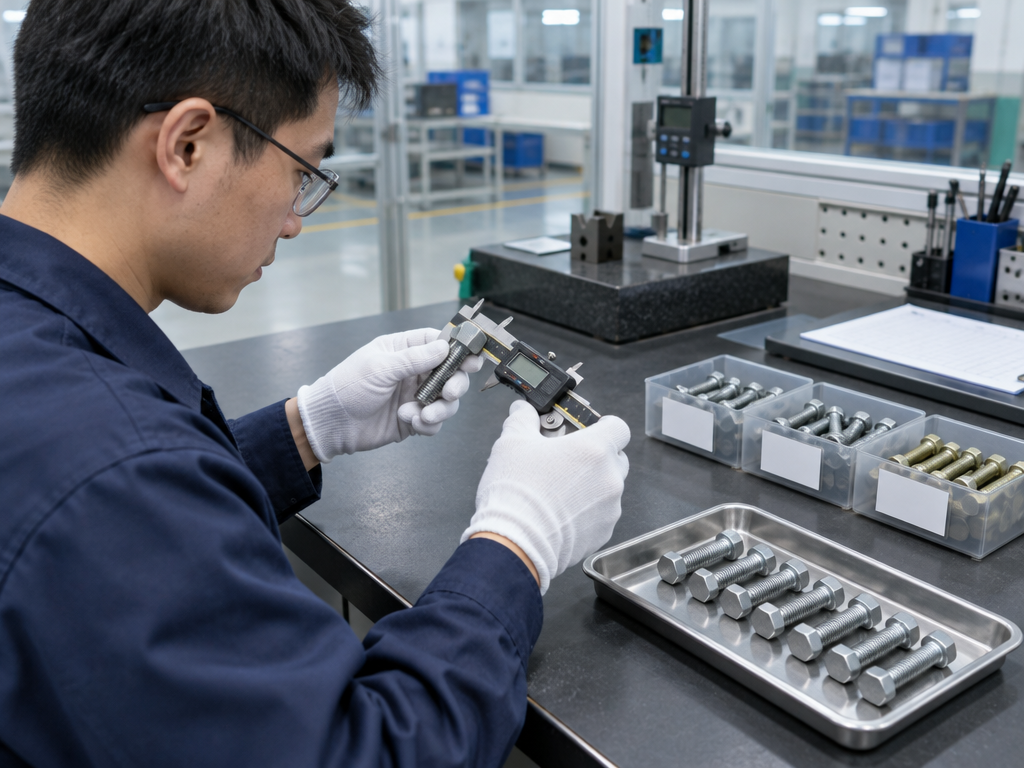
This article is intended for engineering project procurement, equipment manufacturers, traders, and companies currently seekingfastener OEM manufacturingornon-standard fastener machining. The following sections break down the key steps segment by segment according to the actual process from inquiry, technical confirmation, sampling, and supplier audit to mass production acceptance, and Section 6 provides a directly applicable hex bolt/flange bolt acceptance checkpoint table.
2. Before Inquiry: Convert Procurement Requirements into a Quotable Specification List
The root cause of slow and chaotic quotations in many inquiries is not insufficient supplier capability, but rather that the requirements themselves have not been clearly organized. A quotable specification list should include the following dimensions.

1. Clarify the Product Category and Application Location
First, distinguish whether it is ascrew,nut,bolt,studOr otherfasteners, and specify the exact application location and assembly method. For example, for sheet metal panels and general assembly scenarios, common choices include DIN 7971 steel slotted pan head self-tapping screws, with reference specifications covering ST2.2–ST6.3; length and thread type must be specified when purchasing. For general assembly scenarios such as equipment panels and instrument housings, DIN 84 slotted cheese head machine screws are often selected, with reference thread specifications of M1–M10, and it must be noted whether carbon steel, stainless steel, or brass material is selected. Write the product category and assembly scenario clearly so that suppliers can accurately determine the process route.
2. Organize the core dimensions
Nominal diameter, pitch, length, head type, thread type, tolerance, as well as drawing or sample requirements, should all be listed item by item. Forflange bolts, the flange face structure, head dimensions, and bearing surface requirements must also be additionally specified; forcustom socket head cap screw-type requirements, the hex socket type, across-flats dimensions, and depth requirements must be noted.
3. Specify material and performance requirements
Clarify whether it is carbon steel or stainless steel, the strength grade, hardness, surface treatment method, and corrosion resistance or temperature resistance requirements. Outdoor or humid environments usually require consideration of the hot-dip galvanizing solutions provided byhot-dip galvanized bolt suppliers; food, medical, or high-cleanliness scenarios are more suitable for products fromstainless steel fastener manufacturers.
4. Confirm the standard system and document requirements
For national standards, ISO, DIN, ASTM, or customer drawings, the referenced version must be clearly stated. When necessary, simultaneously confirm the requirements for material certificates, inspection reports, and traceability labels. For business involvingexport of inch-series bolts, the requirements of the destination market for standards and document language should also be explained in advance.
5. Provide procurement conditions
Estimated usage, annual demand, packaging method, destination, delivery time, inspection method, and target market regulatory requirements will all directly affect the quotation structure. The quotation logic for small-batch trial orders and annual framework procurement is often different.
6. Attach drawings or samples for non-standard requirements
Whencustom special-shaped fastenersare involved, 2D drawings, 3D models, or physical samples should be attached, and key dimensions and acceptance criteria should be confirmed in advance to avoid later disputes caused by inconsistent judgment standards.
III. Inquiry and supplier screening: identifying true capabilities from quotation sheets
A quotation sheet is not only price information but also a window for judging a supplier's level of professionalism. It is recommended to require quotations to list specifications, material, grade, surface treatment, packaging, mold or sample fees, delivery time, and quotation validity item by item.
Evaluatefastener manufacturersorfastener suppliersWhen doing so, you should verify equipment and process capabilities, the quality management system, inspection methods, production capacity, and batch traceability. Matching suppliers by product type is an effective way to improve efficiency: for procurement ofhex boltsyou can prioritize specializedhex bolt manufacturers; for procurement offlange boltsyou should work withflange bolt suppliersthat have the corresponding molds and process experience; when anti-loosening performance is required, you can evaluatelock nut suppliers; and for heavy-duty working conditions, you can work withheavy-duty hex nut manufacturers.
When procuring specialized categories, you should also check whether suppliers have the corresponding processes and export experience, for example, the coating control capability ofhot-dip galvanized bolt suppliers, the compliance documentation experience ofUS-standard bolt exports, and the material management capability ofstainless steel fastener manufacturers. Forself-tapping screw manufacturersandself-drilling screw suppliers, pay attention to the complete process chain of forming, heat treatment, and surface treatment.
When comparing, focus on total procurement cost rather than unit price: include mold costs, inspection fees, packaging fees, transportation fees, tariff risks, and the cost of handling nonconforming products in the evaluation. At the same time, identify quotation risks: vague specification descriptions, undisclosed substitute materials, delivery times lacking a capacity basis, or acceptance standards not stated at the quotation stage are all common sources of subsequent disputes.
IV. Technical clarification and sample confirmation: lock down specifications first, then start mass production
The core output of the technical clarification stage is a specification confirmation sheet signed by both parties, checking dimensions, materials, mechanical properties, surface treatment, marking, packaging, and applicable standards item by item.
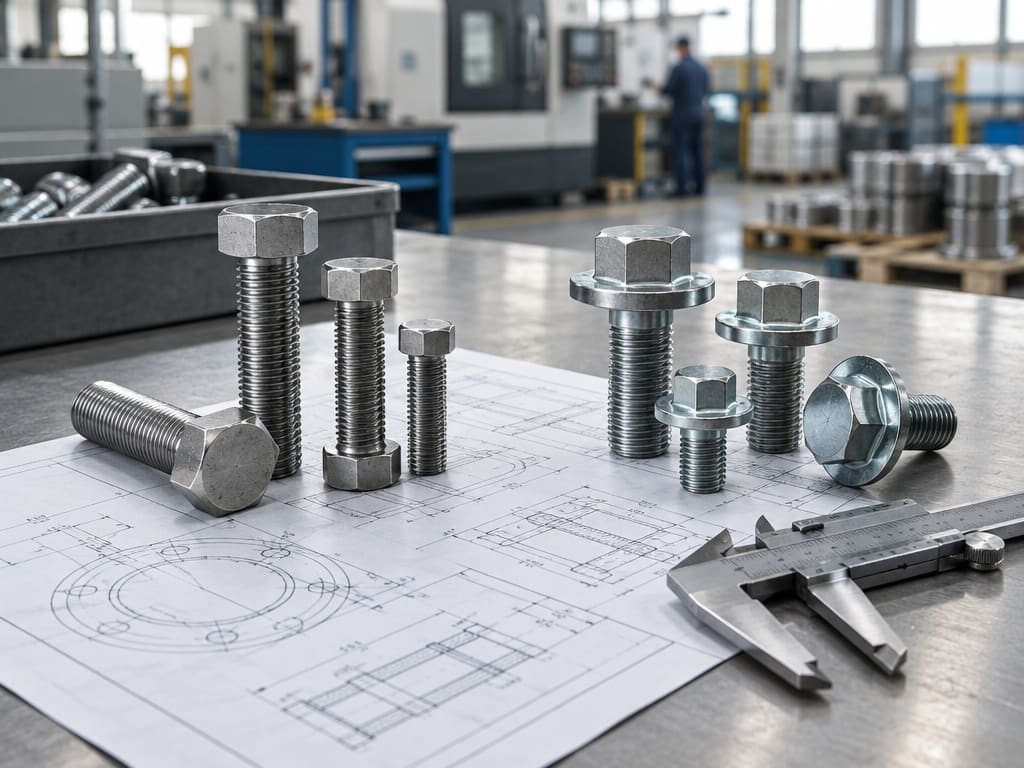
Forhex bolts,flange boltsand other products, special attention must be paid to distinguishing thread length, flange structure, head dimensions, bearing surface requirements, and matchingnuts. Sample review should cover appearance, key dimensions, assembly fit, thread go/no-go gauges, and necessary performance testing. Forcustom socket head cap screws,self-tapping screw manufacturers,self-drilling screw suppliersand other differentiated requirements, it should be confirmed whether the forming, heat treatment, and surface treatment plans match the final operating conditions.
After samples pass, a signed sample record shall be formed, retaining the drawing version, sample number, test results, and the date confirmed by both parties. It must be emphasized: without written approval, materials, processes, molds, surface treatment, or outsourced operations must not be changed without authorization. This clause should be written into the technical agreement as the basis for subsequent mass production acceptance.
V. Trial Production and Mass Production Introduction: Establishing a Control Chain from First Article to Batch Release
Before trial production, it should be confirmed that the purchase order, technical agreement, inspection specification, packaging labels, and delivery plan use the same version of specifications. First article inspection should focus on key dimensions, threads, head or flange structure, materials, and surface treatment; when necessary, the buyer should confirm the first article and sign and retain it on file.
During mass production, continuous attention should be paid to raw material batches, equipment parameters, heat treatment and surface treatment processes, and records of outsourced operations. Establish a sampling inspection and nonconforming product isolation mechanism, and clarify the approval process for rework, replenishment, concession acceptance, and return.
The focus of sampling inspection differs across procurement scenarios:expansion bolt wholesalebusinesses focus more on batch consistency and packaging quantity;carriage bolt factoriesproducts require key inspection of the square neck structure and head forming;machine screw wholesalefocuses more on thread precision and head appearance. Setting applicable sampling inspection items based on risk and use is more effective than a one-size-fits-all inspection plan. Before mass production release, confirm that batch inspection records, packaging quantities, label information, and shipping documents are complete.
VI. Hex Bolt/Flange Bolt Acceptance Node Table
The following node table can be used as an attachment to procurement documents and can also be directly converted into supplier process control requirements.
- Node A: Order and Drawing Confirmation—Verify standards, specifications, material grades, surface treatment, quantity, packaging, and version number; suspend scheduling if inconsistent.
- Node B: Raw Material Incoming Inspection—Check material certificates, heat numbers, and appearance; conduct material re-inspection or sampling inspection according to procurement specifications.
- Node C: Forming and Machining First Article—Inspect hex head or flange head dimensions, shank length, chamfers, and key tolerances, and retain first article records.
- Node D: Thread machining— Check pitch, thread profile, effective thread length, and go/no-go gauge results; isolate and trace abnormal batches.
- Node E: Heat treatment or performance testing— Verify mechanical properties, hardness, or other specified items according to applicable standards and order requirements, and retain reports.
- Node F: Surface treatment— Verify contract-specified items such as coating or plating type, appearance, and thickness; check whether hydrogen embrittlement risk control requirements apply.
- Node G: Finished product sampling inspection— Check appearance, key dimensions, markings, and necessary assembly fit; sampling plans and acceptance criteria shall be as agreed by both parties.
- Node H: Packaging and shipping— Verify quantity, batch labels, protection methods, carton marks, and accompanying documents to ensure information traceability.
Suggested table columns: acceptance node, inspection item, method or basis, sampling requirements, acceptance criteria, record documents, responsible party, and exception handling. Issuing this table with the order can significantly reduce disputes during the acceptance stage.
VII. Delivery, traceability, and exception handling: making quality issues locatable and closable
Before shipment, verify the order, packing list, material or inspection documents, country of origin, and export documentation requirements. Establishing a batch traceability chain that links raw material heat/batch numbers, production batches, inspection records, packaging labels, and shipping records is the foundation of quality closed-loop management.
When wrong material, mixed batches, dimensional deviations, or surface treatment abnormalities occur, first isolate the affected batches, then confirm the scope, cause, and corrective actions. The contract should specify complaint response time limits, replenishment or return mechanisms, cost bearing, and requirements for submitting corrective and preventive actions.
When purchasing for overseas markets, confirm applicable standards, document language, packaging markings, and destination compliance requirements in advance; this is especially true forfastener export suppliers, as incomplete documents or non-compliant markings may cause the entire shipment to be detained.
VIII. Common procurement models and supplier matching recommendations
- Stable repeat purchases of standard parts: Prioritize inventory, lead time, batch consistency, and document management; you may comparecustom bolt wholesaleoptions to lock in annual pricing and replenishment cadence.
- Non-standard or custom products: Focus on evaluating drawing conversion, tooling development, sample iteration, and change control capabilities; suitable for choosing factories withnon-standard fastener machiningexperience.
- High-strength or high-risk applications: Prioritize verification ofhigh-strength bolt manufacturers'related process control, performance validation, and traceability records; require third-party inspection reports when necessary.
- Find specialized suppliers by product: can be evaluated separatelycarbon steel nut factories,stainless steel fastener manufacturers,carriage bolt factoriesand various specializedscrewsuppliers for suitability.
- Functional fasteners: when purchasingself-tapping screws,self-drilling screws,expansion boltsorlock nuts, set up dedicated verification items based on the substrate, installation tools, and operating environment.
IX. Procurement Process Self-Check List: A Closed Loop from Inquiry to Mass Production
- Does the inquiry information include complete drawings, standards, materials, surface treatment, quantity, and delivery date?
- Does the supplier's quotation clearly specify specifications, quality requirements, packaging, documentation, delivery terms, and change rules?
- Are the same version of technical requirements used for samples, first articles, and mass production inspection?
- Have the key acceptance milestones, sampling methods, acceptance criteria, and responsibilities for handling exceptions been confirmed in writing?
- Can batch identification and quality records be traced back to raw materials, production, and inspection stages?
Readers are advised to embed the acceptance milestone table in Section VI directly into the procurement documents and, based on their own product risk level, select appropriatefastener suppliers. Only when every milestone from inquiry to mass production has a written basis can fastener procurement truly shift from "comparing prices" to "controlling risk."