News & Technical Insights
Authoritative metallurgical whitepapers, DIN/ISO international fastener standards, plant expansion notices, and global container logistics intelligence curated by the JJ Fastener technical team.

 TECHNICAL INSIGHT
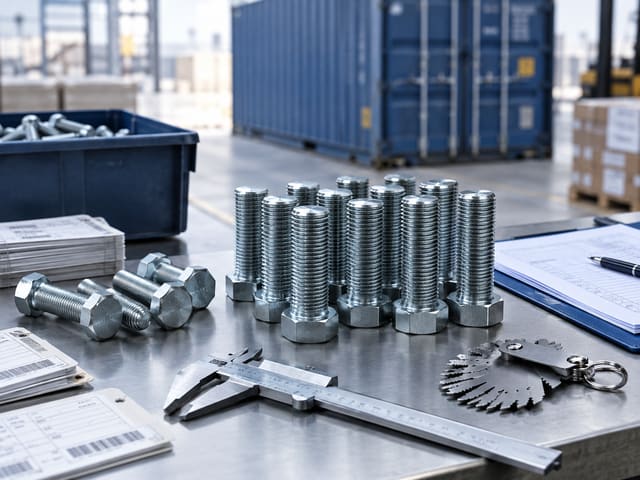
US Standard Bolt Export Compliance Guide: From Standard Confirmation to Packing Release
Even if a shipment of bolts is produced and shipped on time, it may still be rejected at the destination port due to inconsistent understanding of standards, physical parameters, inspection documents, or packaging markings. This article outlines the key verification steps for exporting US standard bolts and provides a practical process from order acceptance and production to shipping traceability, helping companies stop risks before packing.
 TECHNICAL INSIGHT
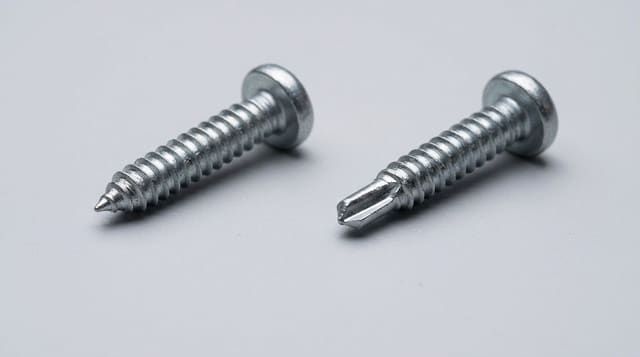
Self-Tapping vs Self-Drilling Screws: What Buyers Should Specify
Compare self-tapping and self-drilling screws, review DIN 7504 sizes and plan substrate, hole preparation and RFQ details before ordering.
 TECHNICAL INSIGHT
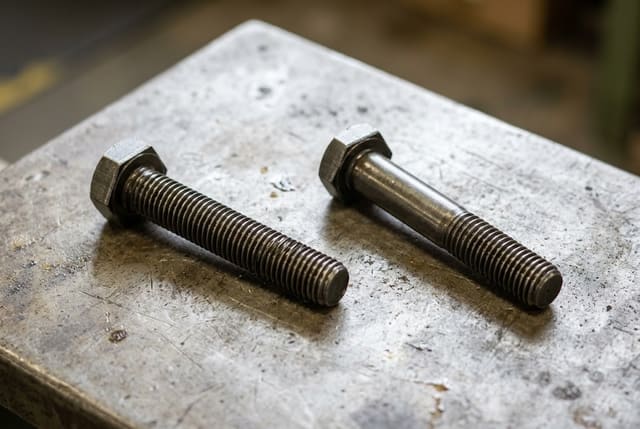
Fully Threaded vs Partially Threaded Hex Bolts: A Buyer's Selection Checklist
Compare fully and partially threaded hex bolts. Check thread length, assembly fit and substitution requirements, then prepare a clear bulk purchase RFQ.
 TECHNICAL INSIGHT
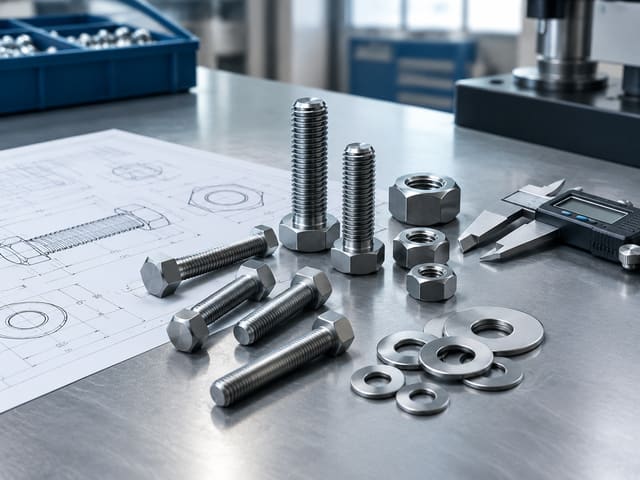
The Complete Fastener OEM Contract Manufacturing Workflow: Supplier Evaluation Methods from Inquiry and Sampling to Mass Production
Risk in fastener OEM projects runs through requirements definition, supplier screening, quotation, sample validation, and volume delivery; low price or similar appearance cannot replace verification of standards, materials, processes, and performance. The article outlines the key control points at each stage and proposes a supplier evaluation method based on traceable data, trial production performance, and quantitative scoring.
 TECHNICAL INSIGHT
Fastener Procurement Standardization: A Closed-Loop Process from Requirement Definition to Supplier Performance
This article outlines the complete fastener procurement process, from requirement definition, unified RFQ, and supplier qualification to sample validation, mass production delivery, and exception improvement. By clarifying standard versions, technical requirements, quotation bases, and traceability mechanisms, procurement teams can reduce quality, cost, and delivery risks while continuously optimizing supplier management.
 TECHNICAL INSIGHT
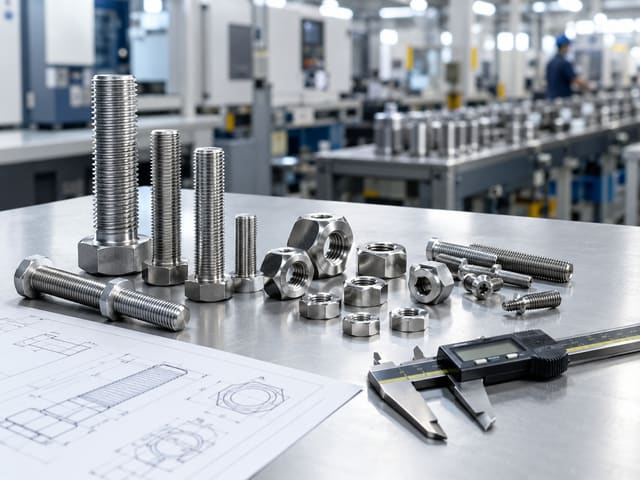
Full Fastener OEM Contract Manufacturing Process: From Inquiry and Sample Validation to Mass Production and Supplier Evaluation
This article breaks down the fastener OEM contract manufacturing process in project progression order, covering requirement clarification, technical review, quotation, sample validation, trial production, and mass production control. It also provides a seven-dimension supplier evaluation framework to help procurement and engineering teams comprehensively assess quality, cost, delivery, compliance, and long-term cooperation risks.
 TECHNICAL INSIGHT
From Returns to Closed-Loop: How the Fastener Procurement Defect Rate Was Reduced to 0.3‰
An auto parts supplier experienced fastener returns and impacts on assembly delivery due to insufficient standard identification, batch traceability, and process control. By unifying statistical standards, improving procurement technical agreements, and strengthening supplier process management and batch verification, the procurement defect rate in this case was reduced to 0.3‰.
 TECHNICAL INSIGHT
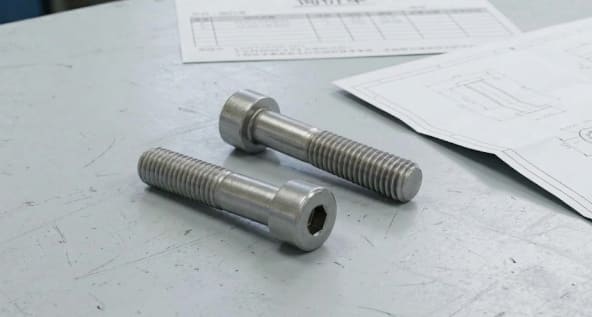
Custom Stainless Steel Fasteners: RFQ Checklist
Prepare a custom stainless steel fastener RFQ with drawings, material and thread specifications, inspection requirements, quantities and delivery details.
 TECHNICAL INSIGHT
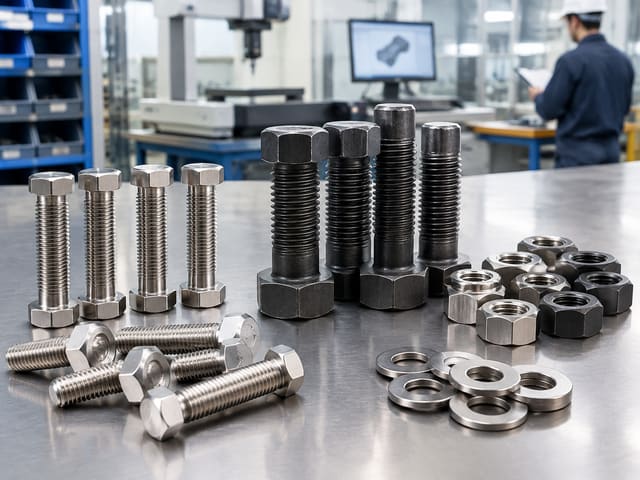
Fastener Selection Guide: Imported vs. Domestic — How to Judge Based on Operating Conditions and Standards
The actual performance of fasteners depends on materials, standards, manufacturing processes, quality inspection, and installation conditions, and cannot be judged solely by imported versus domestic origin or price level. Stainless steel fasteners and high-strength bolts serve different purposes; procurement should specify technical requirements, verify batch quality, and assess suppliers' delivery and traceability capabilities.