Fastener Selection Guide: Imported vs. Domestic — How to Judge Based on Operating Conditions and Standards

Daniel
With experience in fastener manufacturing and export sales, we specialize in bolts, nuts, screws, self-drilling screws, fully threaded rods, and customized fastening solutions for construction, machinery, automotive, and industrial applications.
Procurement challenges: price, grade, and actual operating conditions—which one really determines fastener performance?
After equipment has been running for a period of time, bolts at vibrating locations loosen; outdoor guardrails or supports show surface corrosion in less than two years; screws from the same batch feel inconsistent during assembly, and some even strip or break. These problems are common in procurement and quality management, and they often cannot be explained by a single phrase such as "imported" or "domestic." A country-of-origin label cannot answer selection questions. What truly determines performance is material, heat treatment, thread machining, surface treatment, inspection requirements, and the degree to which the product matches the operating conditions.
Procurement personnel usually have to balance cost, lead time, and reliability. For the same type of nut or bolt, differences in material grade, heat treatment process, and surface treatment method can lead to significant differences in actual load-bearing capacity, corrosion resistance, and consistency in use. Treating price as the only reference can easily lead to higher maintenance and replacement costs later; conversely, blindly pursuing high-priced imported parts may not solve the selection problem itself.
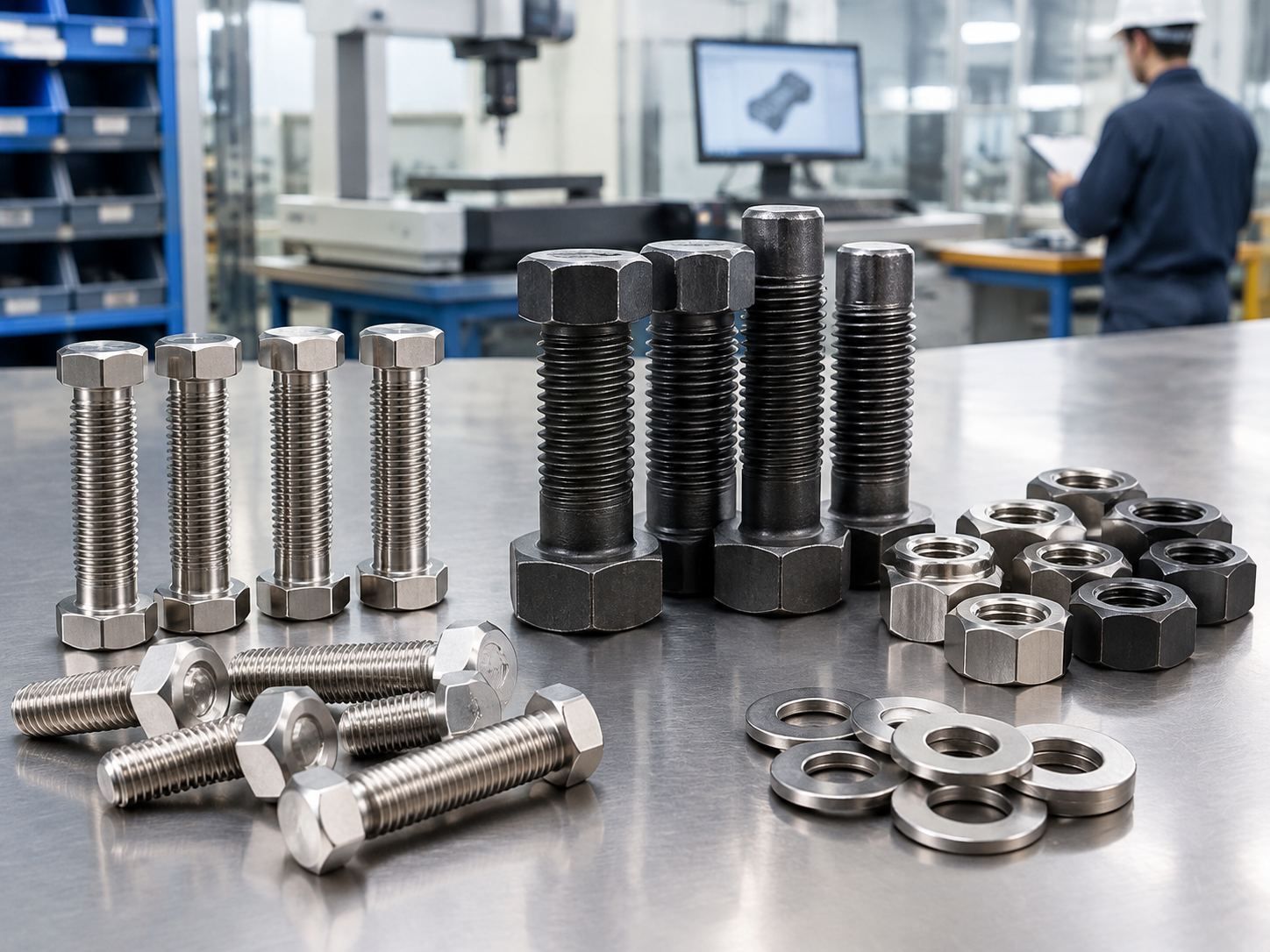
A more reasonable approach is: first distinguish the respective uses and performance priorities of stainless steel fasteners and high-strength bolts, then compare specific standards, property grades, manufacturing capabilities, and batch quality item by item. Only when technical requirements are clearly specified can imported and domestic products have a comparable basis.
First clarify the concepts: stainless steel fasteners are not the same as high-strength bolts
The core advantage of stainless steel fasteners is usually corrosion resistance, making them suitable for humid, outdoor, or chemically aggressive environments. However, the word "stainless" does not mean high strength. Their actual load-bearing capacity depends on the specific material grade, processing state (such as cold heading, solution treatment, and amount of cold deformation), and the product standard applied. For the same hex bolts, tensile strength and yield strength can differ considerably among different grades and states, so whether they can be used for load-bearing connections cannot be judged solely by the material name.
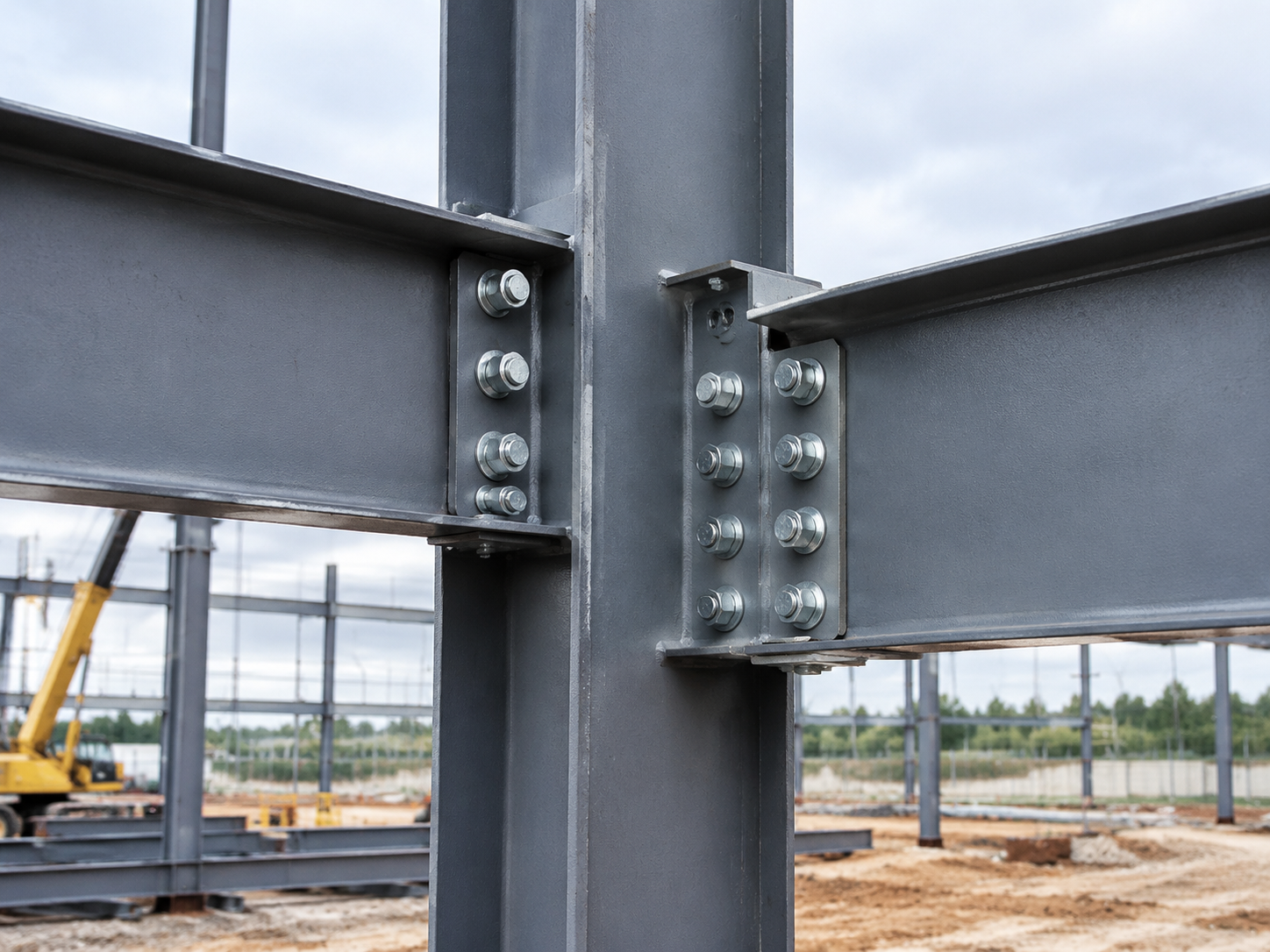
High-strength bolts, by contrast, focus on mechanical properties and connection design requirements, and are commonly used in load-bearing scenarios such as steel structures, bridges, and industrial plants. During selection, it is necessary to verify the property grade, applicable standard, connection type (slip-critical or bearing-type), and matching nuts and washers. Take heavy hex structural bolts for steel structures as an example. These products are usually supplied under the ASTM A325 system and are high-strength carbon steel fasteners used in connections for steel structures and bridges. Their preload, torque coefficient, and matching nuts all need to be controlled according to specifications. By comparison, ordinary stainless steel bolts and carbon steel high-strength bolts solve different problems and cannot be directly compared horizontally based only on strength values or unit prices.
It should also be noted that hex bolts, flange bolts, studs, and similar items are product forms, while material grades and performance requirements are another dimension. The same external shape can be made into products of different grades and different materials. During procurement, "form" and "performance" should be described separately, avoiding vague expressions such as "high-strength hex bolts" in place of complete technical specifications.
How to compare real performance: look at standards, materials, processes, and verification
The first step in comparing fastener performance is to verify the applicable standard, dimensions, property grade, material grade, and product marking, and confirm that incoming goods are consistent with drawings, procurement specifications, and operating conditions. The standard version should also be clearly stated, because different versions may differ in dimensions, tolerances, and inspection items. For general mechanical assembly and general industrial use, products such as IS 1363 hex bolts offer both carbon steel and stainless steel material options, so procurement should specify material, thread size, and surface treatment item by item rather than simply writing "one batch of hex bolts."
The second step is to focus on process control. Whether heat treatment is stable, whether the forming method is appropriate, how precise the thread machining is, and whether surface treatment is uniform all affect final performance. For high-strength products in particular, attention should be paid to mechanical properties and batch consistency, because load-bearing connections are highly sensitive to fluctuations in preload and torque coefficient. Regarding surface treatment, hot-dip galvanizing is suitable for outdoor and severely corrosive environments, but improper control of process parameters can also affect thread fit and hydrogen embrittlement risk, so it needs to be evaluated according to standards.
The third step is to determine verification indicators based on operating conditions. The importance of indicators such as corrosion resistance, tensile strength, yield strength, hardness, fatigue performance, and loosening resistance varies with the application scenario. When necessary, suppliers can be required to provide material certificates, factory inspection reports, or third-party test reports. Taking ASTM A325 as an example, its current classification can be verified according to the relevant requirements of ASTM F3125 Grade A325, and the specific items should be based on the applicable standard and design documents; old-version descriptions should not be assumed to still apply.
The fourth step is to check compatibility and installation requirements. The grade matching of bolts and nuts, washer configuration, installation method, and preload requirements all affect connection reliability. Finally, avoid treating the test results of a single sample as proof of long-term stability. What truly deserves attention is production process control, traceability, and batch sampling mechanisms.
Imported vs. domestic: compare supply chain capabilities, not country-of-origin labels
Imported products may have advantages in coverage of specific standards, brand accumulation, or recognition in overseas projects, but lead time, cost, certification applicability, and after-sales response speed also need to be evaluated. Some projects specify particular standards or owner-approved lists; in such cases, country of origin is only the result, while standard compliance is the reason.
The performance of domestic products depends on manufacturing equipment, quality systems, raw material management, testing capabilities, and product traceability. There are obvious differences among different fastener manufacturers, and there may also be differences among different production lines of the same manufacturer. Industry demand fluctuates with changes in infrastructure and manufacturing projects, but procurement decisions should still return to project standards, application scenarios, and full life-cycle costs; macro trends cannot replace verification of specific products.
When evaluating fastener suppliers, several aspects can be emphasized: whether sample verification is cooperative, whether batch documents are complete, whether capacity and lead time are stable, whether the exception handling mechanism is clear, and whether long-term supply capability is guaranteed. These capabilities are better predictors of actual performance in use than a phrase such as "imported" or "domestic."
Select by application scenario: consider corrosion resistance, load bearing, and anti-loosening separately
In humid, chemically aggressive, or outdoor environments, the evaluation of stainless steel fasteners and surface treatment solutions should prioritize the type of corrosive medium, ambient temperature, and maintenance cycle. The corrosion resistance of different stainless steel grades varies considerably, and the requirements for coastal environments and industrial atmospheric environments are also different, so selection should not be generalized.
For load-bearing connections such as steel structures, high-strength bolts of the corresponding grade, matching nuts, and installation processes should be selected according to design specifications; ordinary bolts must not be used to replace products of the specified grade. Such connections usually have clear requirements for preload and construction tools, and installation quality itself is part of performance.
Vibration conditions require comprehensive consideration of the connection structure, preload, locking solution, and maintenance inspection cycle. Lock nuts are not suitable for all connections. All-metal locking, nylon-insert locking, and thread adhesives each have their applicable boundaries, and choosing the wrong one may instead affect assembly or disassembly.
For large-size or high-load connections, conventional tool installation and specialized tensioning solutions can be compared. First confirm tool conditions, construction space, and inspection methods, and then decide which method to use. The earlier the installation solution is determined, the less likely procurement specifications and accessories are to go wrong.
Procurement and acceptance checklist: translate performance requirements into contract terms and inspection items
Procurement documents should specify the standard version, dimensions, grade, material, surface treatment, marking, packaging, and inspection requirements, avoiding vague descriptions such as "high-strength" or "stainless steel." For products with clear standards, directly citing the standard number and grade is more effective than adjectives.
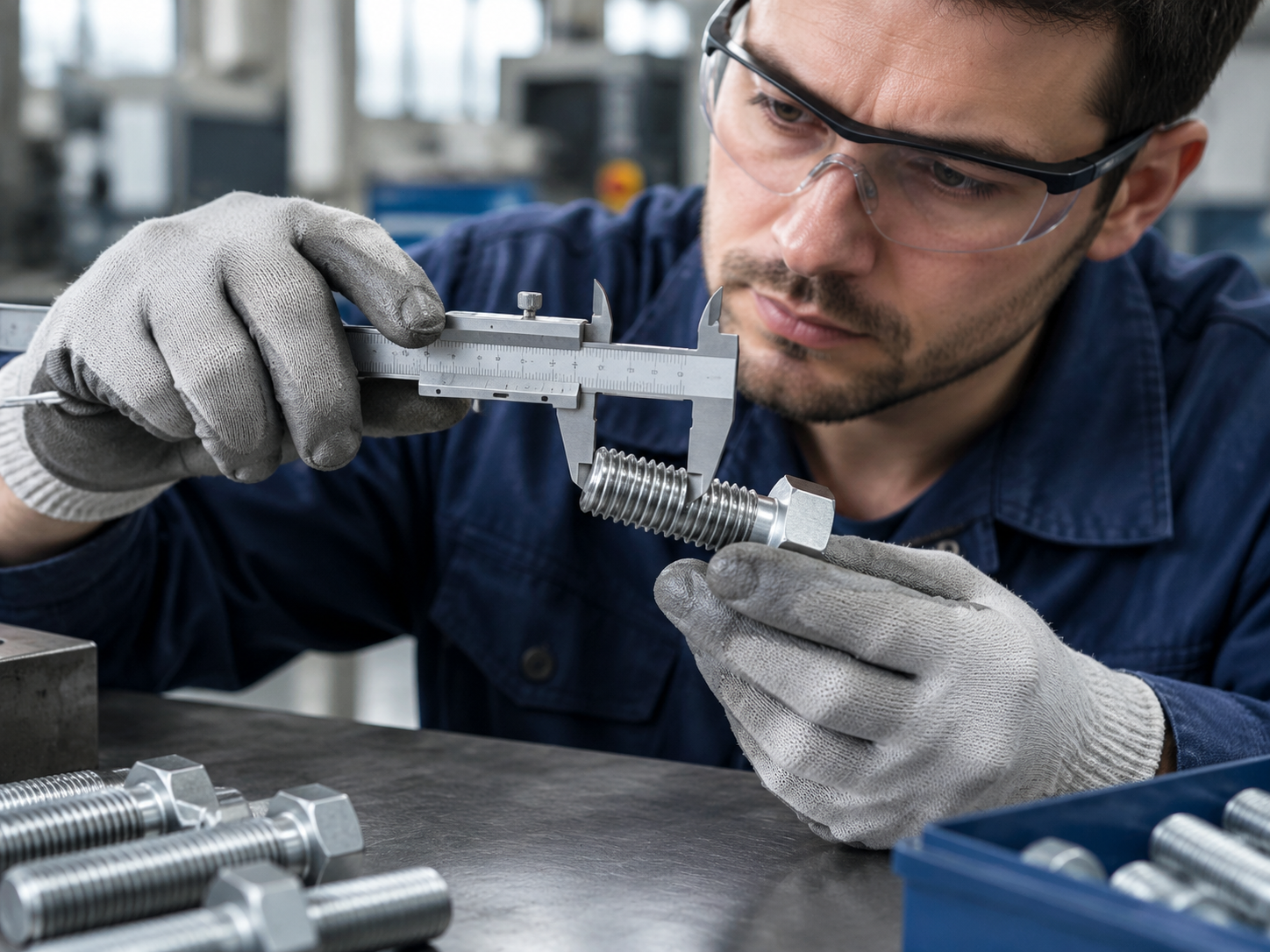
Incoming verification should include appearance, dimensions, marking, quantity, and accompanying documents. Sampling and re-inspection rules should be established according to risk level, and batch traceability records should be retained. For load-bearing products, the value of batch records is especially evident when abnormalities occur.
For non-standard applications, drawing confirmation, sample testing, and operating-condition verification should be completed before arranging mass production. When involving hex bolt manufacturers, flange bolt suppliers, or heavy hex nut manufacturers, focus on confirming their manufacturing and inspection capabilities for the corresponding standard products, rather than only looking at the product range in brochures.
How to find matching supply and customization capabilities
When screening high-strength bolt manufacturers, hot-dip galvanized bolt suppliers, carbon steel nut factories, or stainless steel fastener manufacturers based on project requirements, you should ask them to provide applicable standards and quality documents, and confirm whether their standard stock specifications match the project specifications.
When evaluating suppliers by category, you can separately examine the specification coverage and batch management capabilities of carriage bolt factories, lock nut suppliers, self-tapping screw manufacturers, self-drilling screw suppliers, and machine screw wholesale channels. The more dispersed the categories, the more important it is to confirm each supplier's real strengths, rather than concentrating orders with a single trader that claims to "do everything."
When involving custom socket head cap screws, custom special-shaped fasteners, non-standard fastener machining, fastener OEM contract manufacturing, or custom bolt wholesale, you should confirm in advance the drawing review process, sample verification cycle, tooling costs, and delivery schedule. These steps directly affect project progress and are best clarified at the quotation stage.
For export projects, you can further verify experience exporting ASTM-standard bolts, destination regulations, documentation requirements, and packaging markings; when purchasing expansion bolts wholesale, you need to confirm the base material type, installation conditions, and applicable loads, because the performance of expansion bolts depends heavily on the on-site base material. Comprehensively compare fastener export suppliers' quality traceability, communication efficiency, delivery stability, and after-sales response, and do not make the lowest quote the sole basis for decisions.
Conclusion: Suitability for the working conditions, standards compliance, and quality stability are more important than imported or domestic origin
Imported fasteners are not necessarily superior to domestic products, nor can domestic products be judged solely by origin as to whether they meet project requirements. Treating origin as the only criterion may both raise costs and obscure real technical risks.
Stainless steel fasteners and high-strength bolts have different performance objectives. The correct approach is to compare them item by item based on working conditions, standards, materials, processes, and verification results. First clarify what problem the connection needs to solve, then determine the standards and grades, and only then select the supplier.
Only by clearly defining technical specifications and establishing incoming inspection, installation control, and use and maintenance mechanisms can failure risks and life-cycle costs be reduced. For procurement, a purchasing specification that clearly states standards and inspection requirements is often more valuable than a low-price quotation.