2025 Heavy Machinery Fastener Procurement: Reliability, Supply Chain Resilience, and Operating Condition Fit

Daniel
With experience in fastener manufacturing and export sales, we specialize in bolts, nuts, screws, self-drilling screws, fully threaded rods, and customized fastening solutions for construction, machinery, automotive, and industrial applications.
Introduction: Equipment downtime may start with a single screw
For equipment manufacturers and maintenance teams, the most troublesome scenarios are often not major failures, but those small problems that are "hard to explain, hard to remove, and endless to replace": abnormal noise from moving parts, surface corrosion or even seizing of fasteners, difficulty in disassembling pins and joints, or a connection point that suddenly fails even though "it was still fine last month." Downtime losses, maintenance labor hours, and spare-parts waiting time add up, ultimately reflected in equipment availability and after-sales costs.
The operating conditions of heavy machinery determine that fasteners are not ordinary consumables. Continuous vibration, impact loads, frequent starts and stops, outdoor corrosive environments, and cramped installation spaces all affect the preload retention capability and long-term reliability of threaded connections. A singlescrewor a singlenutselection deviation may evolve into connection loosening, seal failure, or even structural safety issues.

This article interprets the 2025 global procurement trends for heavy machinery screws and relatedfasteners, focuses on three changes that buyers must pay attention to, and provides actionable selection approaches and a supplier evaluation framework.
Data note: The research materials for this article do not provide verifiable 2025 market size, growth rate, or regional share data. Before formal publication, market data with clearly stated sources, statistical scope, and statistical year should be added to avoid mistakenly presenting industry cases as market statistical conclusions.
Change 1: Procurement focus shifts from unit price to full life-cycle cost and reliability
When procurement comparisons remain limited to per-piece quotations, it is easy to overlook the real major costs: equipment downtime losses, maintenance labor hours, spare-parts waiting time, and the secondary costs brought by repeated replacement. Aboltwith a slightly higher unit price but good batch consistency is often "cheaper" than a low-priced product that fails frequently.

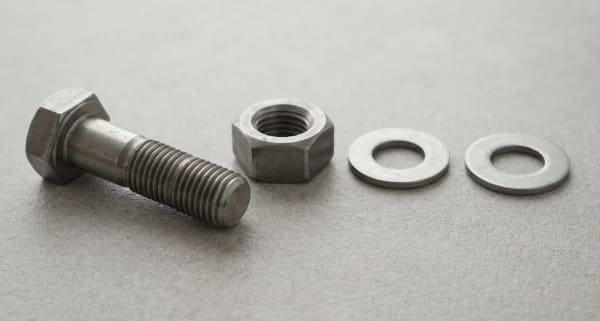
Under typical heavy machinery operating conditions, buyers need to focus not only on specifications and dimensions, but also on preload design, vibration loosening risk, material and surface treatment matching, the strength grade of matching nuts, and assembly consistency. The "abnormal noise, fastener seizing, and difficult disassembly of pin joints" reported from maintenance sites are essentially external manifestations of failure modes, and should be translated into procurement acceptance questions: What is the failure mechanism of this connection point? How can it be prevented? If a problem occurs, can the batch be traced?
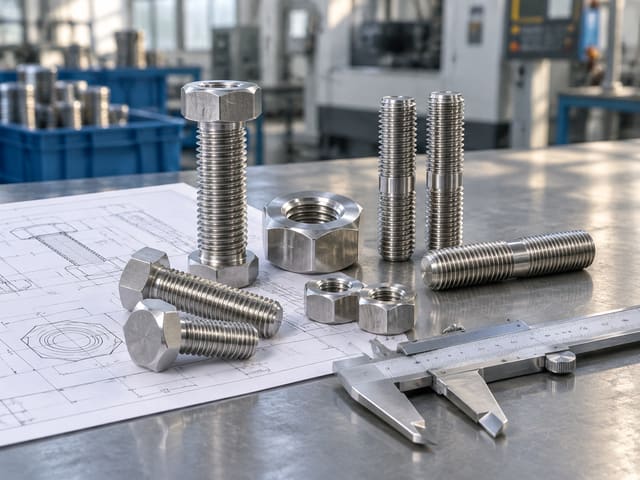
The procurement list usually needs to cover high-strength bolts, hex bolts, flange bolts,studs, lock nuts, and necessary stainless steel fasteners, and each item should be verified according to actual application conditions rather than substituted merely based on similar names. For key positions requiring high-strength connections, priority can be given tohigh-strength bolt manufacturerswith material and heat treatment control capabilities; for outdoor or corrosive environments, the applicability ofstainless steel fastenersneeds to be evaluated in combination with strength and medium conditions.
Recommended quantitative indicators to establish include: annual fastener cost per unit of equipment, failure and repair rate, delivery lead time, batch consistency, and quality traceability completeness. These indicators reflect true full life-cycle value better than unit price.
Change 2: Supply chain layout places greater emphasis on regional service, delivery resilience, and traceability
In a global procurement environment, delivery fluctuations, cross-border transportation uncertainty, inventory deployment, and after-sales response speed directly affect equipment manufacturers' production scheduling and the spare-parts support capability of maintenance systems. The risks of single sourcing and long-chain supply have been repeatedly verified in practice in recent years.
Take Twinco's appointment as a distributor of Asian fuel injection components as an example. This type of regional distribution and local service model deserves attention—it reflects a supply chain approach of "being close to the market and responding quickly." However, it must be made clear: this case involves fuel injection components and cannot serve as direct evidence of fastener market size or growth.
When evaluating fastener suppliers, capacity and stocking capability, material certification documents, batch traceability systems, inspection processes, exception response mechanisms, and export experience should be checked. For cross-border projects, it is also necessary to understandthe compliance requirements for U.S.-standard bolt exports,Hot-dip galvanized bolt supplierscoating quality control, as well as document adaptation under different standards systems; specific standards and certifications must be confirmed one by one according to the target market and project specifications.
In terms of supply strategy, it is recommended to establish dual-source or safety stock mechanisms for key specifications, while being alert to the assembly and performance risks brought by unverified substitutes. When selectingfastener export suppliers, export packaging, documentation capability, and logistics coordination are also evaluation items.
Change 3: Specification customization and application adaptation become differentiated procurement capabilities
Heavy equipment designs are becoming increasingly diverse, with installation space, vibration characteristics, load distribution, and maintenance methods all differing. Procurement needs to shift from "general-purpose part thinking" to a selection logic driven by "working conditions and drawings."
Common product combinations include: hex bolts, flange bolts, carriage bolts, expansion bolts, socket head cap screws, as well as heavy hex nuts, carbon steel nuts, and lock nuts. In thin sheet or sheet metal connection scenarios, self-tappingscrewsalso have clear applications, for example DIN 7973 slotted pan head self-tapping screws, which use a single straight slot and pan head structure and are suitable for occasions requiring pan head assembly; DIN 7972 slotted countersunk head self-tapping screws (corresponding to ISO 1482) are suitable for countersunk flush mounting and general assembly, with steel specifications covering ST2.2–ST6.3. Such products are relatively common in chassis, guards, and auxiliary structural parts. During procurement, you can confirm material, thread specifications, and surface treatment withself-tapping screw manufacturersorself-drilling screw suppliers.
For non-standard connection points,custom special-shaped fastener,non-standard fastener machining, andfastener OEM contract manufacturingare common paths. Buyers must confirm drawing versions, material grades, heat treatment requirements, surface treatment, tolerances, and inspection standards to avoid the problem of "drawings correct, batches deviating." When involvingcustom socket head cap screwsorcustom bolt wholesale, first-article approval and change management are particularly critical.
Materials and protection need to be differentiated by environment: the applicability of stainless steel fasteners must be comprehensively evaluated in combination with strength grade, corrosive media, and mating materials; one cannot judge superiority merely by the word "stainless." For large-volume standard part demand, such asexpansion bolt wholesaleormachine screw wholesale, sample verification and batch data should likewise be required.
Whether custom or standard parts, suppliers should be required to provide sample verification, first-article approval, and change management processes to reduce assembly deviations and field failure risks after batch delivery.
Turn trends into procurement actions: establish a quantifiable supplier evaluation form
Trends only become meaningful when they are translated into an evaluation form. It is recommended to establish a scoring mechanism from four dimensions:
- Quality: Verify material and performance documents, dimensional inspection records, batch traceability capability, and the level of failure analysis and corrective actions.
- Delivery: Evaluate coverage of regularly stocked specifications, customization lead times, capacity flexibility, and export packaging and logistics coordination capabilities.
- Technology: Confirm whether the supplier can provide recommendations for bolts, nuts, and matching fasteners based on equipment operating conditions, and support samples and engineering communication.
- Cost: Simultaneously compare purchase price, inventory carrying costs, transportation costs, assembly efficiency, and rework and downtime risks.
Supplier searches and inquiries can be segmented by demand, for examplehex bolt manufacturers,flange bolt suppliers,carriage bolt factories,heavy hex nut manufacturers,stainless steel fastener manufacturers,lock nut suppliers,carbon steel nut factoriesorfastener manufacturers. It should be noted that a name match does not equal capability verification; ultimately, one must still return to documents, samples, and batch data.
Cases and data: distinguish usable signals from citable market evidence
The approach to solving problems of limited installation space, frequent start-stop operation, and positioning accuracy in geared motor applications is worth learning from, as it demonstrates the importance of matching operating conditions. However, this case is not a market statistic for heavy machinery screws, and its boundaries should be clearly defined when cited.
The 41.07% mentioned in the materials does not specify the corresponding metric, sample, time range, or calculation method. The source and meaning must be verified before publication, and it should not be directly written as a market growth rate or procurement return rate.
If market data need to be supplemented, it is recommended to cover: the 2025 market size and year-on-year change, regional demand structure, product category share, major end-use industries, and the statistical scope explanation of the data agency. In the absence of reliable quantitative evidence, use supply chain cases and procurement indicators for qualitative analysis, and clearly mark the boundaries of the cases to avoid exaggerating them into general conclusions.
Conclusion: Reshaping fastener procurement through reliability, resilience, and fit
The three major changes can be summarized as: shifting from low-price procurement to full life-cycle value, shifting from single sourcing to valuing supply chain resilience, and shifting from prioritizing standard parts to specification fit verified according to operating conditions.
It is recommended that buyers first identify high-risk connection points and historical failure records, then define technical requirements, evaluate suppliers, and continuously review through samples and batch data. Procurement teams can, based on equipment drawings, operating conditions, and target market standards, contactfastener suppliersto request selection recommendations, samples, and traceable quality documents, turning every inquiry into a capability verification.