8.8 vs 10.9 vs 12.9 Bolts: Markings, Strength Differences and Substitution Limits

Daniel
Con experiencia en la fabricación y venta de exportación de sujetadores, nos especializamos en pernos, tuercas, tornillos, tornillos autoperforantes, varillas completamente roscadas y soluciones de fijación personalizadas para aplicaciones en construcción, maquinaria, automoción e industria.
The M12 bolts marked as grade 8.8 have different specifications from the M12 bolts marked as grade 10.9 and grade 12.9. Threads may be able to be screwed in, but the mechanical performance requirements are different. Even if the performance level is higher, it does not mean that the bolt is suitable for the original assembly structure.
When the purchaser compares the strength grades of metric bolts, the primary basis is the drawings and the requirements for the use of connection pairs. Be sure to understand the label and confirm the complete specifications; If you need to change the strength level, you must first obtain approval. The ISO 898-1 standard specifies the mechanical performance requirements framework for carbon steel and alloy steel fasteners, but it is not responsible for determining whether a certain connection structure design is qualified.
What Do 8.8, 10.9 and 12.9 Mean?
These numbers are property class designations. In the ISO 898-1 designation system:
The number before the decimal point, multiplied by 100, gives the nominal tensile strength in MPa.
The number after the decimal point, divided by 10, gives the nominal yield-to-tensile strength ratio.
Multiplying those two values gives the nominal yield strength.
For 8.8, the calculation is 8 × 100 = 800 MPa, followed by 800 × 0.8 = 640 MPa. One MPa equals one N/mm².
| Property class | Nominal tensile strength | Nominal yield strength |
|---|---|---|
| 8.8 | 800 MPa | 640 MPa |
| 10.9 | 1,000 MPa | 900 MPa |
| 12.9 | 1,200 MPa | 1,080 MPa |
These are designation values, not a complete acceptance table. Actual minimum requirements come from the applicable standard and its conditions. For example, ISO 898-1:2013 specifies a minimum tensile strength of 1,040 MPa for class 10.9, rather than the nominal 1,000 MPa used to explain its name. Class 8.8 also has different minimum values on either side of the 16 mm diameter threshold.
Tensile strength, yield strength and proof load are different measures. Proof-load requirements must be checked separately; the table above is not a proof-load or tightening-torque chart.
What the Class Does—and Does Not—Tell You
The class identifies a set of mechanical property requirements. It does not, by itself, specify the bolt's dimensions, exact steel grade, coating, corrosion resistance or installation torque.
An 8.8 bolt is not automatically interchangeable with an A2-70 stainless steel fastener. Nor does a class 10.9 marking establish equivalence to an ASTM or SAE grade. Each system needs its own complete specification and application review.
Likewise, “DIN 933, M12” does not fully define a purchase. The required property class and finish still need to be stated. If the question concerns dimensional interchangeability, use our separate DIN 933 vs ISO 4017 replacement guide.
How Should Buyers Choose Between 8.8, 10.9 and 12.9?
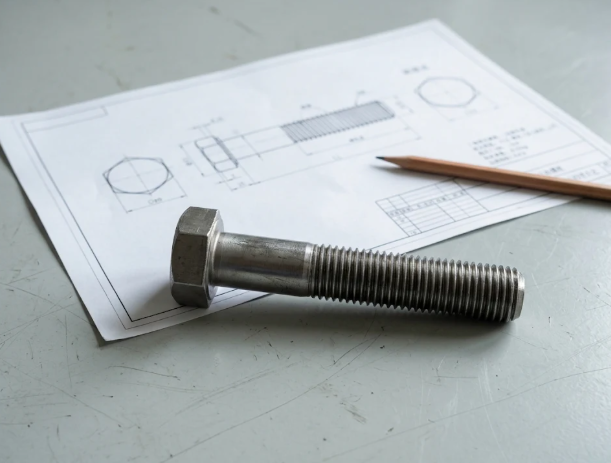
When the approved drawing specifies a class
According to the specified grade on the drawing, place an order with corresponding product standards, dimensions, and surface treatments. When the drawing requires a level of 8.8, the supplier recommends changing it to a level of 10.9, which is a change plan that needs to be reviewed. Adequate inventory and small price difference cannot be used as a reason for approval of the change.
When the drawing only says “high tensile bolt”
Fill in the missing technical requirements before placing an order. Please have the design manager confirm the strength grade, execution standards, and assembly conditions. Simply stating 'high-strength bolts' does not constitute an acceptable standard, and directly selecting grade 12.9 does not meet the technical requirements.
The review needs to consider the load, preload force, material of the connected parts, length of the meshing thread, usage environment, and installation method. ISO 898-1 itself does not specify fatigue performance, corrosion resistance, torque, and clamping force performance.
When a higher class is proposed
Overall review of the entire connection structure. Grade changes will alter the allowed tightening process, selection of matching parts, and failure risk assessment. Sometimes the reliability of a connection is not determined by bolts, but by nuts, internal threads, or the substrate being connected. When selecting grade 12.9, special attention should be paid to the operating conditions, factory processing capacity, and tightening scheme. ISO 898-1 cautions that the use of property class 12.9 should be considered carefully, as service environments may cause stress corrosion cracking. This prompt requires an evaluation of the operating conditions, not a one size fits all ban or unconditional recommendation for use.
Review the Finish, Nut and Washer Together
Separate the coating and its management requirements from the performance level. The black appearance cannot recognize the grade, and higher grades themselves do not provide better corrosion resistance.
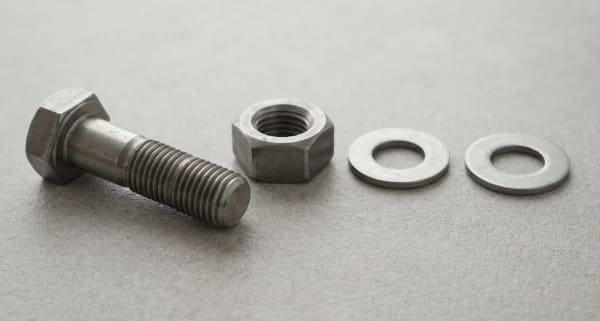
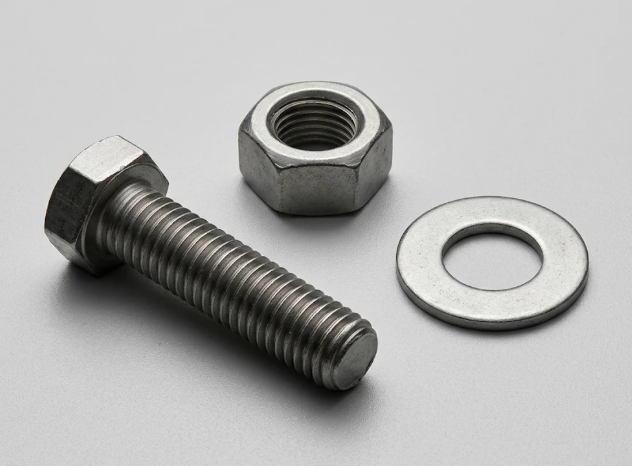
For a comparison of coating options, see our hot-dip galvanized vs. zinc-plated bolts guide. For electroplated high-strength fasteners, ask how the specified coating process minimizes the risk of hydrogen embrittlement. ISO 4042 explains that sensitivity increases with hardness and establishes requirements and recommendations to minimize risk. The general statement of coating color or part "baking" does not prove compliance with the required process. For bolt components using nuts, confirm nut standards, performance levels, styles, threads, and coatings. ISO 898-2 covers nuts with specific performance levels; Nut names (such as 8, 10, and 12) should not be interpreted as bolt names (such as 8.8, 10.9, and 12.9). Confirm the compatibility of the actual combination, rather than assuming that matching numbers or threads are sufficient. Specify the required washer type and hardness as well. Do not select a washer solely because its hole fits the bolt.
For flange-bolt assemblies, see our guide to whether flange bolts need washers.
Can a 10.9 Bolt Replace an 8.8 Bolt?
Only after the proposed substitution has been reviewed and approved for the assembly. The same applies when moving to 12.9 or changing to a lower class.
Before approval, compare:
Product standard, thread size and pitch, length, head geometry and thread length.
Required property class and the applicable mechanical acceptance criteria.
Nut or tapped-hole requirements, washers and bearing surfaces.
Coating, lubrication, environment and the specified tightening procedure.
Do not copy a torque value from the original bolt or select one from diameter and class alone. Changing the coating or lubrication can also change tightening behaviour. Obtain the approved installation requirement for the actual assembly.
Full versus partial thread is another separate decision. See our fully threaded vs partially threaded hex bolt guide for the geometry checks.
Check Markings Against the Delivery Documents
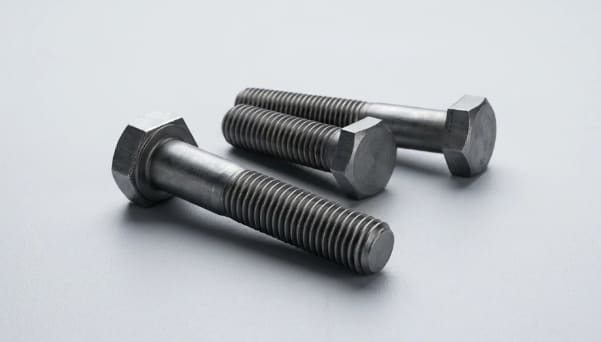
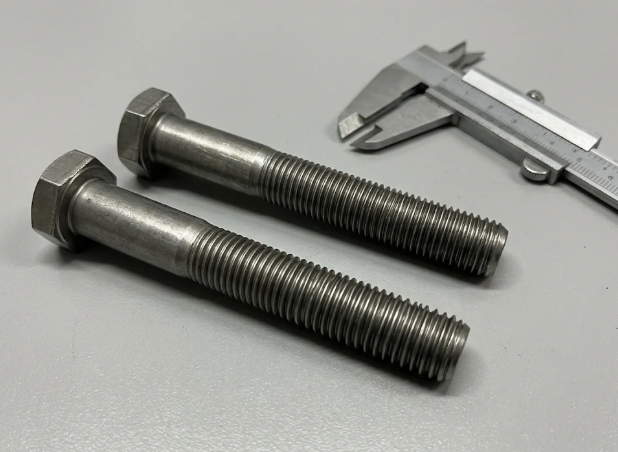
Check the performance level and manufacturer identification markings required by applicable product and labeling rules. Some head geometries may limit a fastener's tensile or torsional capacity. A property-class marking alone does not verify that a supplied batch meets all applicable mechanical requirements; check the specified product standard and inspection records. The visible 10.9 stamp is a recognition feature; It cannot replace the inspection evidence required by the purchase order.Agree on what records are needed and their relationship with the delivery batch. Depending on the specification and order requirements, these may include mechanical test results, dimensional inspection records, and coating records. Maintain consistency in bolt grade, product description, batch identification, and document references in quotations, orders, packaging, and inspection records. If the records are lost or do not match, please resolve them before accepting delivery.
Send a Complete Specification for Quotation
To discuss an order with JJ Fastener Factory, send an inquiry containing:
The drawing revision or product standard and edition.
Thread diameter and pitch, length and required thread configuration.
Property class and the applicable mechanical property standard.
Finish, coating standard and any specified lubrication condition.
Required nuts, washers and quantities for each item.
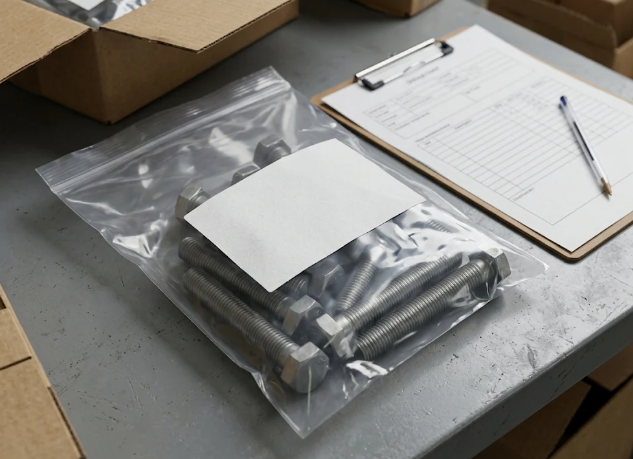
Quantity per size, inspection documents and packaging requirements.
Application details and any proposed substitution needing review.
Explain which requirements have been approved and which requirements are still uncertain. Before placing an order, confirm the required size, property class, finish, and documents. For an existing assembly, provide the original specification so the responsible technical approver can review any proposed change.