DIN 933 vs ISO 4017: What to Check

Daniel
Mit Erfahrung in der Herstellung von Verbindungselementen und im Exportvertrieb sind wir auf Schrauben, Muttern, Bolzen, selbstbohrende Schrauben, Gewindestangen und kundenspezifische Befestigungslösungen für Bauwesen, Maschinenbau, Automobilindustrie und industrielle Anwendungen spezialisiert.
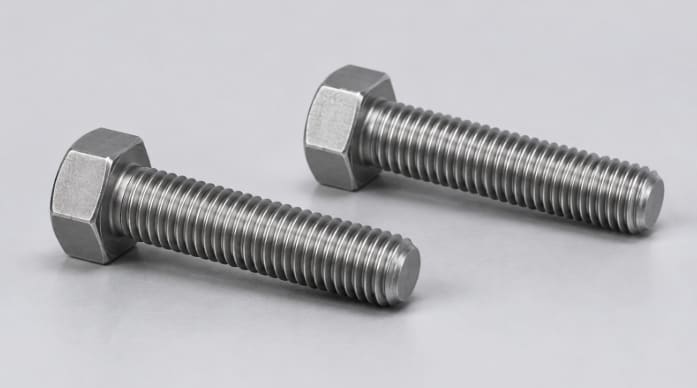
A DIN 933 bolt and an ISO 4017 bolt can look the same and still fail a replacement check. Both describe fully threaded metric hexagon head screws, and ISO 4017 is the ISO-aligned successor to DIN 933. The practical question is not which standard name sounds newer. It is whether the head dimensions, thread, length, property class, finish and approval status match the drawing or the existing assembly.
This guide is for importers, distributors, OEM buyers and maintenance teams comparing a DIN 933 callout with an ISO 4017 offer. It explains the dimension difference that most often matters, the other items to confirm before substitution, and the information to put in an RFQ.
Short Answer: Do Not Treat the Names as Interchangeable
DIN 933 and ISO 4017 belong to the same product series: full thread metric hexagon head screws. For many common sizes, the size chart is close, but important values must be checked to determine the exact size ordered. They are not automatically interchangeable for every size. The most widely cited difference is the width across flats (WAF), which refers to the distance between two parallel planes of a hexagon and the nominal wrench or socket size. DIN 933 and ISO 4017 use different WAF values at M10, M12, M14, and M22. The supplier catalog can be written as "DIN 933/ISO 4017" as a reference for product series. This label does not prove that the provided parts have the head dimensions required by the drawing. For replacement orders, please confirm the standard, version, and actual head size, rather than treating the slash as an equivalence statement.
What Each Standard Covers
ISO 4017:2022 is the latest version of the ISO hex head screw standard. It covers steel and stainless steel products with M1.6 to M64 metric coarse thread and product grades A and B. The performance grade and stainless steel grade can be selected from ISO 898-1 or ISO 3506-1, and the size options can be selected from ISO 888 or ISO 4753. DIN 933 is the traditional German standard name for full thread hex head screws. ISO 4017 is based on and replaces DIN 933, but the DIN name is still common in old drawings, catalog descriptions, and inventory labels. That's why buyers still see these two names on the same product page.
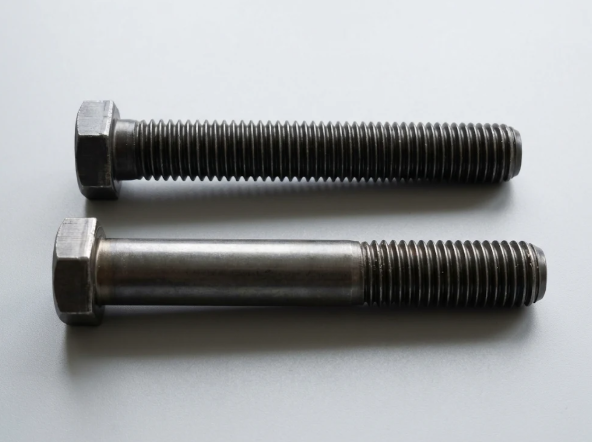
Both standards describe a fully threaded screw with a hexagon head. Neither should be confused with DIN 931 or ISO 4014, which describe partially threaded hexagon head bolts with a plain shank. If thread length and shank configuration are part of the decision, review the separate comparison of fully threaded and partially threaded hex bolts before choosing a standard.
The Dimension Difference That Most Often Matters
The table below compares the nominal width across flats for the four sizes most often cited in DIN 933 and ISO 4017 substitution discussions. Nominal values are shown; the applicable standard tolerances still apply.
| Nominal size | DIN 933 WAF, nominal | ISO 4017 WAF, nominal | What the buyer should check |
|---|---|---|---|
| M10 | 17 mm | 16 mm | Socket or spanner size, head clearance and washer-face bearing area |
| M12 | 19 mm | 18 mm | Socket fit, adjacent components and assembly tooling |
| M14 | 22 mm | 21 mm | Wrench access, edge distance and existing recess or guard clearance |
| M22 | 32 mm | 34 mm | Larger ISO head, socket clearance and interface with the mating part |
The direction of the difference is not uniform. DIN 933 is larger at M10, M12 and M14, while ISO 4017 is larger at M22. That is one reason a simple statement such as “ISO is always the smaller head” is unreliable.
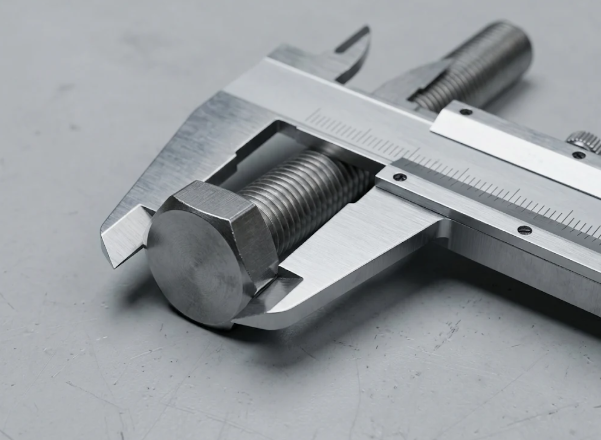
For other sizes, please refer to the actual standard table or the supplier's size table. Don't think that every size within the range will match just because of a universal size match. One millimeter of WAF variation is enough to affect the bearing area around sockets, automatic assembly stations, restricted grooves or slots. WAF is not the only head size. Depending on the application, the buyer may also need to check the head height, gasket surface, transition radius, and cross angle distance. These should be obtained from applicable standards and approved drawings, rather than inferred from catalog photos.
What Else to Confirm Before Replacing DIN 933 with ISO 4017
Head width is the most visible difference, but it is not the whole specification. The following checks help prevent a dimensional match from being mistaken for an approved substitution.
| Check | What to confirm | Why it matters |
|---|---|---|
| Thread | Nominal diameter, pitch, tolerance and thread direction. A common commercial tolerance is 6g, but the drawing or standard governs. | A bolt with the same M-size can still have the wrong pitch or fit. |
| Length | The required length and the measuring convention. For a standard hexagon head screw, length is normally measured from under the head to the end. | Length affects engagement, projection and the position of the thread. |
| Full thread | Confirm that the product is fully threaded up to the head, not partially threaded. | DIN 933 and ISO 4017 are fully threaded; DIN 931 and ISO 4014 are not. |
| Property class or material | State the required class or material designation, such as 8.8, 10.9, 12.9, A2 or A4, and the applicable standard. | “High strength” or “stainless” alone does not define mechanical properties or corrosion resistance. |
| Product grade | Confirm whether product grade A or B is required, especially for larger or longer screws. | Product grade affects tolerances and inspection expectations. |
| Finish | Specify zinc plating, hot-dip galvanizing, zinc flake or another coating, with the applicable finish standard where required. | Coating thickness can affect thread fit and appearance, and different finishes are not equivalent. |
| Marking and documents | Confirm the required manufacturer marking, property class marking, inspection records and material certificate. | A certificate should identify the actual lot and specification, not just the product family. |
| Application approval | For structural, lifting, safety-related or customer-approved parts, confirm who approves the substitution. | A supplier can propose a deviation, but it should not silently replace an approved item. |
For steel products, ISO 4017 points to ISO 898-1 for property classes. For stainless steel, it points to ISO 3506-1. Finish requirements may refer to standards such as ISO 4042 for electroplating, ISO 10684 for hot-dip galvanizing or ISO 10683 for zinc flake coatings, depending on the order. These are separate requirements; a bolt does not become interchangeable merely because the thread and head width match.
A Practical Replacement Decision
Use the following sequence when a customer or drawing specifies DIN 933 and a supplier proposes ISO 4017, or the reverse.
1. Start with the governing drawing or standard
Determine standards and versions on drawings, purchase orders, or approved specifications. The absence of versions of "DIN 933" and "ISO 4017" is not a complete specification. If the drawing is old, please confirm whether the customer intends to retain the original DIN 933 requirements or approve the current ISO 4017 requirements.
2. Measure the existing head, not only the thread
Measure the planar width of representative bolts from the installed batch for existing components. Check the actual socket or wrench used, available head clearance, and bearing area around the hole. If automatic tools are used for assembly, please confirm the tool envelope. Don't just measure the thread diameter and come to the conclusion that the bolts are the same. The head is the part with four different size variations in the table above.
3. Compare the complete specification
Compare diameter, pitch, length, full-thread configuration, property class, product grade, finish, marking and documentation. If any item is missing from the quotation, mark it as an open item rather than assuming the supplier will match the original.
4. Record any substitution as a deviation
If ISO 4017 is proposed against a DIN 933 drawing, ask the supplier to state the WAF and other head dimensions in writing. The buyer should then obtain the required internal or customer approval before the order is released. A lower price or a shorter lead time does not replace that approval.
5. Do not use a generic torque or strength assumption
The standard name does not provide a torque value for a specific joint. Tightening requirements depend on the fastener, mating components, lubrication, coating, joint stiffness and the applicable engineering specification. Obtain torque requirements from the responsible engineer or the approved assembly instructions.
RFQ Checklist for DIN 933 and ISO 4017 Screws
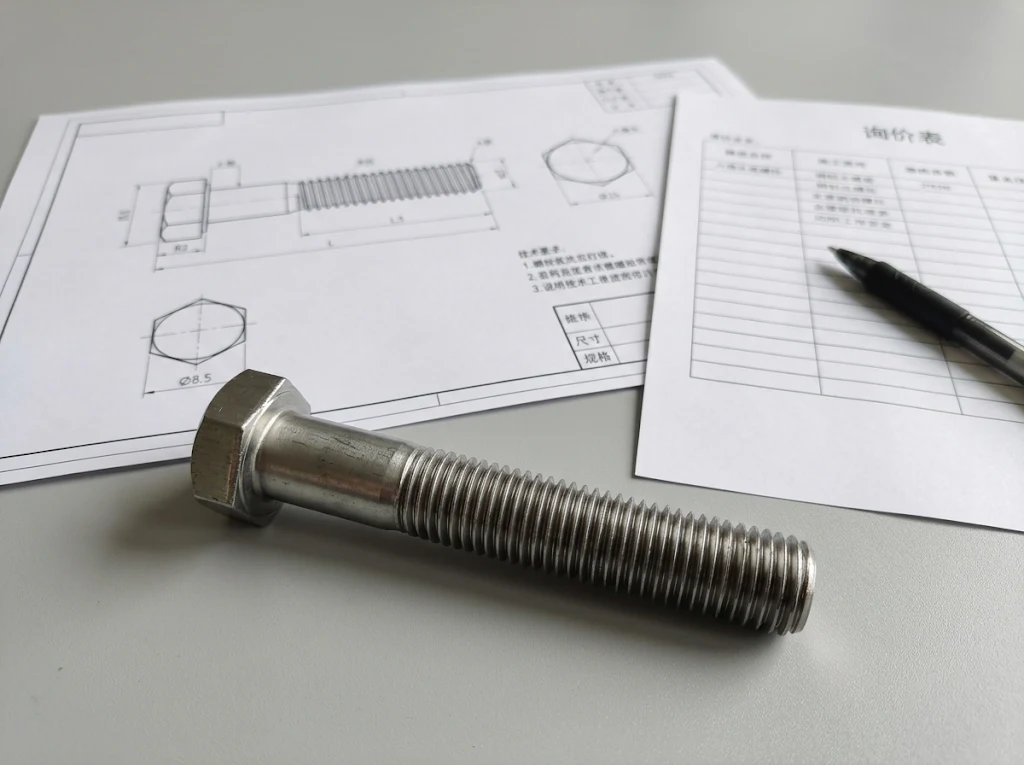
A clear RFQ lets the supplier quote the intended product instead of guessing from a catalog label. Use one line per specification.
| RFQ field | Information to provide |
|---|---|
| Standard and edition | DIN 933 with the drawing revision, or ISO 4017:2022, as applicable |
| Product description | Fully threaded hexagon head screw |
| Size and pitch | Nominal diameter and pitch, for example M10 × 1.5 |
| Length | Required length and the drawing’s measuring convention |
| Head dimensions | Required WAF and any controlled head height or washer-face requirement |
| Property class or material | 8.8, 10.9, 12.9, A2-70, A4-80 or the drawing’s material designation |
| Finish | Coating type, standard and any thread-fit or appearance requirement |
| Quantity | Quantity per size and total order quantity |
| Marking and documents | Required head marking, inspection records and material certificate |
| Application | Joint type, environment and whether the part is structurally or safety-related |
An example of a complete line is: "M10 × 40, ISO 4017:2022,WAF 16 mm, Performance level 8.8, galvanized, 5000 pieces, material certificate required. ”If the approved drawings require DIN 933 to have a 17 mm WAF, the same line should be clearly indicated. This difference is small in millimeters, but significant for the components.
How to Review a Supplier’s “Equivalent” Claim
Be cautious when a quotation says “DIN 933 / ISO 4017 equivalent” without listing the size, edition or head dimensions. Ask for a dimension sheet that shows the actual WAF, head height and thread specification for the offered lot.
Also check whether the supplier is mixing standards within one order. A carton labeled with both standard names may contain parts from different production runs or different head dimensions. For a replacement order, require the supplier to identify the standard and dimension basis for each lot.
If the application is structurally sensitive, safety-related or subject to a customer-approved drawing, route the proposed substitution through the responsible engineer. The supplier’s role is to state what it can supply and to identify deviations; the buyer’s engineering function approves the fit for the application.
FAQ
Are DIN 933 and ISO 4017 the same standard?
They cover the same product family, but they are not the same document. ISO 4017 is the ISO standard and the successor to DIN 933. For many common sizes the general dimensions are close, but the head width differs at M10, M12, M14 and M22.
Can I replace a DIN 933 bolt with an ISO 4017 bolt?
Not automatically. Check the WAF, thread, length, property class, product grade, finish and application approval. If the existing assembly was designed around a 17 mm head at M10, for example, an ISO 4017 M10 with a 16 mm WAF may not fit the same socket or clearance.
Why is M10 the most common example?
M10 is a widely used size, and the DIN 933 / ISO 4017 difference is easy to see: 17 mm versus 16 mm nominal WAF. The same issue also applies at M12, M14 and M22, where the direction and amount of the difference vary.
Is DIN 933 obsolete?
ISO 4017 is the ISO-aligned successor, but DIN 933 is still used in legacy drawings, catalogs and stock descriptions. The important point is to confirm which standard and edition the drawing or purchase order actually requires, rather than assuming that the newer name is automatically approved.
What if my drawing only says “DIN 933”?
Ask the drawing owner whether an ISO 4017 substitution is acceptable. If it is, record the proposed WAF and other dimensional differences and obtain the required approval before shipment. Do not let a supplier change the standard silently.
Is DIN 931 the same as DIN 933?
No. DIN 933 is fully threaded. DIN 931 is partially threaded, with a plain shank and a threaded section at the end. The same distinction applies to ISO 4017 and ISO 4014.
Need to Confirm a DIN 933 or ISO 4017 Specification?
Send JJ Fastener Factory the drawing or standard and edition, nominal size and pitch, length, required WAF, property class or material, finish, quantity and application. If the drawing specifies DIN 933 and you are considering ISO 4017, include that question in the inquiry so the dimensional difference can be reviewed before quotation.
Use the DIN 933 / ISO 4017 full-thread hex bolt page to identify the product family, the DIN 931 / ISO 4014 partial-thread bolt page for the partially threaded alternative, and the hex bolts category for related products. Confirm the actual supply scope and inspection documents for your order before release.