Standardizing the Fastener Procurement Process: From Requisition Submission to Supplier Performance Closed Loop

Daniel
With experience in fastener manufacturing and export sales, we specialize in bolts, nuts, screws, self-drilling screws, fully threaded rods, and customized fastening solutions for construction, machinery, automotive, and industrial applications.
Standardizing the Fastener Procurement Process: A Complete Methodology from Requisition to Supplier Evaluation
In manufacturing and infrastructure projects, fasteners such as screws, nuts, bolts, and studs, although low in unit price, directly affect assembly efficiency, connection reliability, and project delivery pace. When purchasing these types of materials, many companies often encounter problems such as incomplete specification descriptions, inconsistent quotation bases among different suppliers, and difficulty balancing delivery time with quality. Establishing a standardized fastener procurement process can help procurement, engineering, quality, and supply chain teams use the same set of information standards, thereby reducing incorrect and missed purchases, shortening procurement cycles, controlling total costs, and forming a reusable supplier evaluation mechanism.
I. Why Standardize the Fastener Procurement Process
When purchasing categories such as screws, nuts, and bolts, common challenges include incomplete specification descriptions, inconsistent quotation bases among different suppliers, and difficulty balancing delivery time with quality. A mismatch between selection and fastening solutions may lead to assembly difficulties, loose connections, or rework; some high-requirement scenarios also require evaluation of anti-loosening designs and specialized fastening solutions. Changing demand in infrastructure and manufacturing is pushing the hardware tools industry into a new cycle, and companies can improve demand response, quality traceability, and supply continuity through a unified process.

The goal of standardization is not to add approval steps, but to clarify the following matters: reducing incorrect and missed purchases, shortening procurement cycles, controlling total costs, and establishing a reusable supplier evaluation mechanism. When demand, specifications, quotations, acceptance, and performance all use the same set of data, the certainty of procurement decisions improves significantly.
II. Step One: Establish Demand Requisition Standards
Demand requisition is the starting point of fastener procurement. Design a unified requisition form and require the requesting department to fill in the application scenario, equipment or project, quantity, required date, delivery location, and budget information. The clearer the form, the fewer disputes there will be in subsequent quotation inquiries and acceptance.
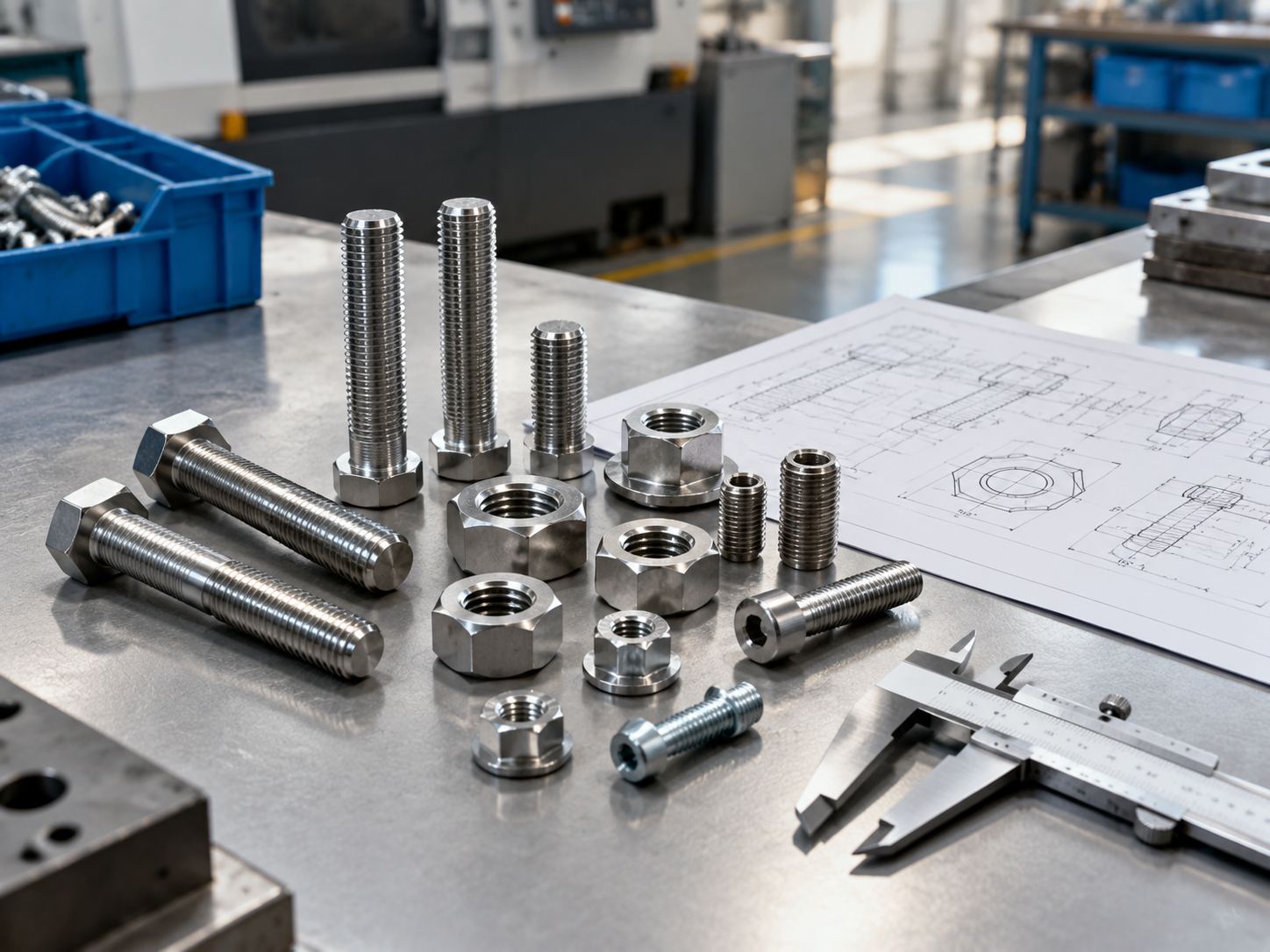
Technical fields must be clear: product name, standard number, material, strength grade, thread specification, length, surface treatment, tolerance, and packaging requirements. At the same time, categories such as screws, nuts, bolts, and studs must be distinguished; for structural parts such as hex bolts and flange bolts, add head type, flange dimensions, and matching requirements. For example, in wood structure or bracket installation scenarios, if DIN 571 hex head wood screws are selected, the carbon steel or stainless steel material, thread specification, and length need to be specified to ensure they match the assembly requirements of the wood or bracket.
In addition, key quality characteristics and acceptance methods should be noted, such as dimensional inspection, mechanical properties, material certificates, coating requirements, and batch traceability information. Establish demand classification: regular standard parts, project-specific parts, urgent parts, and customized parts requiring drawings or sample confirmation. For support systems connecting threaded rods, if DIN 6334 hex connecting nuts are used, the matching threaded rod specifications and load-bearing requirements must be stated in the demand to avoid being unable to fit after arrival.
III. Step Two: Technical Confirmation and Procurement Specification
Engineering, quality, and procurement jointly review the demand, confirm standards, drawings, samples, and applicable environment, and avoid requesting quotations based only on product names. For stainless steel fasteners, confirm the material grade, corrosion resistance requirements, and usage environment; for carbon steel products, clarify the strength grade and surface treatment.
For needs such as custom special-shaped fasteners, non-standard fastener machining, and custom socket head cap screws, provide controlled drawings, key dimensions, tolerances, and inspection standards. Distinguish between treatment requirements such as hot-dip galvanizing and mechanical galvanizing, and confirm the relevant processes and acceptance basis to avoid the same name corresponding to different quality standards. Ultimately form a procurement specification that can be quoted, inspected, and traced, and record technical change versions.
IV. Step Three: Supply Market Research and Candidate Supplier Screening
Build a supplier pool by product category and capability, covering needs such as standard parts, custom machining, export, and special surface treatment. When initially screening fastener manufacturers and fastener suppliers, verify business qualifications, production or trading identity, product scope, production capacity, equipment, and quality system.
For specialized resources such as high-strength bolt manufacturers, hex bolt manufacturers, and flange bolt suppliers, focus on verifying the actual manufacturing and inspection capabilities for the relevant products. Add categorized searches according to procurement scenarios: for example, carriage bolt factories, heavy hex nut manufacturers, lock nut suppliers, self-tapping screw manufacturers, or self-drilling screw suppliers.
When involving machine screw wholesale, expansion bolt wholesale, custom bolt wholesale, or fastener OEM contract manufacturing, separately verify inventory, minimum order quantity, mold investment, and delivery model. For export projects, evaluate experience in exporting American standard bolts, document coordination capability, packaging labeling, and destination market requirements; at the same time verify the delivery and communication capabilities of fastener export suppliers. For stainless steel fastener manufacturers and carbon steel nut factories, their material certification and batch traceability capabilities should also be confirmed.
V. Step Four: Quotation Inquiry, Quote Comparison, and Cost Calculation
Send the same version of the specification to candidate suppliers, unifying quantity, delivery location, trade terms, payment conditions, and quotation validity period. Require quotations to break down unit price, mold or sampling fees, packaging fees, transportation fees, taxes, and other possible costs, avoiding comparison of only the surface unit price.
For stainless steel fasteners, non-standard fastener machining, and custom special-shaped fasteners, confirm how materials, processes, testing, and loss affect the price. Evaluate total cost of ownership, including quality risk, inventory occupation, stockout impact, after-sales cost, and supplier switching cost. Record quotation differences and clarification conclusions, focusing on identifying issues such as specification deviations, material substitutions, inconsistent treatment methods, and different delivery assumptions.
VI. Step Five: Sample Verification and Supplier Quality Audit
Arrange sample verification for new suppliers, new specifications, or critical connection parts, checking dimensions, appearance, material documents, mechanical properties, and assembly fit. When necessary, conduct small-batch trial purchases to verify batch consistency, packaging protection, delivery accuracy, and exception response speed.
Audit the supplier's incoming inspection, process control, finished product inspection, measuring tool management, nonconforming product handling, and batch traceability mechanisms. For products used together such as bolts and nuts, verify thread fit, assembly performance, and the anti-loosening requirements specified by the project. For example, when DIN 6334 hex connecting nuts are used to connect threaded rods, their screwability and load-bearing performance with the matching threaded rods should be verified; when DIN 571 hex head wood screws are used for wood structures, attention should be paid to whether the head type, threads, and anti-corrosion treatment meet the installation conditions.
Decide whether an on-site audit is needed based on risk; for critical or customized products, focus on verifying equipment capability, process stability, and outsourcing management.
VII. Step Six: Establish a Supplier Scoring and Admission Mechanism
Set unified scoring dimensions: quality capability, technical response, delivery performance, price competitiveness, compliance, service capability, and business stability. Set differentiated weights for different categories: for critical load-bearing parts, prioritize quality and traceability; for regular standard parts, balance price, inventory, and delivery.
Based on the score, classify suppliers as qualified, under observation, subject to improvement within a deadline, or eliminated, and retain audit records, sample conclusions, and improvement evidence. For special categories such as lock nut suppliers and hot-dip galvanized bolt suppliers, add special audit items related to key processes and product risks. Avoid admission based only on low price; establish alternative suppliers to reduce single-source and supply interruption risks.
VIII. Step Seven: Procurement Execution, Acceptance, and Performance Review
Purchase orders reference approved specifications and drawings, and state quantity, delivery date, packaging, inspection requirements, change control, and nonconforming handling methods. At receipt, check the order, labels, quantity, batch, and quality documents; conduct sampling inspection of dimensions, appearance, and key performance according to the inspection plan.
Include incoming material nonconformities, delays, wrong shipments, and customer feedback in the supplier performance ledger, forming a closed loop of cause analysis, corrective actions, and verification. Review on-time delivery rate, incoming material qualification performance, price fluctuations, and exception response on a monthly or quarterly basis, and support supplier adjustments with actual records. For suppliers with stable performance, promote annual frameworks, demand forecasts, or safety stock collaboration; for those that continue to fail to meet standards, initiate improvement or replacement processes.
IX. Implementation Tools and Common Pitfalls
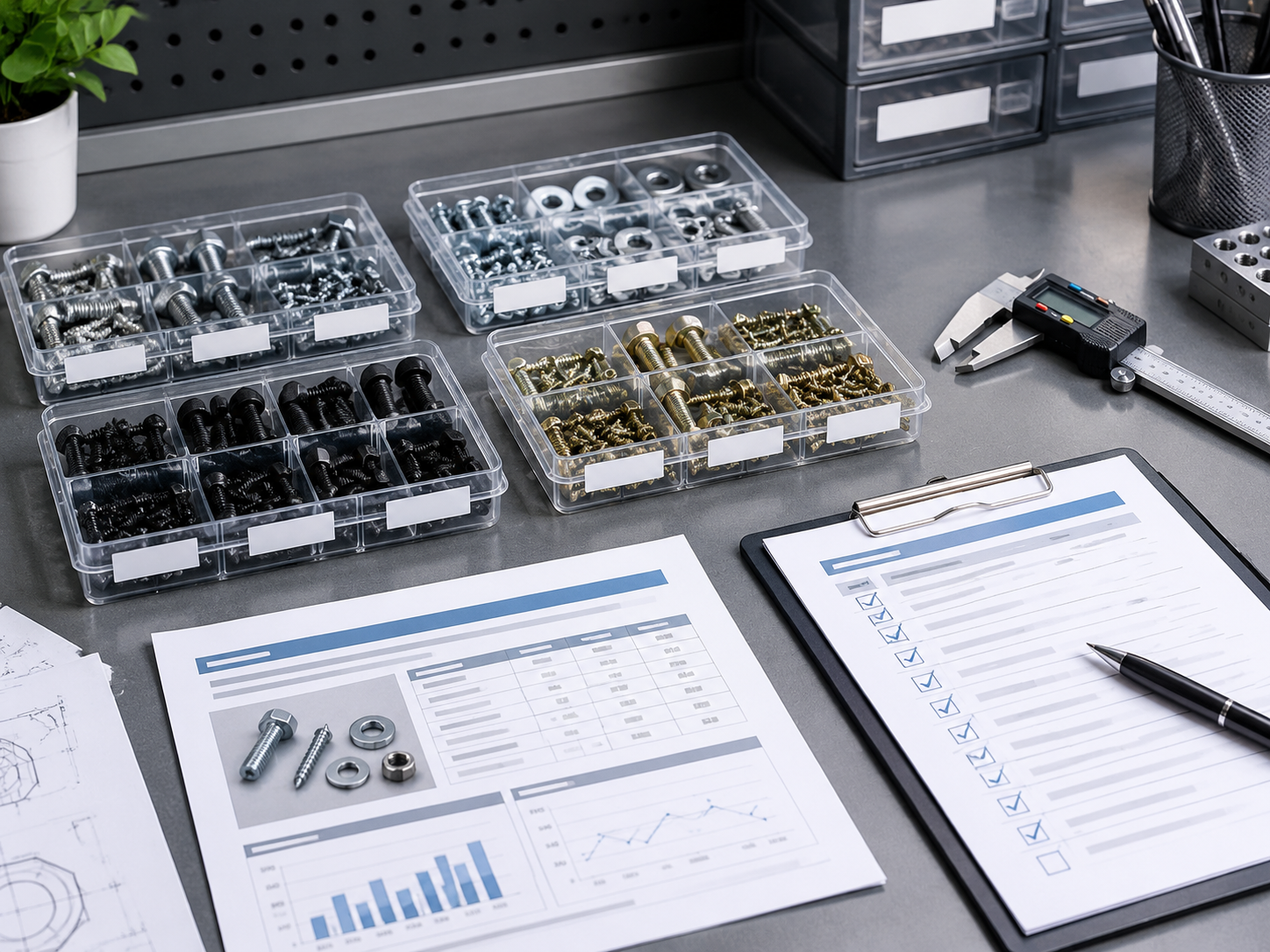
It is recommended to prepare a requisition form, procurement specification, quotation comparison table, sample verification report, supplier audit form, and performance scorecard. These tools enable different departments to collaborate using the same set of data, reducing verbal confirmations and ad hoc changes.
- Mistake 1: Writing only "screw" or "nut" without specifying the standard, material, dimensions, and conditions of use.
- Mistake 2: Directly comparing quotations for different material grades, surface treatments, or inspection standards side by side.
- Mistake 3: Treating a supplier list as equivalent to admission review, lacking sample verification and quality capability checks.
- Mistake 4: For custom requirements, failing to control drawing versions, mold ownership, change approvals, and delivery acceptance.
The implementation sequence can begin with a pilot in fastener categories that have high procurement amounts, high quality risks, or frequent anomalies, then gradually expand to all categories.
10. Summary: Improve procurement certainty through unified data and closed-loop management
The core of standardization is not adding approvals, but ensuring that requirements, specifications, quotations, acceptance, and supplier performance use the same information standards. Through requisition submission, technical confirmation, supplier screening, sample verification, scoring-based admission, and performance review, a complete closed loop is formed from procurement entry to supply improvement.
Continuously improve supplier resources according to business needs, covering different scenarios such as standard fasteners, custom machining, export, and special processes. Whether hex bolts, flange bolts, nuts, or studs, as long as unified data standards and closed-loop management are maintained, a more stable balance can be achieved among lead time, quality, and total cost, enabling fastener procurement to shift from passive response to a predictable, traceable, and improvable routine capability.