How B2B Fastener Procurement Can Avoid Standard Inconsistencies: From Returns to a Specification Closed Loop

Daniel
With experience in fastener manufacturing and export sales, we specialize in bolts, nuts, screws, self-drilling screws, fully threaded rods, and customized fastening solutions for construction, machinery, automotive, and industrial applications.
Starting from a batch of returned hex bolts: Why does B2B fastener procurement always fail on "standards"?
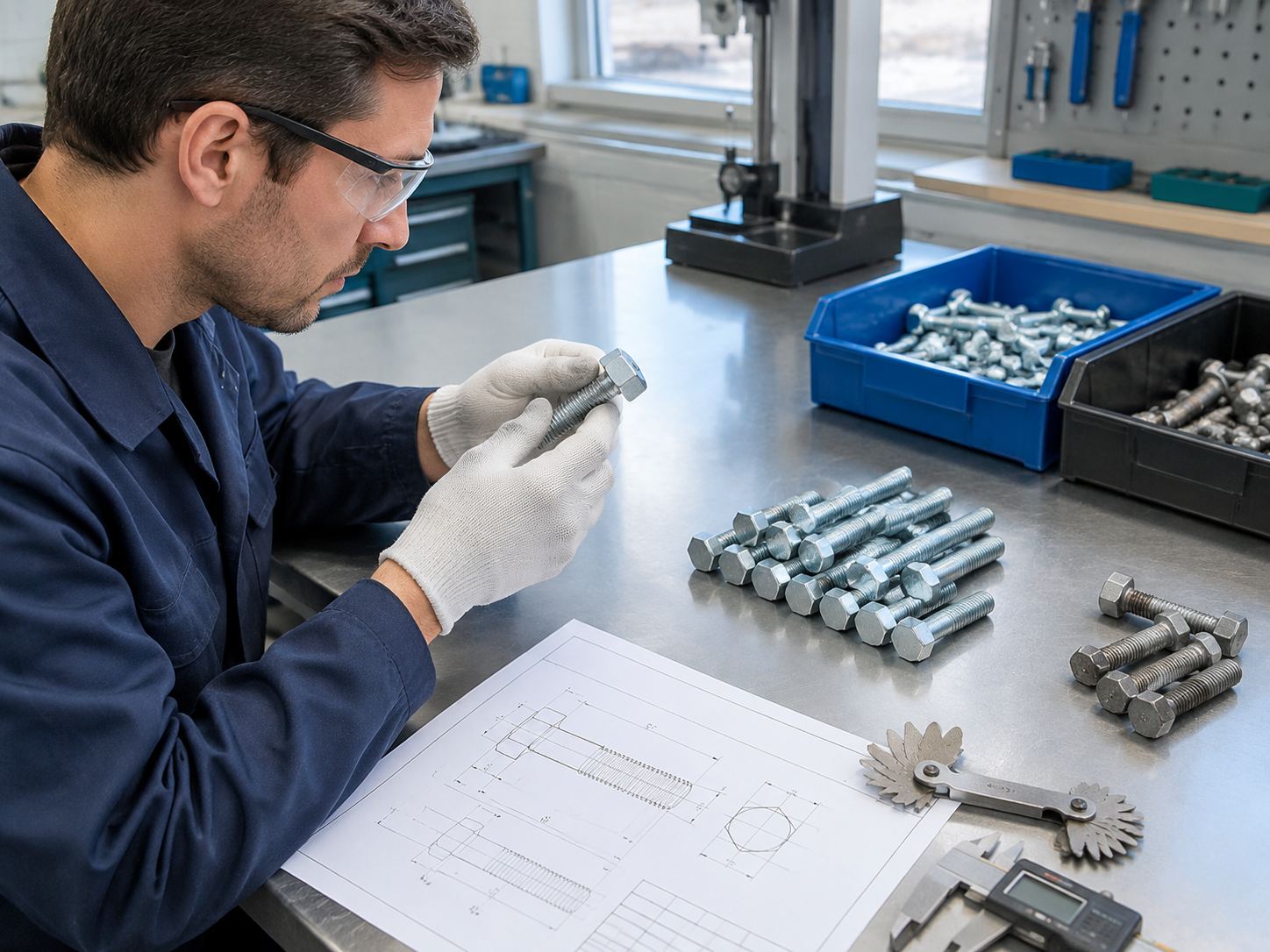
A batch of hex bolts arrived at the factory. The labels, quantity, and appearance were all fine, but during trial assembly on the production line, the threads were found to fit too tightly, and the length and property class of some specifications did not match the drawings. Procurement urgently contacted the supplier, who replied, "We made them according to the national standard," while the drawings specified a different standards system. Returns, replenishment, and line-stop communication followed. Similar scenarios are not uncommon in B2B fastener procurement. The problem is often not simply that "the bolts are nonconforming," but that the "standard" was never clearly specified from the outset.
A batch of hex bolts is returned; the problem may not be that "the bolts are nonconforming"
Procurement places orders according to drawings, but after the goods arrive at the factory, the threads, dimensions, or property class do not match, the production line stops and waits, and return and replenishment costs increase accordingly. Such problems often occur in scenarios where equipment is subjected to cyclic loads, temperature changes, or vibration: even a seemingly minor standard difference can affect assembly and connection reliability. For example, different thread tolerance classes lead to different go/no-go gauge results; if the property class is ambiguously marked, the actual load-bearing capacity may deviate from design assumptions.

When a return occurs, don't rush to assign blame to one party. A more effective approach is to clarify the issue: do the purchase order, drawings, samples, and supplier confirmation records all point to the same set of standards and version? The order says "produce according to standard," the drawing marks an old version of a standard, and the sample is a version adjusted according to the customer's verbal requirements—if even one of the three is inconsistent, mass delivery may deviate from expectations. For hex bolts,stud bolts, flange bolts, and other commonly used connectors, this kind of version mismatch is especially easy to overlook because the appearance is similar, and problems often only surface at the assembly stage.
"Standard" is not just a number: the six types of information procurement most easily overlooks
Many procurement staff are accustomed to writing a standard number on the order and consider that sufficient. But the standard number is only the entry point; what truly determines whether products are interchangeable and can be assembled is a set of technical information that must be confirmed item by item. The following six categories are the parts most easily overlooked in fastener procurement and most likely to cause disputes.
Standards system and version
Confirm the national standard, ISO, DIN, ASTM, ASME, or other specification adopted, as well as the specific version; do not just write "produce according to standard." Different systems may have different requirements for the appearance, threads, and performance of the same type of product, and version updates may also bring changes in dimensions or inspection rules. ForU.S. standard bolt exportsbusiness, the standards system applicable to the target market, inspection documents, and packaging markings need to be specified in the order even more clearly, and cannot be judged merely by "having export experience."
Product type and structure
Distinguish among hex bolts, flange bolts, stud bolts, and other products, and check the head type, shank, flange, chamfer, and matching nut requirements. Takingflange boltsas an example, the flange face diameter, serration form, and fillet transition all affect the contact-surface clamping effect; while forhex bolts, the under-head fillet radius, width across flats, and head markings are also details that need to be checked during acceptance. If the structural description is unclear, the supplier will produce with its own conventional tooling, and interference or poor fit may occur during assembly.
Dimensions and threads
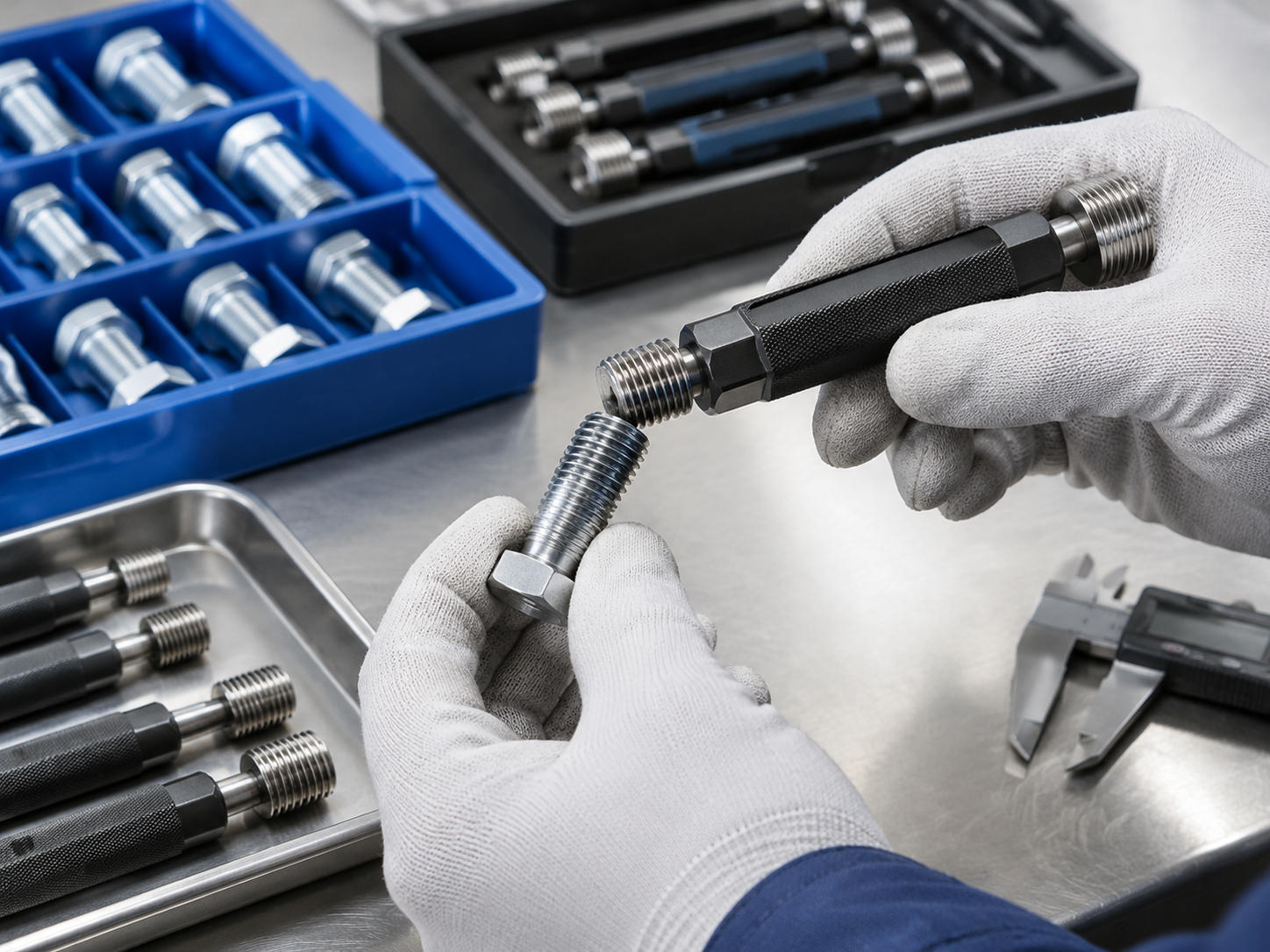
Specify the nominal diameter, length, pitch, thread tolerance, hand of thread, and effective thread length to avoid mixing different systems or coarse and fine threads. The fit between screws and nuts especially depends on consistency of the thread series and precision class. Formachine screw wholesaleorders, if only "M6 screw" is written without specifying pitch, thread length, and head type, fit differences may occur between batches. For products such as DIN 965 cross-recessed countersunk head machine screws used in electrical equipment, furniture, and panel assembly, the countersink angle, recess type, and thread precision all directly affect installation results, and should be listed item by item in the specification confirmation sheet.
Materials and performance
Distinguish among material grades, property classes, heat treatment conditions, and mechanical performance requirements; stainless steel fasteners also need clear material and applicable environment. High-strength bolts cannot just be marked "high strength"; the property class, material, and heat treatment requirements must be specified;stainless steel fastenersneed to distinguish among austenitic, martensitic, and other material categories, as well as whether they are suitable for humid, corrosive, or high-temperature environments. Ambiguous material descriptions are a common reason for repeated confirmation betweenhigh-strength bolt manufacturersand procurement.
Surface treatment
Specify the coating or plating type, thickness or grade, color, and corrosion protection requirements, and pay attention to the impact of the treatment on thread fit. Hot-dip galvanizing, Dacromet, black oxide, electrogalvanizing, and other processes have different effects on thread clearance and friction coefficient; an excessively thick coating may make nut threading difficult. When communicating withhot-dip galvanized bolt suppliers, the coating standard and thread go/no-go gauge requirements should be clearly specified, rather than merely writing "galvanized treatment."
Inspection and documentation
Agree on dimensional and performance inspection items, sampling rules, material certificates, test reports, and traceability requirements. For critical fasteners, first-article approval and batch identification methods should also be agreed upon. If the inspection basis is not clearly specified, incoming inspection and supplier factory inspection may each follow their own standards, ultimately causing disputes at the assembly site.
Why screws and nuts "look the same" but assemble differently
Different standards systems may have different external dimensions, thread specifications, and tolerances; similar appearance does not mean interchangeability. Even for the same socket head cap screw, head diameter, socket depth, and thread tolerances may differ slightly under different standards; these differences are hard to notice when comparing individual pieces but become amplified in batch assembly or automatic tightening equipment.
Screws and nuts must be checked as a matched connection pair, especially the thread series, precision grade, material, and surface treatment. When purchasingnuts, if you order only by specification name and ignore the matching screw thread tolerances and coating thickness, poor threading or insufficient preload may occur. Forlock nut suppliers' anti-loosening products, it is also necessary to confirm the locking method, reuse count, and applicable torque range; selection cannot be completed based on the words "lock nut" alone.
Treating descriptions such as "high strength," "stainless steel," and "hot-dip galvanized" as complete technical requirements can easily omit key information that determines compatibility. If samples, quotations, and bulk orders use different drawing versions, information gaps may occur in procurement, inspection, and assembly. In practice, it is recommended to bind sample approval records to drawing version numbers and route any change through written approval, avoiding "verbal agreement" becoming the basis for mass production.
Before placing a purchase order: use a specification confirmation sheet to keep ambiguity out
To reduce returns and line stoppages, the most practical tool is not more complex contract clauses but a specification confirmation sheet covering key information. It serves both as the basis for purchase orders and as a checklist for supplier scheduling, quality inspection, and delivery.
- List the product name, drawing number, standard number and version, and attach controlled drawings or sample approval records.
- Confirm dimensions, threads, materials, performance grades, heat treatment, and surface treatment item by item; do not substitute "equivalent products" for unapproved changes.
- State the operating conditions, mating parts, and key assembly requirements; when special loads, temperatures, or corrosive environments exist, have technical personnel review in advance.
- Agree on first-article approval, batch inspection, marking and packaging, change approval, and nonconforming product handling methods.
- For custom special-shaped fasteners, non-standard fastener machining, and fastener OEM contract manufacturing, confirm the drawing version, acceptance basis, and change process before starting mass production.
Take the cross recessed countersunk head machine screw commonly used in panel and equipment assembly as an example. The DIN 965 cross recessed countersunk head machine screw uses metric threads; the countersunk design allows the head to sit flush with the mounting surface, making it suitable for electrical equipment, furniture, panel assembly, and similar scenarios, with material options such as carbon steel, stainless steel, and brass. When purchasing such products, the confirmation sheet should specify the recess type, countersunk angle, thread specification, material, and surface treatment, rather than merely writing "a batch of countersunk screws."
Another example is the ISO 7380-1 hex socket button head screw, whose low domed head and hex socket drive suit machinery, furniture, and equipment panel assembly in space-constrained areas. For such products, the order should clearly specify head dimensions, drive socket specification, thread length, and performance grade to avoid mixing them with ordinary cylindrical head screws. For projects requiringcustom hex socket screws, material substitution rules and inspection items should also be agreed in advance.
How to judge whether a fastener manufacturer or supplier truly understands standards
Price and lead time are certainly important, but professionalism on standards often determines whether subsequent cooperation will be stable. To judge whether afastener manufacturerorfastener supplieris reliable, you can observe from the following angles.
- Check whether the other party proactively verifies the standard version, dimensional system, threads, and matching nuts, rather than merely quoting based on keywords.
- Confirm whether they have production, inspection, batch traceability, and document delivery capabilities that match the product and order requirements.
- Evaluate their change management and exception response processes: when specifications are in question, do they confirm in writing first rather than substituting on their own?
- Select partners by category, such as hex bolt manufacturers, flange bolt suppliers, or lock nut suppliers; specific capabilities should still be verified through qualifications, samples, and audit results.
- When exporting inch-standard (US standard) bolts, clarify the applicable standards for the target market, inspection documents, packaging markings, and customer acceptance requirements, and avoid judging solely on "export experience."
Different categories require different areas of focus. When purchasingcarriage bolts, pay attention to the square neck dimensions, head type, and neck fit; when looking forexpansion bolt wholesalechannels, verify the sleeve material, expansion method, and suitable base materials; when choosingself-tapping screw manufacturersorself-drilling screw suppliers, confirm whether the thread form, point type, and surface treatment match the materials being joined. For supporting suppliers such asheavy hex nut manufacturersandcarbon steel nut factories, thread precision, material certificates, and batch traceability should likewise be included in the audit scope. When working withcustom bolt wholesaleorfastener export suppliers, change approval and document delivery capabilities are especially worth confirming in advance.
From a single return to stable supply: establishing a closed-loop standard
Once a return has been handled, if the matter is merely resolved by replenishing stock, the same problem may recur on the next order. A more reliable approach is to unify technical specifications, purchase orders, supplier confirmations, incoming inspections, and exception handling under the same version, forming a traceable closed-loop standard.
- Unify technical specifications, purchase orders, supplier confirmations, incoming inspections, and exception handling under the same version.
- Implement sample or first-article approval for high-risk or critical connectors, and retain approval records.
- Regularly review the causes of returns, assembly mismatches, and inspection failures, and update corrective actions into drawings, specifications, and supplier files.
- Establish standardized material codes for commonly used fasteners such as bolts and nuts to reduce same-name-different-specification items and duplicate purchasing.
Material coding may appear to be an internal management issue, yet it can significantly reduce "same name, different specification." For example, for what is nominally the same "M8×30 socket head cap screw," different materials, property classes, surface treatments, and standard versions should use different codes, and the code descriptions should be linked to the specification confirmation table. In this way, when purchasing, warehouse, and quality inspection use the same code, they are referring to the same set of technical requirements.
Conclusion: clarify the standards first, then discuss price and lead time
Fastener procurement failures are often not due to a lack of products, but because requirements were not accurately expressed, confirmed, and executed. The standard number is only the starting point; the version, dimensions, threads, material, performance, surface treatment, and inspection documents are the complete technical language. Only when procurement, engineering, quality, and suppliers jointly confirm the specifications can the risk of returns, line stoppages, and repeated inspections be reduced.
Whether purchasing stainless steel fasteners, carbon steel nuts, or expansion bolts, carriage bolts, self-tapping screws, or self-drilling screws, clear standards and acceptance requirements are the starting point for stable delivery. Put the specification confirmation form to use, lock down the change process, and only then discuss price and lead time—that is how cooperation becomes more controllable.