2025 Fastener Export Guide: Keeping Compliance, Quality, and Lead Times Under Control

Daniel
With experience in fastener manufacturing and export sales, we specialize in bolts, nuts, screws, self-drilling screws, fully threaded rods, and customized fastening solutions for construction, machinery, automotive, and industrial applications.
New challenges for export orders: compliance, quality, and delivery time are all indispensable
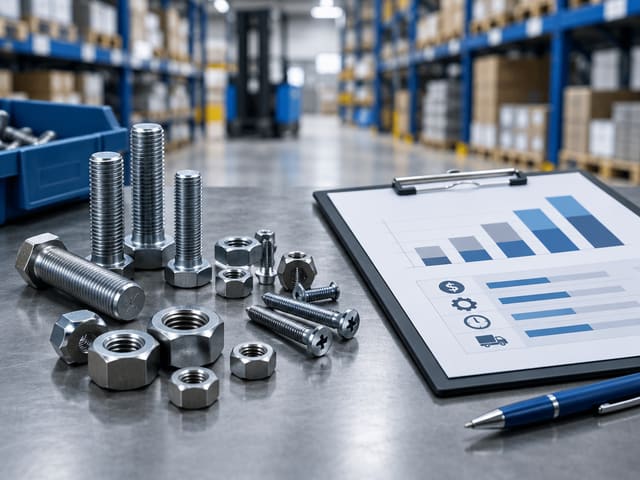
The fastener export market in 2025 is undergoing a clear round of rule upgrades. In the past, buyers mainly compared prices; now more and more overseas buyers check material composition, mechanical properties, batch traceability documents, and delivery stability before placing orders. Price is still a threshold, but it is no longer the only determining factor. For fastener manufacturers undertaking export orders, whether they can simultaneously manage the three lines of compliance, quality, and delivery directly determines whether they can enter a customer's long-term supplier list.
Especially in working conditions such as pressure vessels, reactors, and heat exchange equipment, bolts and studs often have to withstand cyclic pressure and temperature changes. Once there is a deviation in specification matching or quality verification is inadequate, the consequences are not only returns and rework, but may also affect the safe operation of the entire equipment set. Therefore, buyers' review of export orders for American-standard bolts is usually more detailed, checking item by item from drawing versions to performance test reports.
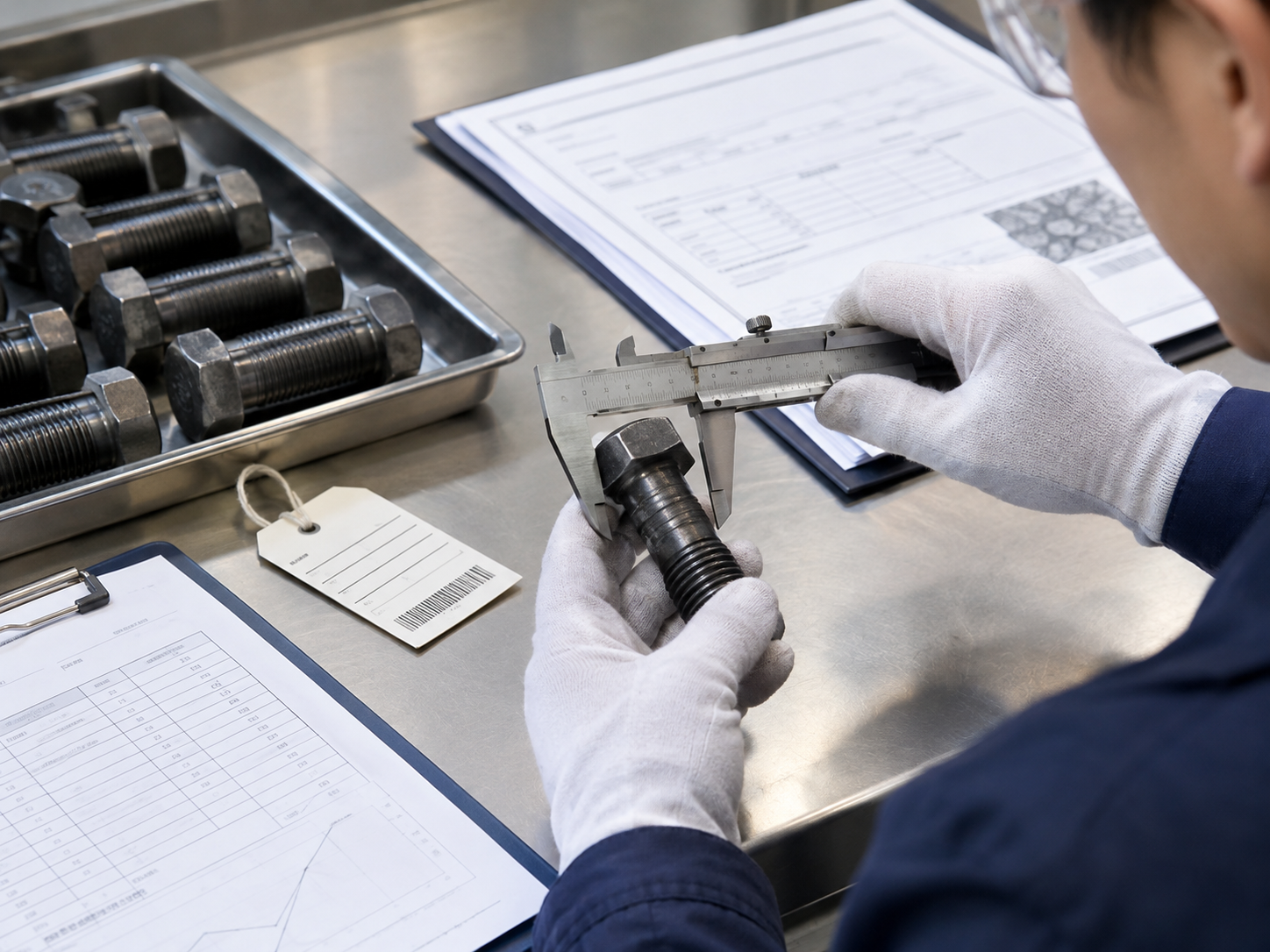
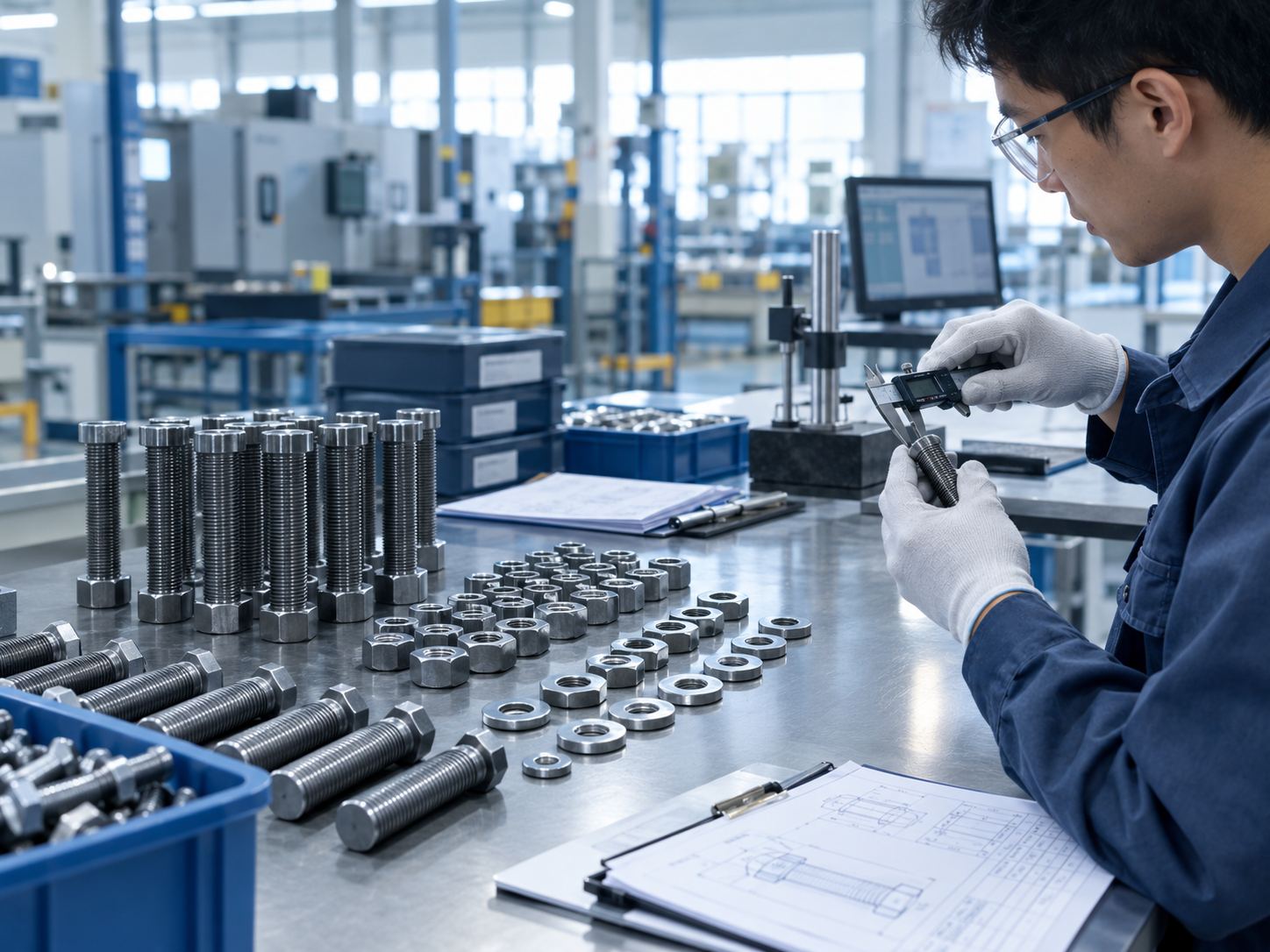
From screws and nuts to bolts and studs, establishing a consistent quality control process is an effective way to reduce acceptance disputes. Process consistency means that products of different batches and specifications can be released according to the same inspection logic, and it is also easier for customers to compare during incoming inspection. For foreign-trade fastener suppliers that supply multiple categories at the same time, this consistency itself is competitiveness.
Export of American-standard bolts: first align standards and order requirements
The most common disputes in the export of American-standard bolts are often not that the product cannot be made, but that what is "made" and what the "customer wants" are not fully aligned. Before starting work, drawings, procurement specifications, dimensional tolerances, material grades, mechanical properties, thread accuracy, and surface treatment requirements should be confirmed item by item and put into written documents, rather than remaining as verbal confirmation in emails.

Special attention should be paid to not inferring acceptance requirements solely from the two words "American standard" or the product name. The same type of bolt may reference different standard versions in different end-use industries, and dimensional systems and inspection rules may also differ. Checking the standards and versions applicable to the product is a necessary action before quotation and production.
On this basis, the inspection plan, sampling rules, material certificates, performance test items, and marking requirements should also be clarified and formed into written confirmation before production. The export of American-standard bolts involves different end-use industries and customer specifications, and fastener export suppliers should avoid replacing order-specific requirements with generic documents; otherwise, they can easily be put in a passive position during inspection.
Writing the standard version, inspection plan, and marking requirements into the pre-production confirmation sheet costs less than explaining afterward.
Key quality control points for high-strength bolt manufacturers
Quality differences in high-strength bolts are often already seeded during the heat treatment and thread processing stages. From raw material procurement, heat treatment, forming, and thread processing to surface treatment, key inspection points should be set at each stage, with inspection methods and acceptance criteria clearly defined. It is very difficult to detect process drift in time by relying only on finished-product sampling inspection.
Ensuring traceability of product performance and material source through batch management and inspection records is a basic skill of high-strength bolt manufacturers. When customers request re-inspection or assembly abnormalities occur, whether the heat number, batch number, and process parameters can be quickly located determines the speed of problem handling.
At the same time, manufacturers should have processes for abnormal isolation, re-inspection, and corrective actions to control batch quality risks before shipment. For supporting products such as hot-dip galvanized bolts and carbon steel nuts, process compatibility, dimensional changes, and assembly requirements also need to be evaluated in advance, for example the impact of coating thickness on thread fit, to avoid supporting parts being unable to be assembled smoothly after arrival.
Product portfolio and supporting supply: shifting from single-item quotation to complete solutions
More and more overseas projects adopt package procurement: hex bolts, flange bolts, nuts, and washers are inquired together, requiring specifications, grades, and assembly requirements to match one another. This places higher demands on suppliers' product coverage and supporting experience, and also causes single-item quotations to gradually give way to complete solutions.
For corrosion-resistant scenarios, stainless steel fasteners and corresponding materials and application conditions can be evaluated, with material grades and surface conditions confirmed according to the service environment. Supporting roles such as heavy hex nut manufacturers and lock nut suppliers should provide clear specification identification and batch information to facilitate quick checking by customers during warehousing and assembly.
In terms of category coverage, according to project needs, this can be extended to custom socket head screws, self-tapping screws, self-drilling screws, machine screws, carriage bolts, and expansion bolts, etc. For example, cross-recessed countersunk head machine screws used in electrical equipment, furniture, and panel assembly adopt the DIN 965 standard and offer multiple material options including carbon steel, stainless steel, and brass. The countersunk design makes the surface flat after assembly, making them suitable for occasions with requirements on the appearance of the mounting surface. ISO 7380-1 button head socket screws adopt a low-profile dome head and hex socket drive, making them suitable for compact-space assembly in mechanical equipment, furniture, and equipment panels. The two materials of alloy steel and stainless steel can cover different strength and corrosion resistance requirements. Specification identification, material certificates, and batch information for such products should also be included in a unified supporting supply system.
Delivery challenges: capacity, production scheduling, and logistics must be managed in sync
Delivery problems rarely originate only on the shop floor. Only by incorporating raw material procurement cycles, special process outsourcing, inspection release, and international transportation into a unified delivery plan can a deliverable commitment be given. Scheduling any single stage in isolation can easily create gaps at the interfaces.
For urgent orders and multi-specification orders, a capacity assessment should be done first to avoid exchanging orders for unverified delivery commitments. The mold changeover, machine adjustment, and inspection time for multi-specification small-batch orders are often underestimated, and this is exactly where delivery delays frequently occur.
Before export, packaging, rust prevention, labels, packing lists, and destination document requirements also need to be confirmed to reduce identification and customs clearance problems after arrival. Establishing order progress milestones and an exception warning mechanism and promptly updating customers on production, inspection, and shipment status can also gain handling time before problems expand.
How to evaluate fastener manufacturers and suppliers
When screening suppliers, first check the product scope, inspection capability, batch traceability, and export collaboration experience of the fastener manufacturer or fastener supplier. Product scope determines whether supporting supply is possible, inspection capability determines the quality baseline, and the traceability system determines the efficiency of problem handling.
It is also necessary to evaluate by product category: whether hex bolt manufacturers, flange bolt suppliers, and stainless steel fastener manufacturers have the corresponding process and quality control capabilities should be confirmed item by item according to specific order requirements, rather than only looking at promotional materials.
When there are needs for custom special-shaped fasteners, non-standard fastener processing, or fastener OEM contract manufacturing, confirm whether the drawing review, sample verification, and change management processes are complete. Providing standards, dimensions, materials, performance, surface treatment, quantity, packaging, and delivery information at the inquiry stage can significantly improve the comparability of quotations and reduce subsequent repeated communication.
Pre-export checklist: keep risks before shipment
- Confirm that the order, drawings, standard version, and technical agreement are consistent
- Check material certificates, inspection records, product markings, and batch traceability information
- Complete inspections related to key dimensions, mechanical properties, and surface treatment, and retain records
- Recheck packaging, protection, labels, quantity, and export documents
- Obtain written confirmation of changes, deviations, and customer special requirements
This checklist may look basic, but each item corresponds to a common point of dispute in actual exports. Putting inspection actions upfront is more economical than remedying issues after arrival.
Conclusion: Win long-term orders with verifiable quality and reliable delivery
Export competitiveness comes not only from price, but also from standards understanding, process control, communication efficiency, and stable delivery. Buyers can evaluate cooperation capability through sample verification, document review, and small-batch trial orders; manufacturers should build trust with clear compliance documentation, traceable quality records, and realistic delivery commitments. In the 2025 export environment, fastener manufacturers that can do both compliance and delivery solidly are more likely to turn a one-time order into long-term cooperation.